
As one of the world’s most prolific lenders, China has paid out more than a trillion dollars in loans to the developing world to fund roads in Africa, ports in South America and railroads in Central Asia.
But the biggest recipient of its financing over the past two decades has been the United States, where Chinese banks have extended $200 billion in financial support to American companies and projects, according to AidData, a research institute at the College of William and Mary in Williamsburg, Va.
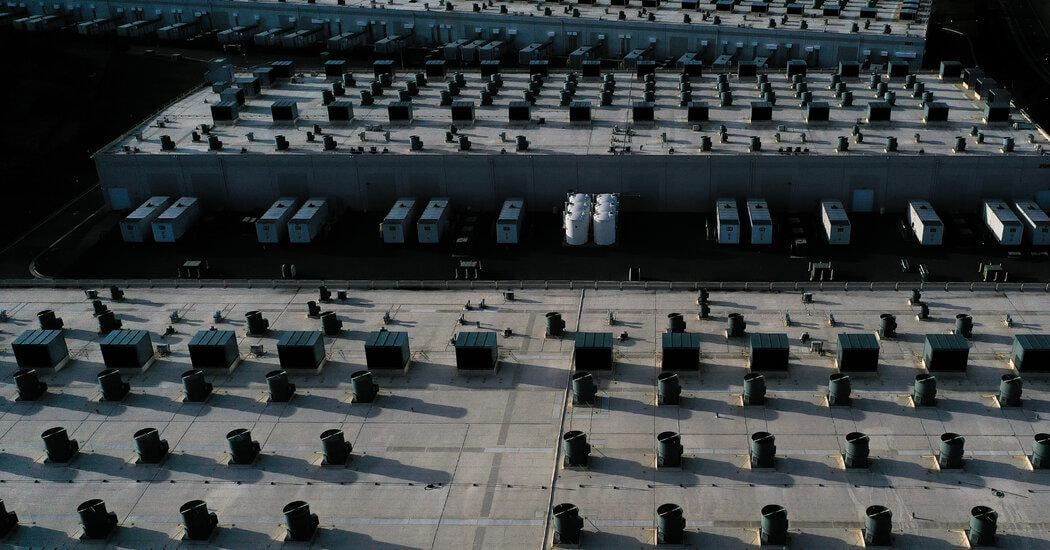
The money poured into the construction of pipelines, data centers and airport terminals, and it helped to grease the wheels of corporate financing for U.S. companies like Tesla, Amazon, Disney and Boeing. By 2017, some of this financing started to raise alarms in Washington.
In all, Chinese state-owned firms have provided $2.2 trillion in loans and grants around the world since 2000, a figure two to four times larger than previously thought, according to Brad Parks, the lead author of a report that AidData released on Tuesday, which draws on information from more than 30,000 projects in over 100 countries.
Covering the period from 2000 to 2023, the study provides a fuller picture of China’s role as an international creditor. It outlines how Beijing has used its financial resources to position itself in strategic sectors and establish potential supply chain chokeholds. It touches on deals that continue to raise concerns in the West, like the acquisition of Nexperia, a company recently thrust into the middle of a geopolitical battle for control of semiconductor supply chains.
Most of China’s financing in the developing world has been loans to governments for big projects, but that has increasingly shifted to emergency lending as the borrowing countries have fallen deep into debt. In the developed world, Beijing’s focus has been more commercial. The AidData figures do not include China’s $730 billion holdings of U.S. Treasury securities.
Since 2000, China has become a financial powerhouse, with deep-pocketed, state-owned financial institutions and policy banks that have a mandate to fulfill Beijing’s political ambitions. Its overseas lending accelerated after 2013 under its top leader, Xi Jinping, who used China’s coffers to shell out more than $1 trillion in loans for infrastructure projects in developing countries through its Belt and Road Initiative.
That sprawling program gave Beijing leverage in parts of the world that had been overlooked by Western powers. The program has been criticized for creating unaffordable levels of debt and for directing contracts to China’s own companies, which, at times, has resulted in problematic projects.
More recently, China has scaled back its lending to poorer countries, while extending more credit to wealthier ones like Australia and the United Kingdom. It now lends just as much to high-income countries as to the developing world — $1 trillion, according to AidData.
Posted by John3262005