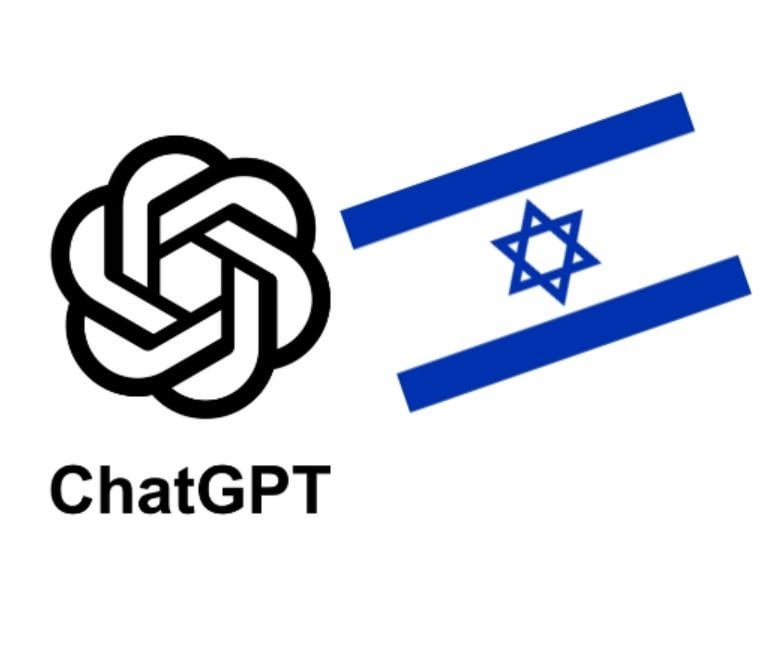
if you mirror gpt’s logo and overlay it, you’ll get star of Remphan
Jay__LeCaprio on
Fuck chatGPT
Jupiters_phaerie on
I can look at anything and will see the Star of David.
Netflix logo? Star of David.
Hulu? Star of David.
Coke? Star of David.
Whirlpool? Star of David.
McDonald’s? Star of David.
I’m totally fine though I promise.
Nick6468 on
The Star of David is not a star. It’s a 2D implication of a 3D Cube with spikes on each side. This represents them worshipping the 3D realm and the spikes represent them doing everything to protect it. It’s also two inverse triangles overlapping each other which mean sex. The normal triangle representing the man. The upsideown triangle representing the female. You’ll see it if you look. How does one go into this realm? Sex. The ChatGBT logo is also a cube, but a vortex around it which represents us taking the vortex down into the 3D realm.
ResidentMind8307 on
Reminds me of this article I found that humorously argues how many modern AI company logos share a “circular sphincter” aesthetic: soft circular forms, gradients, central voids, and radiating elements that unintentionally resemble anuses. It points to OpenAI’s logo change, other “big AI” brands, and especially Anthropic’s Claude as examples, then notes similar mishaps in older non‑AI logos like Electrolux or the Brazilian Institute of Oriental Studies.
The author explains why this keeps happening: circles suggest wholeness, friendliness, and infinity; designers unconsciously mimic biological forms; companies copy successful visual templates; and “design by committee” pushes toward safe, familiar, logo-by-average shapes. This sameness reflects a deeper tech‑branding fear of standing out, echoing past design waves (3D glossy, skeuomorphism, flat design, neomorphism) and framing today as the “Butthole Era” of circular gradient logos.
To escape the trend, the article suggests sharper angles, creative negative space, avoiding radial symmetry and gradients, and testing designs with diverse (and especially adolescent) audiences to catch unintended anatomical readings. It closes by saying AI companies don’t have to abandon current logos, but the next wave of AI should also innovate visually, using approaches like Slack’s abstract hashtag, Netflix’s letterform “N,” Stripe’s line-based story, or Twitch’s distinctive purple instead of more sphincter‑like circles.

6 Comments
if you mirror gpt’s logo and overlay it, you’ll get star of Remphan
Fuck chatGPT
I can look at anything and will see the Star of David.
Netflix logo? Star of David.
Hulu? Star of David.
Coke? Star of David.
Whirlpool? Star of David.
McDonald’s? Star of David.
I’m totally fine though I promise.
The Star of David is not a star. It’s a 2D implication of a 3D Cube with spikes on each side. This represents them worshipping the 3D realm and the spikes represent them doing everything to protect it. It’s also two inverse triangles overlapping each other which mean sex. The normal triangle representing the man. The upsideown triangle representing the female. You’ll see it if you look. How does one go into this realm? Sex. The ChatGBT logo is also a cube, but a vortex around it which represents us taking the vortex down into the 3D realm.
Reminds me of this article I found that humorously argues how many modern AI company logos share a “circular sphincter” aesthetic: soft circular forms, gradients, central voids, and radiating elements that unintentionally resemble anuses. It points to OpenAI’s logo change, other “big AI” brands, and especially Anthropic’s Claude as examples, then notes similar mishaps in older non‑AI logos like Electrolux or the Brazilian Institute of Oriental Studies.
The author explains why this keeps happening: circles suggest wholeness, friendliness, and infinity; designers unconsciously mimic biological forms; companies copy successful visual templates; and “design by committee” pushes toward safe, familiar, logo-by-average shapes. This sameness reflects a deeper tech‑branding fear of standing out, echoing past design waves (3D glossy, skeuomorphism, flat design, neomorphism) and framing today as the “Butthole Era” of circular gradient logos.
To escape the trend, the article suggests sharper angles, creative negative space, avoiding radial symmetry and gradients, and testing designs with diverse (and especially adolescent) audiences to catch unintended anatomical readings. It closes by saying AI companies don’t have to abandon current logos, but the next wave of AI should also innovate visually, using approaches like Slack’s abstract hashtag, Netflix’s letterform “N,” Stripe’s line-based story, or Twitch’s distinctive purple instead of more sphincter‑like circles.
Source: Why do AI company logos look like buttholes?[https://velvetshark.com/ai-company-logos-that-look-like-buttholes](https://velvetshark.com/ai-company-logos-that-look-like-buttholes)
Symbolizes who owns it.