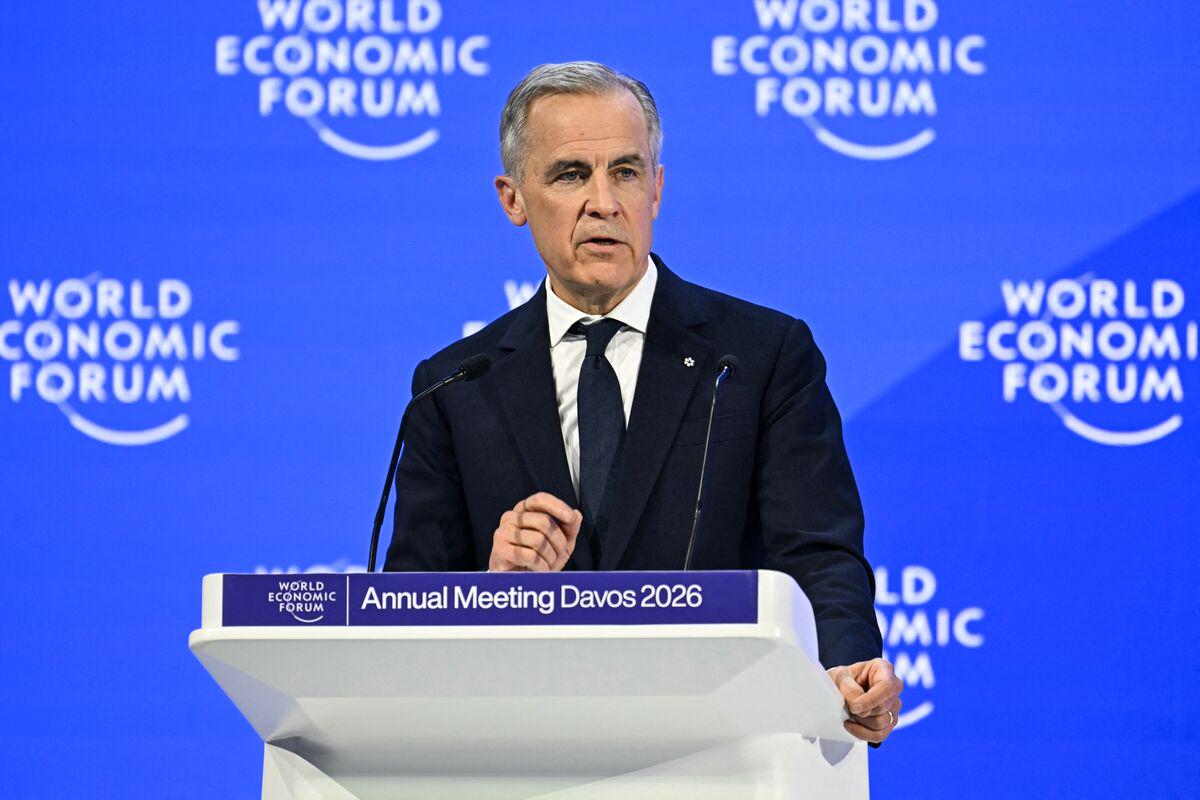
Mark Carney argued at Davos that middle powers could unite to defend the liberal order against America and China. Yet many such states, including Saudi Arabia, the UAE and Singapore, are illiberal and favour state-led capitalism. They prize elite-driven efficiency over democratic pluralism and see their model as superior to Western liberalism. These countries act as pragmatic swing states, not natural custodians of global liberal norms. Rather than saving liberalism, rising middle powers may pose one of its greatest long-term challenges.
catonakeyboard on
To call this a “hole” in Carney’s speech is to ignore his core idea of “variable geometry”. His speech explicitly assumes middle powers have diverging interests and values. It lays out a vision for calibrated, pragmatic engagement with the world “as it is”.

2 Comments
Mark Carney argued at Davos that middle powers could unite to defend the liberal order against America and China. Yet many such states, including Saudi Arabia, the UAE and Singapore, are illiberal and favour state-led capitalism. They prize elite-driven efficiency over democratic pluralism and see their model as superior to Western liberalism. These countries act as pragmatic swing states, not natural custodians of global liberal norms. Rather than saving liberalism, rising middle powers may pose one of its greatest long-term challenges.
To call this a “hole” in Carney’s speech is to ignore his core idea of “variable geometry”. His speech explicitly assumes middle powers have diverging interests and values. It lays out a vision for calibrated, pragmatic engagement with the world “as it is”.