
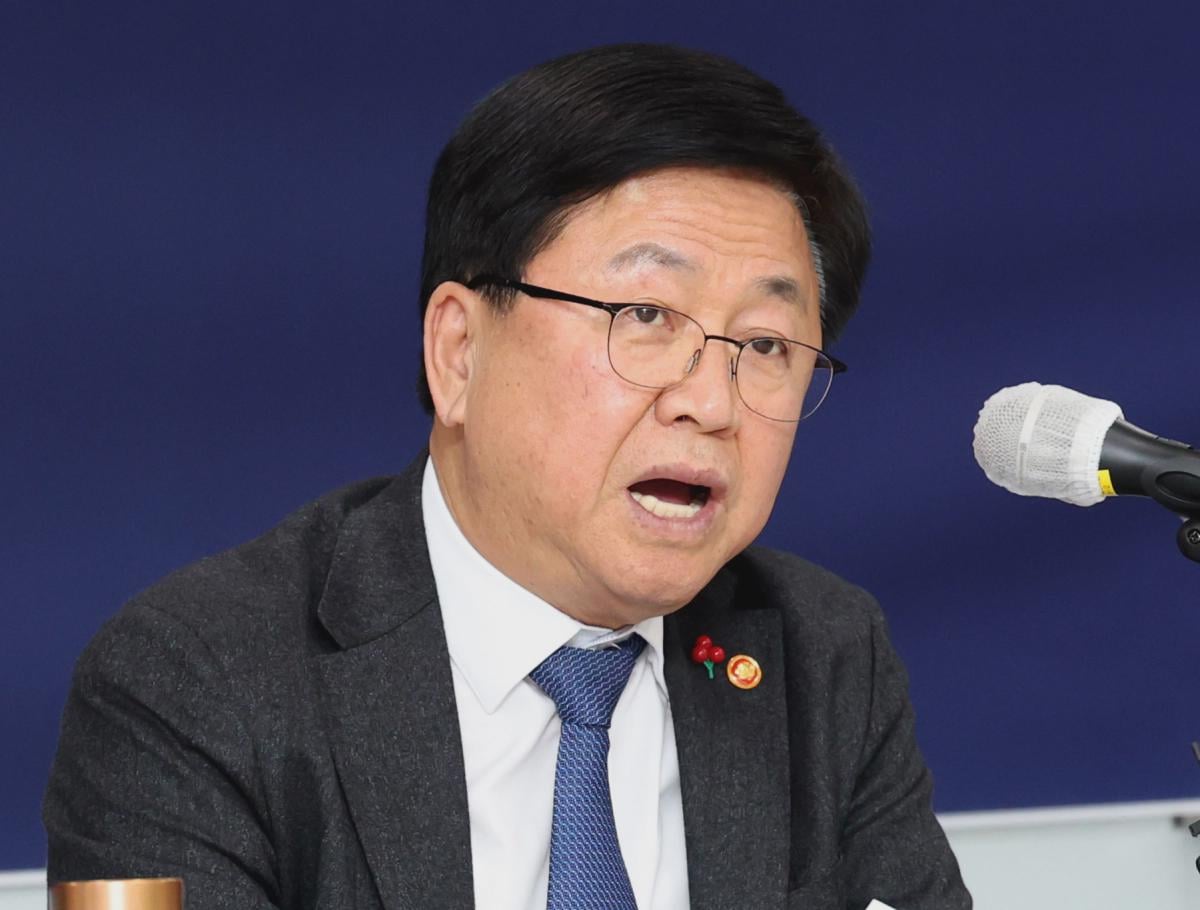
The Ministry of Education is accelerating the implementation of “democratic civic education,” a key national policy initiative of the government, by working with other government agencies to strengthen constitutional education, election education, and related programs.
On the 30th, the Ministry of Education signed a memorandum of understanding (MOU) to strengthen constitutional education in schools with the Ministry of Justice, the Ministry of Government Legislation, and the Constitutional Court Research Institute at the Government Complex Seoul. This agreement is part of the Democratic Civic Education Promotion Plan, and the Ministry of Education has been cooperating with the Ministry of Justice and other bodies since the second half of last year in preparation for this initiative.
Beginning this year, the Ministry plans to systematize constitutional education for students and teachers and to share and expand best practices, with the goal of improving the overall quality of constitutional education. A program that previously supported professional constitutional education instructors only in elementary and middle schools will be expanded this year to include high schools as well.
The Ministry also announced its 2026 Democratic Civic Education Promotion Plan, which includes tailored election education programs for elementary, middle, and high schools in cooperation with the National Election Commission. In light of recent legal changes granting voting rights at age 18 and allowing party membership from age 16, the aim is to ensure that students acquire basic knowledge related to political participation.
Specifically, the Ministry plans to operate a “New Voter Education” program for 12th-grade students and a “Democratic Election Classroom” program for elementary and middle school students, with target participation of 400,000 and 20,000 students, respectively. Ahead of the local elections scheduled for June, schools will be provided with a Q&A guide on political and election-related laws covering student participation in elections and political parties.
Digital media literacy education will also be strengthened. As the spread of misinformation and the resulting intensification of confirmation bias have emerged as major social concerns, the program aims to help students develop discernment and critical thinking skills amid an overload of information.
In addition, “visiting media education” programs conducted in cooperation with the Korea Communications Standards Commission will be introduced. Professional instructors from regional Media Centers will visit schools to provide education on deepfake crime prevention and media ethics. This program will be implemented at 36 schools this year.
“Democratic civic education” is one of the core policy agendas of the Lee Jae-myung administration. In November last year, the Ministry of Education established a dedicated democratic civic education team and has since been developing measures to strengthen constitutional and election education. Going forward, the Ministry plans to analyze the content and current status of democratic civic education and consider flexible curriculum revisions, including the creation of new elective courses if necessary.
The Ministry also plans to pursue the enactment of a School Democratic Civic Education Act after sufficient public consultation and to develop indicators to measure students’ democratic civic competencies.
Posted by Freewhale98
2 Comments
lord i have seen what you have done for others……
1. Summary
Korea is expanding “Democratic Civics Education” to teach their students about media literacy, constitution and elections. This is done to counter the rising tide of extremist contents online. The government is trying to provide students tools they need to be a responsible voter in the age of post-truth.
2. How is this related to sub
(1) Media Literacy Education on voters: Korea is trying to fortify themselves against the rising tide of online extremism by educating their future voters on media literacy & Civics.
3. My opinion
This should be understood in the context of “Cyber-insurrection” doctrine of Korean government. The government believes that there are malicious actors who are contaminating Korean online space with extremist contents to destabilize Korean society. They are failing to pinpoint these “malicious actors”, but pushing reforms to counter these online threats.
They passed Online Disinformation Act modeled on EU’s Digital Service Act to bring accountability to Big Tech companies for mishandling online troll farms and other online disinformation campaigns. The government is also cracking down on online troll farms harshly. The introduction of this new education program is another addition to the fortification against why they call “online invasion” or “online violation of sovereignty”.
These actions have faced great criticism from the US, with Trump administration calling it “violation of free speech” and “unfair trade practice”.
Is this kind of “online fortification” a violation of free speech? Or is it a defense mechanism for democratic institutions in the age of post-truth?
I lean on the latter opinion because I have seen how Korean language instagram is overflowing with extremist AI slop contents clearly made by people who lack understanding of Korean culture.