
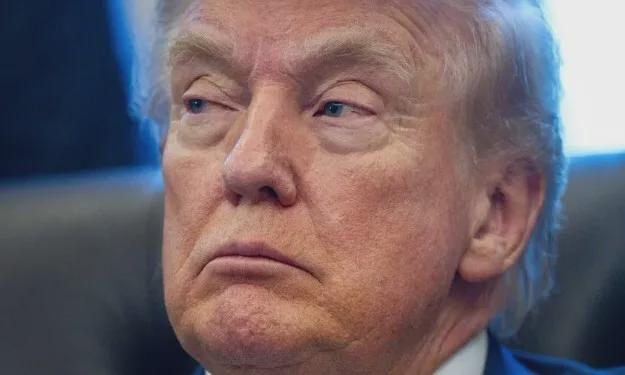
It was confirmed on the 4th that the United States government—pressuring South Korea by threatening to reimpose higher reciprocal tariffs over delays in Korean investment in the U.S.—recently proposed an energy-sector project as what it termed the “No. 1 Korean investment in the United States” during negotiations with the South Korean government.
As Washington’s pressure to raise tariffs intensifies, Seoul is focusing its negotiations on delaying the timing of any tariff increase. Meanwhile, the National Assembly has decided to form a special committee composed of members from three relevant standing committees to expedite the passage of a special law on U.S.-bound investment.
According to reporting by Hankyoreh on the 4th, after U.S. President Donald Trump announced on January 26 that reciprocal tariffs on South Korea would be raised from 15% to 25%, the United States proposed a specific energy-sector project as South Korea’s “first investment project in the U.S.”
The proposal was conveyed to the South Korean side prior to Industry and Trade Minister Kim Jeong-kwan’s visit to the United States on January 28, and was discussed in detail during meetings between Minister Kim and U.S. Commerce Secretary Howard Lutnick in Washington on January 29–30.
During those talks, Minister Kim reportedly responded by proposing that South Korea could also undertake nuclear power plant construction, in addition to the project suggested by the U.S. This appears to have been a strategy to expand the scope of negotiations and create additional room for compromise in response to Washington’s energy investment proposal.
The energy-sector project proposed by the United States is said to be one that has never been reported in South Korean media, and is reportedly a project that a Korean company had previously reviewed as a potential U.S. investment but ultimately abandoned due to concerns such as insufficient commercial viability. A senior presidential office official said, “This is not the Alaska development project, LNG, or nuclear power projects that have been discussed previously.”
At the same time, the South Korean government continues efforts to delay the implementation date of the reciprocal tariff hike announced by President Trump. Another presidential office official told Hankyoreh by phone that “the wording related to the tariff increase to be published in the U.S. Federal Register is already very close to reaching President Trump’s desk.”
When Minister Kim and Foreign Minister Cho Hyun separately met with Secretary Lutnick and U.S. Secretary of State Marco Rubio, respectively, they reportedly focused on persuading U.S. officials by emphasizing that “we are committed to swiftly passing the special law on U.S.-bound investment, and an immediate tariff hike would only make matters more difficult for us.”
The South Korean government has requested that the United States either delay publication of the tariff increase in the Federal Register or include language stating that the higher tariffs would be applied after a certain period, rather than immediately. As of now, however, the U.S. side has not responded.
Analysts say the tariff negotiations have stalled in part because different U.S. officials are prioritizing different issues. Secretary Lutnick is focused on investment, U.S. Trade Representative Jamieson Greer on digital regulations, and Secretary Rubio on critical minerals, making it difficult to establish a unified negotiating framework.
As U.S. tariff pressure has intensified, leaders of South Korea’s ruling and opposition parties held a meeting of their floor leaders on the same day and agreed to form a special parliamentary committee to review the investment bill and complete its passage within one month.
The prolonged tariff negotiations are also spilling over into security-related issues. A U.S. negotiation team expected to visit South Korea before the Lunar New Year holiday to discuss security matters such as nuclear-powered submarines has yet to finalize plans, with the visit now uncertain. A presidential office official said, “We are coordinating schedules, but the situation is not easy.” Another government official added, “With tariff negotiations stalled, it would be awkward for U.S. officials to travel to Korea solely for security talks.”
Posted by Freewhale98
1 Comment
1. Summary
The final negotiation to salvage US-ROK tariffs deal made last year collapsed with the unreasonable demand from the US. The US demanded Korea to invest in a mysterious energy project that was never reported in Korea. This energy project was considered not profitable and no better than the theft of hard currency unworthy of investment by Korean business community. But, it seems Trump administration wants cash investment to this project from Korean companies.
Korean government made an offer of new nuclear power plants to the US claiming that this will more energy-efficient for the US but Trump administration refused. It seems every official in Trump administration have their own different unreasonable demands, making any type of negotiations impossible.
Trade envoy returned to Korea empty-handed, ruling DPK refuses to ratify the deal despite heavy pressure from PPP to give the ratification on the deal. To counter tariff pressure, DPK is pushing for “Special Act on US investment”, a symbolic piece of legislation that would appease Trump but have no teeth to enforce investment.
2. How is this related to the sub
(1) Tariff War & Trade Coercion for hard cash: Trump administration wants cash investment in exchange for tariff relief.
3. My opinion
Why is Trump administration so obsessed with cash investment instead of really tangible results? I mean nuclear power plants would be better for American energy grid.