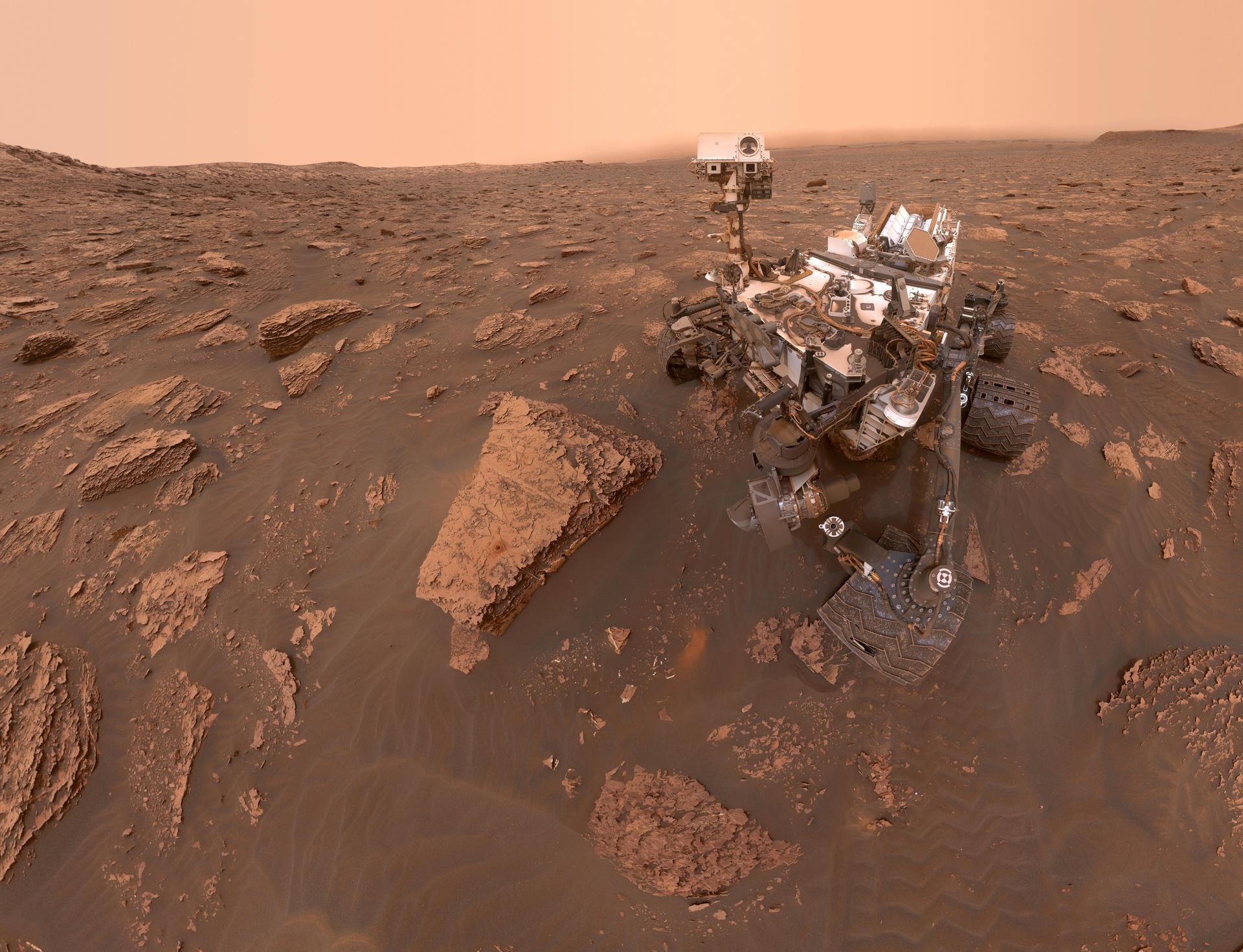
A recent study from NASA has posited that a number of sampled rocks contain a group of minerals – decane, undecane and dodecane – that could be created through fatty acids, and that natural, non-biological processes for their construction don’t fully explain how they emerged in the journal *Astrobiology*. This is very preliminary as a study, and I don’t really have a firm enough grasp on this kind of research to make much of a statement, but the fact that NASA itself is reporting something on this level is a significant sign, in my view. This isn’t the normal fare to post here, I realise, but the prospect of alien life being discovered, even in the unicellular form that would likely inhabit Mars, is significant by itself on its own terms. Beyond that, limits to research could definitely complicate factors, worsened by budget cuts to NASA implemented since Trump came to office, which both highlights the damage that cuts to R&D can do and opens up the field for other space programmes (CNSA, ESA) to potentially make the discovery itself.

2 Comments
A recent study from NASA has posited that a number of sampled rocks contain a group of minerals – decane, undecane and dodecane – that could be created through fatty acids, and that natural, non-biological processes for their construction don’t fully explain how they emerged in the journal *Astrobiology*. This is very preliminary as a study, and I don’t really have a firm enough grasp on this kind of research to make much of a statement, but the fact that NASA itself is reporting something on this level is a significant sign, in my view. This isn’t the normal fare to post here, I realise, but the prospect of alien life being discovered, even in the unicellular form that would likely inhabit Mars, is significant by itself on its own terms. Beyond that, limits to research could definitely complicate factors, worsened by budget cuts to NASA implemented since Trump came to office, which both highlights the damage that cuts to R&D can do and opens up the field for other space programmes (CNSA, ESA) to potentially make the discovery itself.
No, we will not continue mars sample return.