
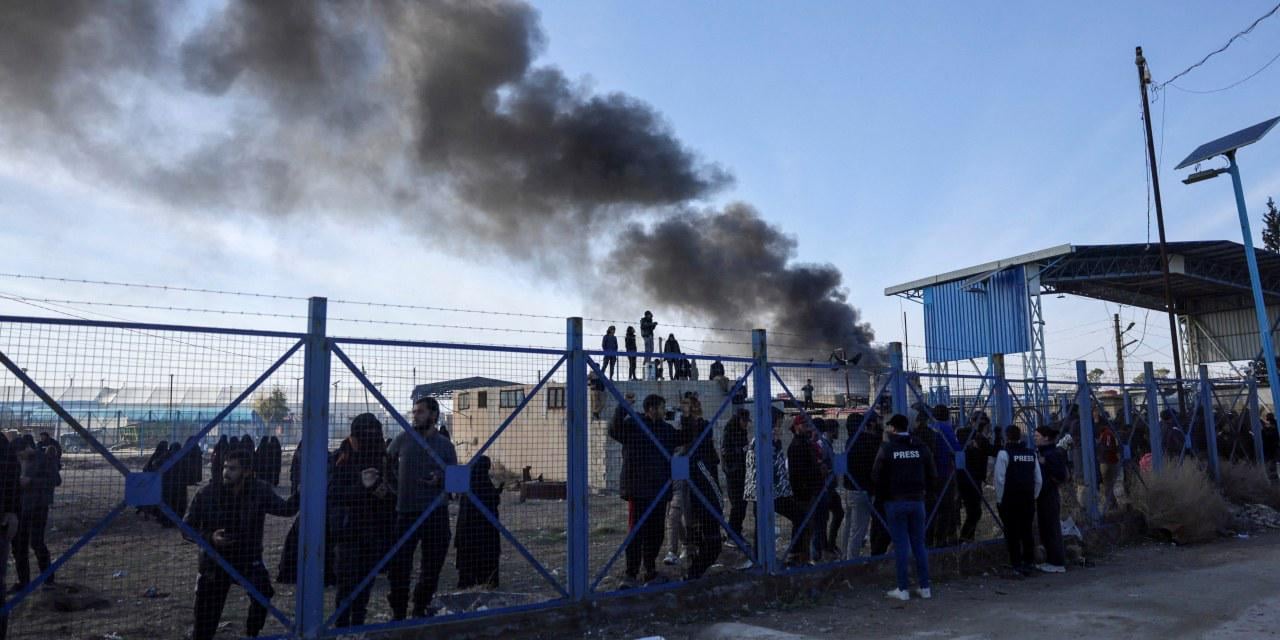
U.S. intelligence agencies have concluded that 15,000 to 20,000 people, including Islamic State affiliates are now at large in Syria, after an exodus from a camp that held jihadists’ families, U.S. officials familiar with the estimate said.
Security experts have long warned that the wives of Islamic State fighters were effectively raising the next generation of militants at the sprawling Al-Hol facility. Security at the camp fell apart in recent weeks after Syria’s government routed the U.S.-backed Syrian Democratic Forces, which had guarded Al-Hol for years, raising concerns about the release of people who might have become radicalized during the years held behind the razor wire.
The size of a small city, the camp in Syria’s eastern desert at one point held more than 70,000 people after U.S.-backed forces destroyed what remained of Islamic State’s self-proclaimed caliphate in Syria in 2019. At the end of 2025, more than 23,000 people were there, according to a report this week from the Pentagon’s Inspector General.
The vast majority have left Al-Hol after the Syrian government took control last month. Western diplomats in Damascus assessed that more than 20,000 people fled the camp in a matter of days earlier amid rioting and a surge of escape attempts.
A diplomat following the situation said only 300 to 400 families remained at the beginning of the week.
The U.S. assessment attributed the escapes to mismanagement by Syria’s government and a lack of assiduous custody of the camp’s large security perimeter, the U.S. officials said.
The Syrian government, led by a former jihadist, President Ahmed al-Sharaa, has acknowledged that many people left the camp for other parts of the country and says it plans to monitor any extremists and reintegrate them into society. It blamed the chaos on SDF troops, who it says abandoned the camp during the January offensive, leaving the facility unguarded for hours and making it hard to reimpose security.
The government said this week it was moving the last remaining families from the camp in Syria’s remote borderlands with Iraq to another displacement camp in northwestern Syria, where the state has stronger infrastructure.
Sharaa ignored U.S. warnings not to proceed with his offensive, a lightning takeover that brought about the end of a Kurdish-controlled autonomous zone that posed a challenge to his efforts to consolidate control over the country.
The Pentagon’s intelligence arm found that Sharaa’s government has demonstrated the willingness to work with the U.S. to fight terrorist groups but that the Damascus’s efforts are “limited by a lack of trained, qualified personnel, and the nascent state of security institutions,” according to a report published on Feb. 19 by the Department of Defense Inspector General.
Posted by John3262005