
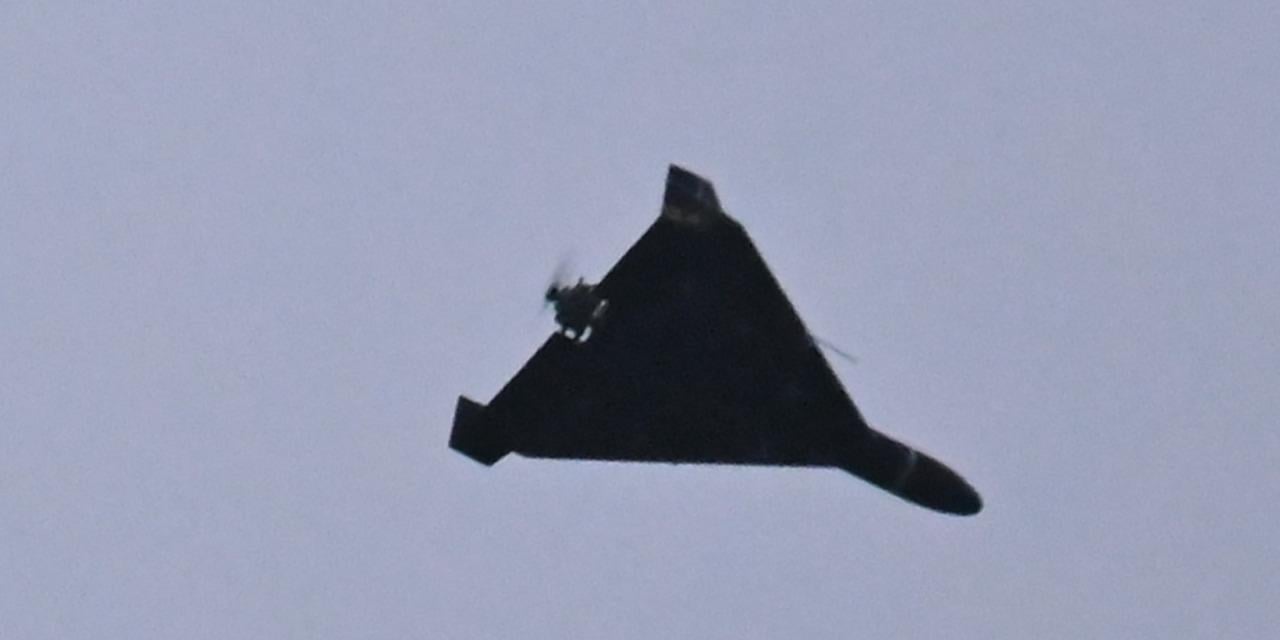
Russia has been expanding its intelligence sharing and military cooperation with Iran, providing satellite imagery and improved drone technology to aid Tehran’s targeting of U.S. forces in the region, people familiar with the matter said.
Russia is trying to keep its closest Middle Eastern partner in the fight against U.S. and Israeli military might and prolong a war that is benefiting Russia militarily and economically.
The technology provided includes components of modified Shahed drones, which are meant to improve communication, navigation and targeting, the people said. Russia has also been drawing on its experience using drones in Ukraine, offering tactical guidance on how many drones should be used in operations and what altitudes they should strike from, said the people, who included a senior European intelligence officer.
Russia has been providing Iran with the locations of U.S. military forces in the Middle East as well as those of its regional allies, The Wall Street Journal has reported. That cooperation has deepened in early days of the war, with Russia recently providing satellite imagery directly to Iran, said two of the people, the officer and a Middle Eastern diplomat.
The assistance is similar to intelligence the U.S. and European allies have given to Ukraine in recent years, analysts say. In the Gulf, Moscow’s aid is believed to have helped Iran with recent strikes on U.S. radar systems in the region, said the people. Those strikes have included an early warning radar for a Terminal High Altitude Area Defense, or Thaad, system in Jordan, as well as other targets in Bahrain, Kuwait and Oman.
Satellite images can provide more granularity about the details and movements of both land-based and sea-based targets, to help targeting before the strike as well as damage assessment following a hit.
“If there are details in those images that the Russians are providing, say, of specific types of aircraft, munitions sites, air defense assets, and naval movements, that have intel value to the Iranians, that would really help them,” said Jim Lamson, a visiting research fellow at King’s College London and former CIA analyst who specialized in the Iranian military.
The data Russia is providing comes from a fleet of satellites that provides intelligence for military operations, one official said. The fleet is managed by the Russian Aerospace Forces, better known under its Russian acronym VKS.
Iran has had greater success targeting U.S. and Gulf state military assets in this war than it did during last year’s 12-day war. The country’s strikes—using drones to overwhelm radar before a missile strike—look very similar to Russia’s tactics in Ukraine, military analysts said.
“Iranian targeting in the Gulf has been more focused on radar and command and control,” said Nicole Grajewski, a professor at Sciences Po, a research university in Paris. “Iran’s strike packages have come to strongly resemble what Russia does.”
U.S. special envoy Steve Witkoff, who has led U.S. negotiations with Moscow, said Russia denied they were giving Iran intelligence to aid in their strikes. President Trump has said he believes Moscow might be aiding Iran “a bit.”
Russia and Iran don’t have a formal military alliance, but Tehran is Moscow’s closest partner in the Middle East. Russia is one of Iran’s top military suppliers. The relationship has had its ups and downs since the fall of the Soviet Union, but it has deepened greatly since Russia launched its invasion of Ukraine.
The two have formed commissions and working groups to share military and defense learning. Military delegations regularly visited one another while their soldiers trained together. Russia even built and launched one of Iran’s most recent satellite systems.
But most important, Iran supplied Moscow with its Shahed drones for its war against Ukraine.
When Russia started using the Shaheds on the battlefield, a delegation of several dozen Iranian officers gathered in Crimea to watch footage of the effects on Ukrainian cities and front-line positions. Ukraine says that Russia has used more than 57,000 Shahed-type drones since the start of the war.
Since then, Moscow has started producing them domestically, and it has been adapting them to navigate and target more precisely as well as withstand electronic warfare jamming. It is sharing some of those innovations back with Iran now.
The aid Russia can give to Iran has been limited not only by its own ongoing conflict in Ukraine, but also the Kremlin’s reluctance to anger Trump. While Moscow could do much more to turn the dial up on its assistance, its current aid plays an important, albeit limited, role in helping Iran’s war effort, said Lamson.
“The categories of assistance—including satellite data and advice on drone tactics—that Russia is providing are limited but still valuable to the war and Iran’s ability to hit specific military sites,” he said.
The war has played to Russia’s advantage in some ways, drawing down U.S. supplies of the interceptors that Ukraine needs for its air defenses. The closure of the Strait of Hormuz, where a fifth of the world’s oil and liquefied natural gas transits, has boosted the price of oil, the lifeblood of the Russian economy. The Trump administration has eased restrictions on purchases of Russian oil to bring down prices.
The war also carries downsides for Russia, especially if the regime in Iran is toppled, but Moscow still sees a chance to help a partner and strike out at the U.S. Despite Putin’s relationship with Trump, the Kremlin still sees Washington as a strategic adversary, said Samuel Charap, distinguished chair in Russia and Eurasia policy at Rand, a U.S.-based defense think tank.
“It’s an opportunity to give us a taste of our own medicine in terms of what the U.S. provides to Ukraine in intelligence support,” he said.
Posted by John3262005