
Almost all of these were already pressing issues prior to the Iran war, but off the top of my head:
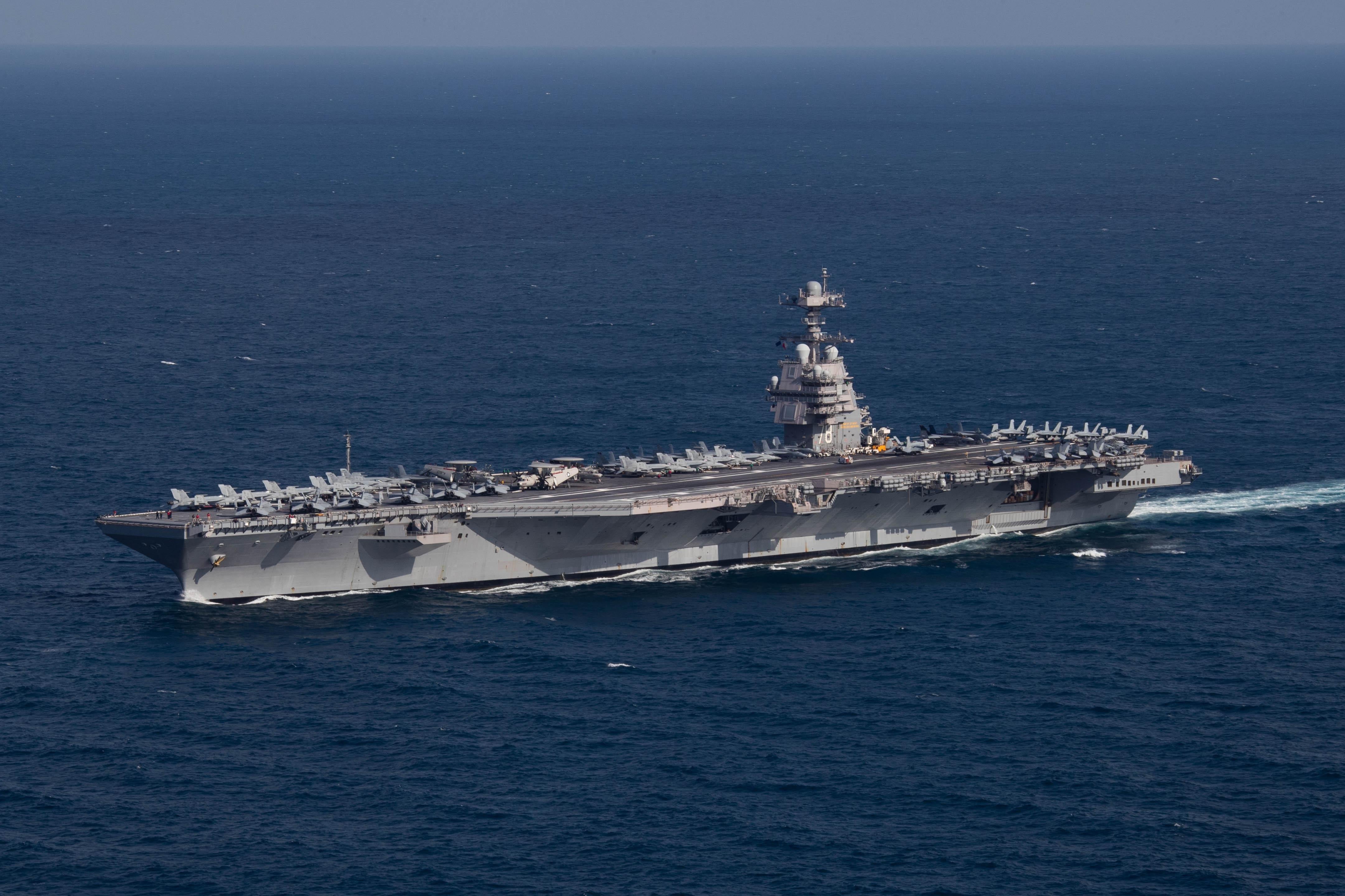
- Naval shipbuilding crisis: We simply cannot build and procure ships fast enough at all levels. Our domestic shipbuilding (both military and commercial) has atrophied and we lack the necessary labor force. The last 15 years have witnessed the boondoggles of both the Littoral Combat Ship and Zumwalt-class destroyer projects. At an ever higher degree of difficulty is building aircraft carriers. The USS Gerald R. Ford is being run ragged through endless deployments. In the near future, over half of the Nimitz class will be over or pushing 50 years old. There is little confidence that the next ships in the Ford class can be delivered on time and on budget. So little confidence, in fact, that just this week the Navy announced that the 54-year-old USS Nimitz will be kept in service to artificially meet the congressional mandate of 11 active carriers.
- Cheap drones and cheap anti-drone defense: If the Ukraine and Iran wars have taught nothing else, it's that we one-way drones and FPV drones, as well as drone defenses. And we need to ramp up production of both types of vehicles at scale and on the cheap. The LUCAS drone is a start, but there's lots of catching up to do.
- Modernization of the nuclear triad: The aging Ohio-class SSBMs need newer replacements. The B-52 is 70 years old, and the newest B-2 is over 25 years old. (The B-21 thankfully has plans to ramp up production.) Our ICBMs and missile-defense systems are similarly aging, and certainty of their effectiveness is murky at best. Nuclear modernization is underway, but will not be quick.
- Next generation fighters: The F-22 and F-35 remain highly capable aircraft (despite lots of teething problems on the F-35), but it won't be until the 2030s until the F-47 could be put into service, which means we'll likely go another 5-10 years without an operable sixth-generation fighter.
- Missiles and missile defense: Ditto on most of the above. Expensive, high tech systems that take forever to build, are highly vulnerable to supply chain disruptions, and are easily exhaustible.
- Thinking hard about the future of the Marine Corps.: The controversial Force Design 2030 is ongoing as the USMC tries to pivot away from its identity during GWOT, but we need to think long and hard about what a 21st century USMC would look like and what's its mission would be.
- Space: This is self-explanatory, but we need to leverage the Space Force as a laboratory of technology and innovation. Defense and intelligence are one thing (and important), but we need to look at our engagement with space (either through the Space Force in its current form or some future iteration) as a way to develop more resilient engineering materials, improve our propulsion technology, interface with the solar energy industry to improve power generation here on Earth. While the current Space Force seems focused on the defense sphere, there are practical applications aplenty.
All of this takes time and money, so I understand that it's a hard political sell. But is there a way that we can raise these issues to the public – not in a swaggering, neoconservative manner – but in a sober, clearheaded way that gets people bought into these challenges.
And look at our NATO partners. Countries that have far more credible claims to be social democracies than the U.S. maintain strong domestic defense supply chains (especially France and Germany) and are taking Arctic, Atlantic, and Baltic security seriously.
Posted by JulianBrandt19
8 Comments
This sounds like a campaign promise that would be catnip for the rNL FoPo sickos, but poison for the median voter. There go those warmongering Democrats again!
Nope. This should be done after winning the election. Trump campaigned on anti war and now look at him. Trump is doing so many self owns it would be embarrassing for the Democrats to fuck up.
>This is self-explanatory, but we need to leverage the Space Force as a laboratory of technology and innovation.
As someone who works in this area, why does the Space Force need to be the laboratory in this area? There are multiple private companies in this space, all of whom are doing things far more efficiently than the government and the traditional ‘prime’ contractors.
They are already beginning to lean on the private space industry, and I see no reason reverse this trend.
I also don’t see the utility in making these political issues.
https://preview.redd.it/t67ptjm5b7qg1.png?width=1200&format=png&auto=webp&s=407f201af78b46c106ca708de8ed949c2f71afdd
The US must embrace MASGA.
It would perhaps be better repackaged under the “we used to build things in this country”, i.e: frame it as a part of rejuvenation of manufacturing and state capacity rather than solely weapons manufacturing.
uhhh what about L E T H A L I T Y???
This is objectively true. The Democratic Party must become the party of national security, because the party that currently occupies such an image is completely incompetent.
̶H̶a̶r̶r̶i̶s̶-̶C̶h̶e̶n̶e̶y̶ ̶2̶0̶2̶8̶
The B-52 is fine for the job it does, which is “bomb the shit out of targets that can’t shoot back”. That’s a more-or-less solved technical problem.
There’s no need to replace it just like there’s like no need to replace the Browning .50