
Before I say anything else, first, just in case:
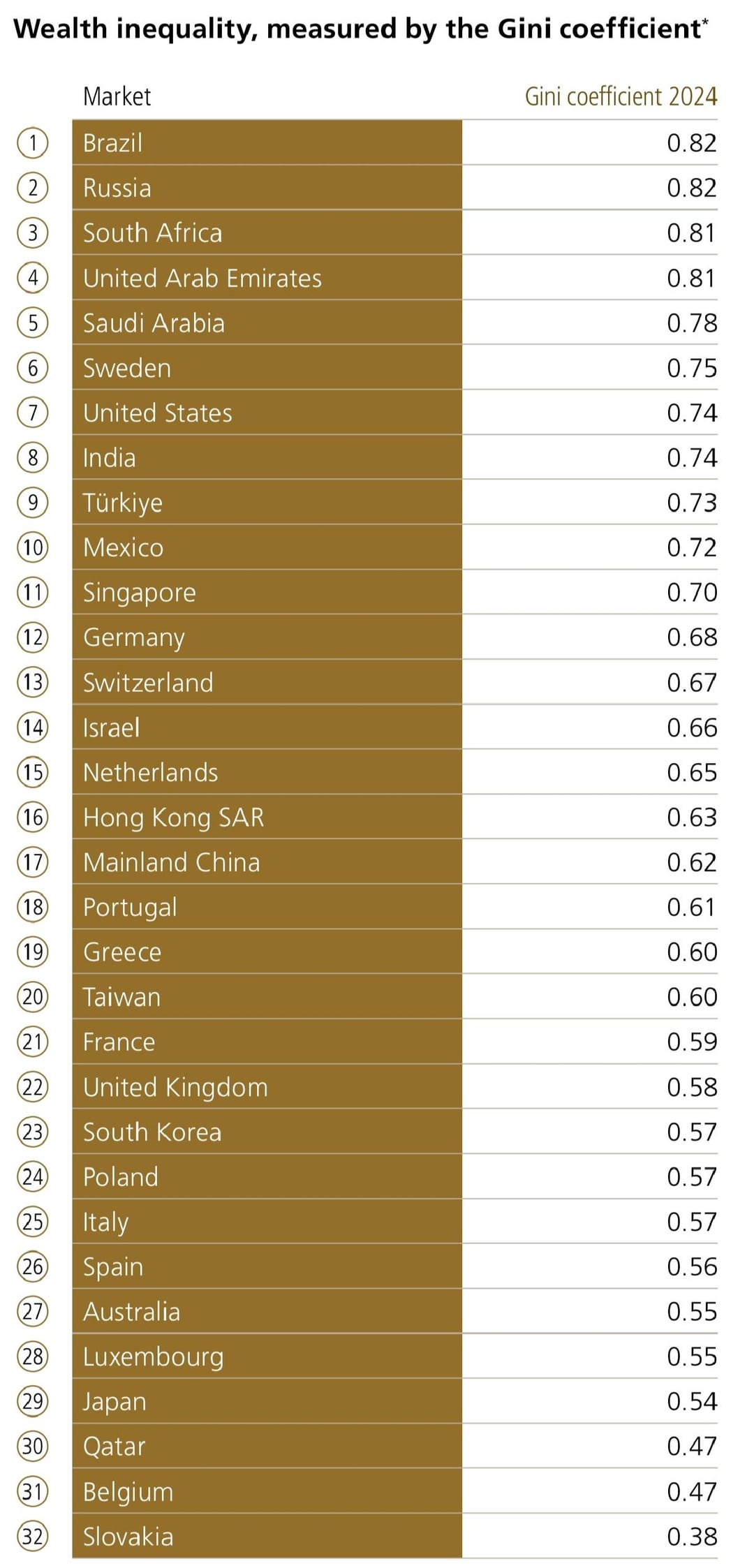
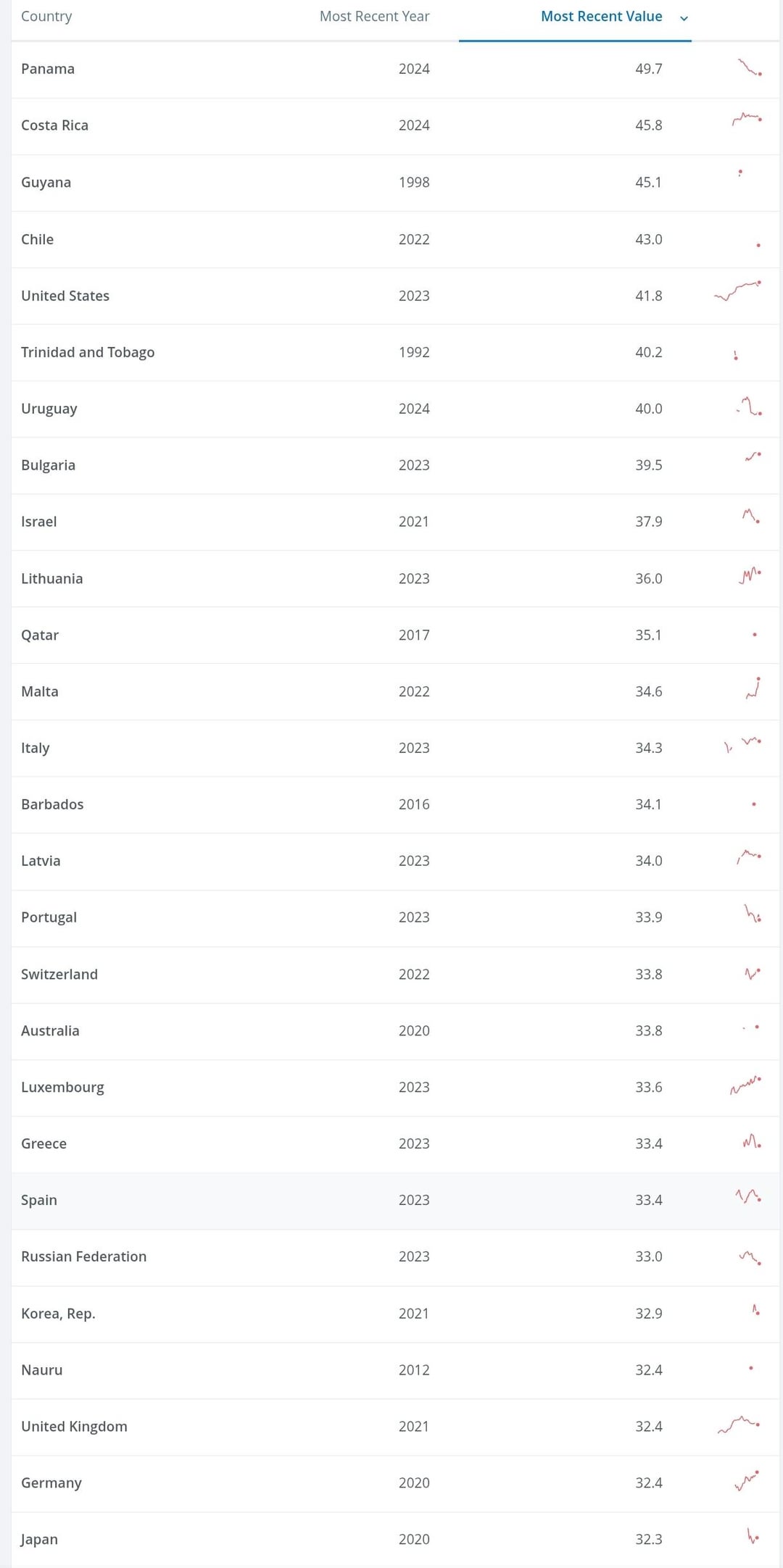
Beware, you should not mistake the Gini coefficient indicator published in this report with the World Bank's Gini coefficient indicator:
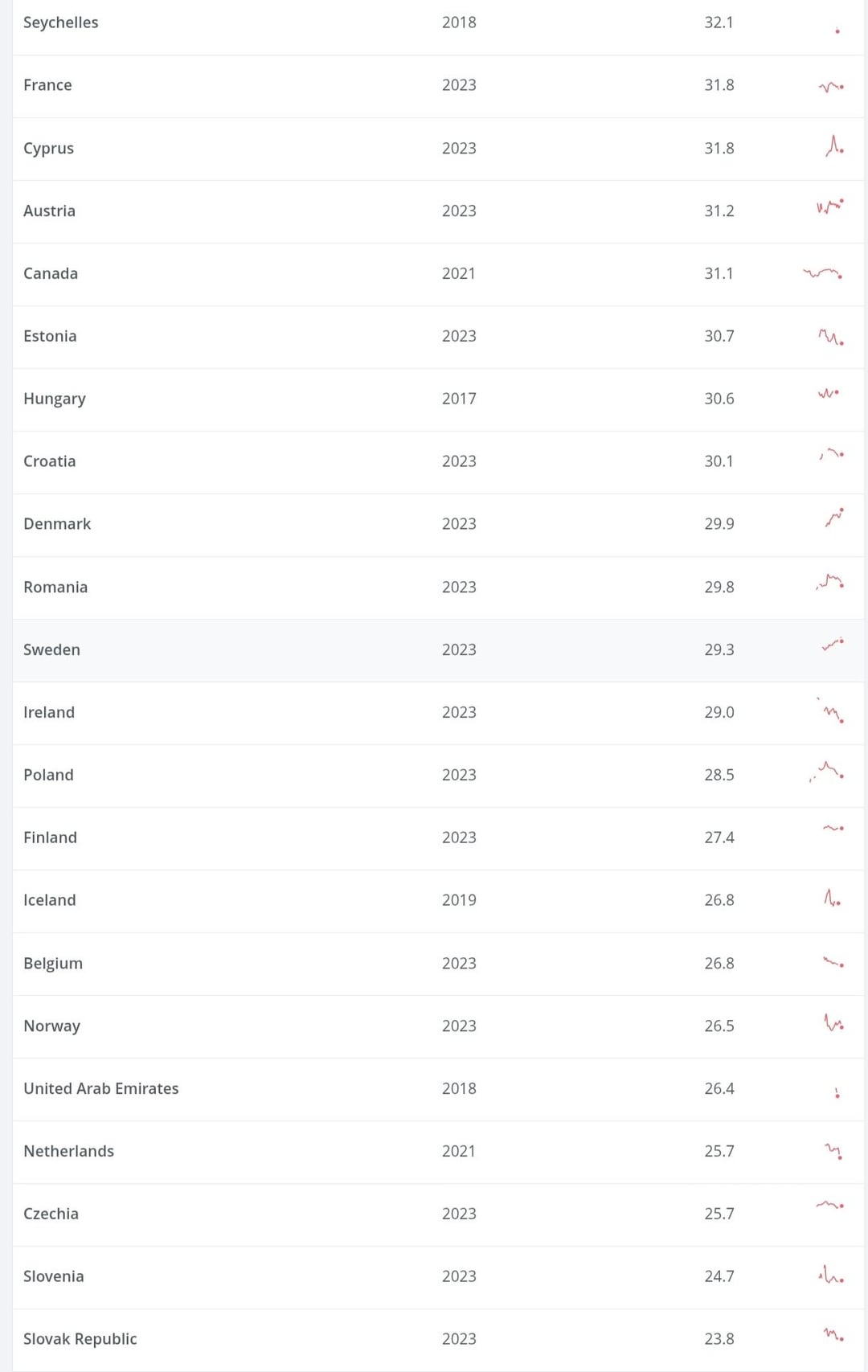
The former measures wealth inequality, with Sweden scoring 0.75 out of 1.00, the 6th largest score after Brazil, Russia, South Aftica, Emirates & Saudi, above the US, India, Turkey, Mexico & Singapore, while the latter measures income inequality, with Sweden scoring 29.3 out of 100.0, the high-income economy with the 12th lowest score after Slovakia, Slovenia, Czechia, the Netherlands, Emirates, Norway, Belgium, Iceland, Finland, Poland & Ireland, you know, what one would expect from Sweden lol you can take a look at these World Bank-high income economies ranking-by-Gini coefficient figures for yourselves in the last two screenshots I've included in this post as well as in the following link, just in case anyone wants to compare with the welfare, not income, Gini coefficient figures of this UBS Global Wealth Report 2025: https://data.worldbank.org/indicator/SI.POV.GINI?locations=XD&most_recent_value_desc=true
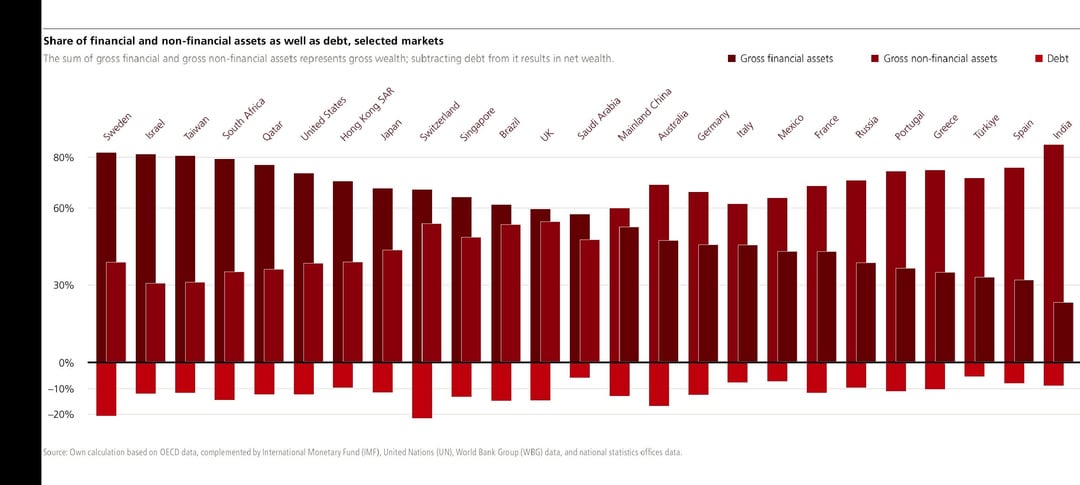
Anyway, now back to wealth: I know next to nothing about how the economy works, but could the fact that Sweden is the country where on average gross financial assets represent the highest share & gross non-financial assets represent the lowest share of gross wealth be a major factor as to why this is?
Funnily enough, my own home country, Spain, sits at the opposite end:
We are after India the second country where on average gross financial assets represent the lowest share & gross non-financial assets represent the highest share of gross wealth.
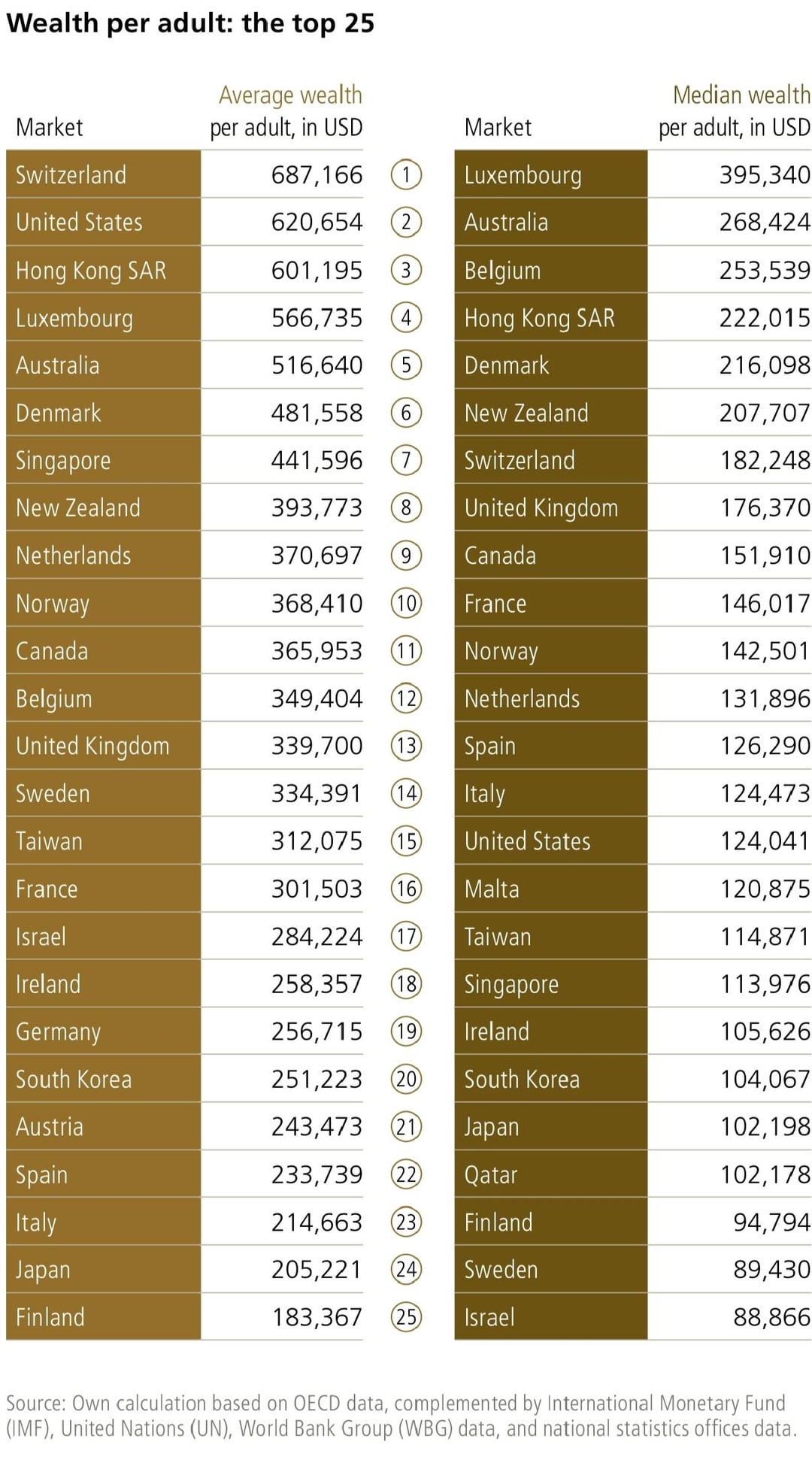
The UBS Global Wealth Report 2025 in full:
Posted by mikelmon99
1 Comment
I think it has something to do with Sweden not experiencing a big war or political upheaval for centuries. Even if you suppress income equality to minimum, if there is a continuous accumulation of wealth through generations, there will high wealth inequality. Also, Sweden has relatively low inheritance tax which maximizes generational accumulation. Korea & Japan which have high inheritance tax being relatively low on wealth inequality support that theory.