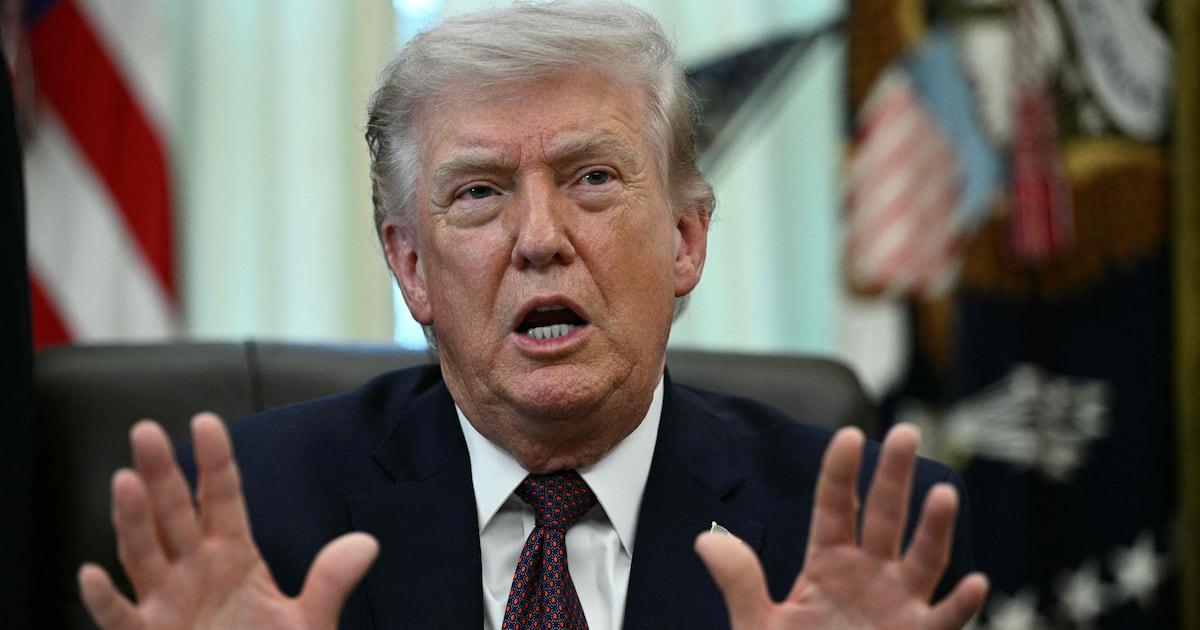
U.S. President Donald Trump said on the 1st that European and Asian countries benefiting from the Strait of Hormuz—effectively blockaded by Iran—should take responsibility for managing it. He also expressed dissatisfaction with South Korea for not responding to his requests, including the dispatch of naval forces.
Speaking at an Easter luncheon held at the White House, Trump argued that the Strait of Hormuz is not America’s responsibility, stating: “We have 45,000 troops stationed in a dangerous area right next to a nuclear power (North Korea), yet (South Korea) has not helped us,” conveying his frustration.
Trump’s remarks are interpreted as criticism that, although the United States stations troops in South Korea, Seoul did not cooperate with requests such as sending warships to the Strait of Hormuz. Since his presidential campaign, he has repeatedly argued, “Why should the U.S. defend a wealthy country like South Korea?”
Countries specifically asked by Trump—including South Korea, Japan, China, and major European nations—have effectively refused requests to dispatch forces to help resume safe navigation.
Currently, about 28,500 U.S. troops are stationed in South Korea, though Trump again cited an inflated figure during his remarks. He went on to say, “Let Japan do it—they get 90% of their oil from the strait,” and added, “Let China do it.”
2. How is this related to the sub
(1) America Alone: Trump is furious that Asian allies are not helping out his war.
Kolhammer85 on
Maybe we could convince him North Korea failed to show up as promised?
TF_dia on
> Currently, approximately 28,500 U.S. troops are stationed in South Korea, but Trump cited inflated figures again on this day. Following these remarks, he said, “Let Japan do it,” “They get 90% of the oil from the strait,” and **”Let China do it.”**
Xi Jinping: Actually, we agree, we *would love* to station 30.000 troops in South Korean soil. You just need to ask.

4 Comments
[Translation]
U.S. President Donald Trump said on the 1st that European and Asian countries benefiting from the Strait of Hormuz—effectively blockaded by Iran—should take responsibility for managing it. He also expressed dissatisfaction with South Korea for not responding to his requests, including the dispatch of naval forces.
Speaking at an Easter luncheon held at the White House, Trump argued that the Strait of Hormuz is not America’s responsibility, stating: “We have 45,000 troops stationed in a dangerous area right next to a nuclear power (North Korea), yet (South Korea) has not helped us,” conveying his frustration.
Trump’s remarks are interpreted as criticism that, although the United States stations troops in South Korea, Seoul did not cooperate with requests such as sending warships to the Strait of Hormuz. Since his presidential campaign, he has repeatedly argued, “Why should the U.S. defend a wealthy country like South Korea?”
Countries specifically asked by Trump—including South Korea, Japan, China, and major European nations—have effectively refused requests to dispatch forces to help resume safe navigation.
Currently, about 28,500 U.S. troops are stationed in South Korea, though Trump again cited an inflated figure during his remarks. He went on to say, “Let Japan do it—they get 90% of their oil from the strait,” and added, “Let China do it.”
2. How is this related to the sub
(1) America Alone: Trump is furious that Asian allies are not helping out his war.
Maybe we could convince him North Korea failed to show up as promised?
> Currently, approximately 28,500 U.S. troops are stationed in South Korea, but Trump cited inflated figures again on this day. Following these remarks, he said, “Let Japan do it,” “They get 90% of the oil from the strait,” and **”Let China do it.”**
Xi Jinping: Actually, we agree, we *would love* to station 30.000 troops in South Korean soil. You just need to ask.
He’s that meme of the pigeon playing chess