
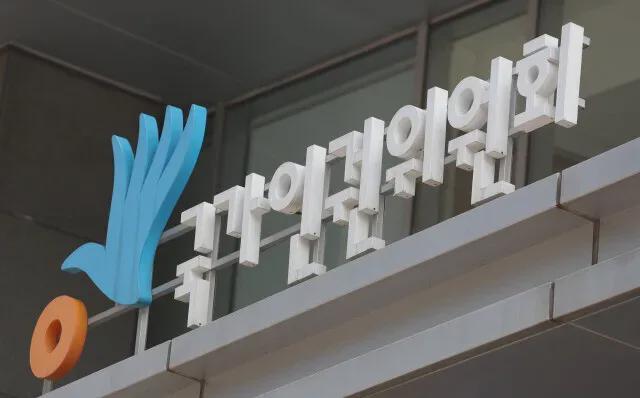
It has been found that sexual minorities in South Korea feel that the attitudes of the two major political parties toward LGBTQ+ individuals have regressed compared to 11 years ago.
According to the “Survey on Discrimination Based on Sexual Orientation and Gender Identity” released on the 3rd by the National Human Rights Commission of Korea, 70.5% of LGBTQ+ respondents said that the Democratic Party of Korea is “unfriendly toward sexual minorities.” Meanwhile, 93.6% responded that the People Power Party is unfriendly toward sexual minorities. The survey, conducted last year and released on this day, included 455 LGBTQ+ youth and 2,495 LGBTQ+ adults.
These results represent a significant deterioration compared to a similar survey conducted 11 years ago. In the 2014 survey, 53.4% of respondents said the Democratic Party (then the New Politics Alliance for Democracy) was unfriendly toward sexual minorities, while 78.3% said the same of the People Power Party (then the Saenuri Party). This indicates that not only the conservative People Power Party, but also the Democratic Party—generally considered more receptive to LGBTQ+ issues—has seen a marked regression in perception.
Negative perceptions of the two major parties have also affected overall expectations toward politicians and political institutions. Only 30% (883 respondents) of LGBTQ+ individuals said they expect political attitudes toward sexual minorities to improve over the next five years—a lower figure compared to expectations for other sectors such as law and policy, media, and everyday social attitudes. Meanwhile, 637 respondents said they expect conditions to worsen, making it the second-highest area of pessimism after media and popular culture (674 respondents).
This stands in contrast to broader societal trends, where perceptions of LGBTQ+ individuals are gradually improving. In this survey, the proportion of respondents who experienced discrimination based on sexual orientation fell slightly to 20.3% from 22.6% in the past, while those who experienced discrimination based on gender identity dropped significantly to 35.6%, roughly half of the previous 65.3%.
Hostility toward sexual minorities has also decreased across other sectors compared to 11 years ago. Negative perceptions have improved among progressive parties, civil society organizations, labor unions, academia, and the medical field. For example, hostility in labor unions dropped from 52.5% to 13.8%, and in academia from 64.2% to 39%.
Posted by Freewhale98
1 Comment
1. Summary
LGBTQ Koreans believe that major political parties are hostile to them.
2. How is this related to the sub
(1) LGBTQ rights: Korea remains a hostile place for “sexual minorities”.
3. My opinion I think this perception has something to do with homophobic speeches and behavior of current PM Kim Min-Seok. He opposed anti-discrimination Act to protect LGBTQ and declared “If all humans choose homosexuality, humanity is not sustainable.”
https://preview.redd.it/nc6a1orbm3tg1.jpeg?width=1170&format=pjpg&auto=webp&s=7b37f59ab7d1208b809ef57d186f8ffdb755aaf9
[ Picture of PM Kim Min-Seok]