
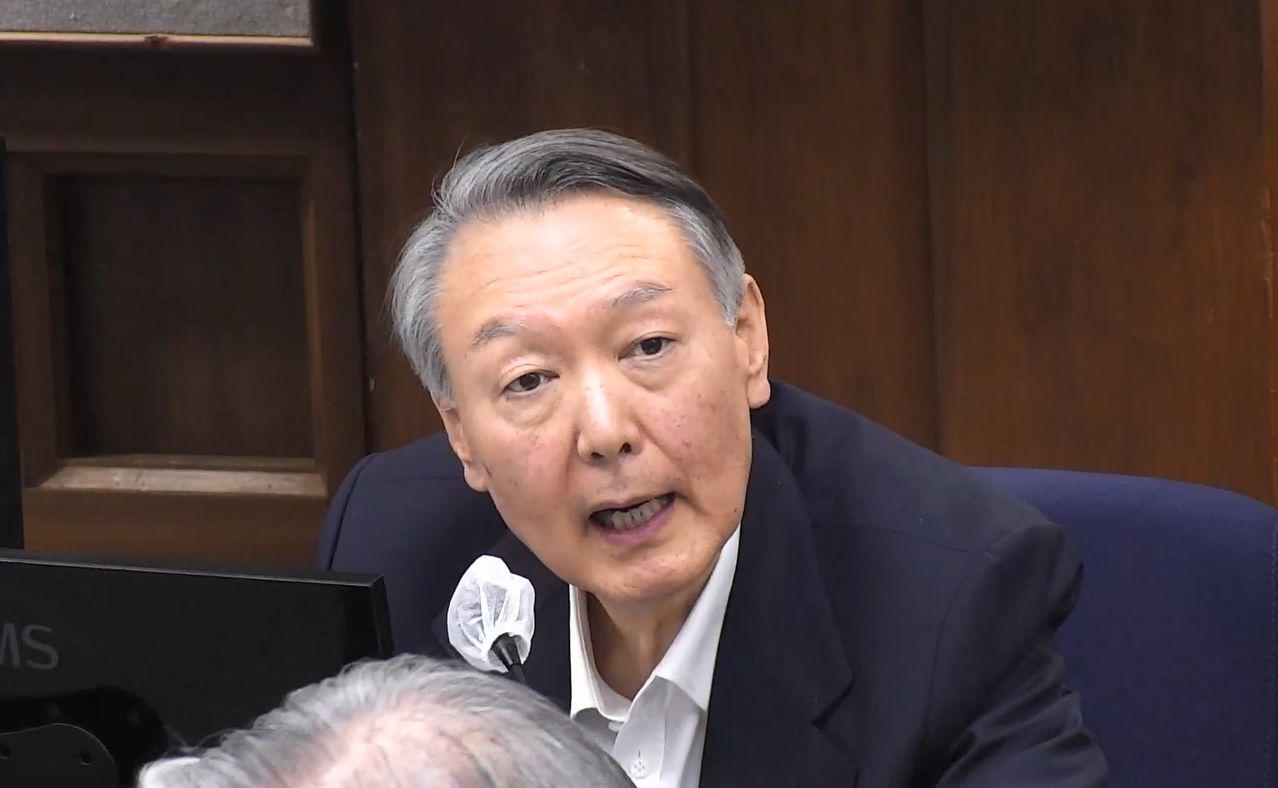
Even after his impeachment, former President Yoon Suk Yeol continued to blame his subordinates. In court proceedings broadcast to the public, Yoon claimed that the blockade of the National Assembly and the operation of arrest squads were decisions made by his subordinates. The courts did not accept this defense, and he was sentenced to life imprisonment on charges including leading an insurrection. Despite this, he continues to engage in what has been described as “prison politics.”
Yoon had already been blaming subordinates before his impeachment. On February 4 of last year, during impeachment proceedings at the Constitutional Court, he stated, “(Military commanders) may have prepared measures beyond what I or the minister intended, as they followed their respective manuals.” He acknowledged deploying military forces to the National Election Commission but denied ordering the detention of staff or the confiscation of their phones.
Later, the special prosecution team for the insurrection (led by Special Prosecutor Cho Eun-seok) revealed that military personnel carried items such as baseball bats, awls, and hammers. The prosecutor announced that troops attempted to coerce election officials to fabricate claims of fraud in the 22nd general election.
Yoon was formally removed from office on April 4 last year. Ten days later, he made his first appearance as a defendant at the Seoul Central District Court on charges including leading an insurrection. As before, he shifted responsibility for martial law onto his subordinates. At the first hearing, he said, “Commanders and unit leaders likely acted according to emergency manuals beyond communication with me and Minister Kim Yong-hyun,” implying that military personnel operated arrest squads for politicians without direct orders. Regarding the blockade of the National Assembly, he stated, “I never told anyone to open or close the Assembly gates.”
He also repeated claims of an “insurrection fabrication.” Before impeachment, he had argued that “the insurrection narrative and impeachment plot began with Hong Jang-won’s scheme and former Special Warfare Commander Kwak Jong-geun’s appearance on Kim Byung-joo TV (December 6).” In criminal court, he similarly dismissed the charges, saying, “What kind of insurrection lasts only a few hours?” and describing it as a “frame-up.”
However, subordinates contradicted his claims. Former Commander Kwak Jong-geun testified in court on October 30 that Yoon had ordered, referring to former PPP leader Han Dong-hoon, “Bring him to me—I’ll shoot him if necessary.” Former brigade commander Lee Sang-hyun also testified that Yoon had instructed during a video conference, “Break down the National Assembly doors, even with axes if necessary.”
# Trial Boycott and Repeated Absences
After being detained, Yoon at times boycotted his trials. Following his re-arrest in July by the special prosecutor after a temporary release in March, he failed to appear 12 consecutive times in the insurrection trial and 4 times in a separate trial for obstructing his arrest. After applying for bail in September, he attended one hearing but resumed absence after the request was denied.
His legal team twice petitioned for a constitutional review of the special prosecutor law on insurrection, which—if accepted—would have suspended the trial. However, the court rejected both requests. In January, during closing arguments for the insurrection case, his legal team took approximately six hours to review documentary evidence—a process that typically takes only 5–10 minutes.
In January, Yoon was sentenced to five years in prison in the first trial for obstructing arrest, and in February, he received a life sentence for leading an insurrection. Nevertheless, he continues to engage in “prison politics.” Shortly after receiving the life sentence, he released a Lunar New Year message stating, “Even if wounded, like the Red Hare horse that rises again and runs forward, let us stand up again with true courage and boldness.”
Currently, appeals are underway for both the obstruction of arrest and insurrection charges. In addition, Yoon faces multiple other indictments, including charges of aiding the enemy, perjury, interference in the investigation of the Marine corporal case, harboring criminals, violations of political funding laws, and election law violations—bringing the total to eight ongoing trials.
# Overloaded Court Schedule
Due to the sheer number of cases, Yoon has reached a point where he cannot complete all court appearances within a standard five-day workweek. On the 23rd of last month, he attended a 2 p.m. hearing at the Seoul Central District Court for election law violations, then moved to the Seoul High Court at 3 p.m. for an appeal hearing related to obstruction of arrest.
He is also scheduled to attend two separate trials on the 7th, including charges related to receiving free opinion polling services and violations of election law.
Posted by Freewhale98
1 Comment
1. Summary
Insurrection Leader Yoon Suk-Yoel continues to blame subordinates for the night of insurrection while engaging “prison politics” and indulging himself in conspiracy theories.
2. How is this related to the sub
(1) Responsibility & accountability in politics: Bad actors always blame their minions for their crimes.
3. My opinion
When given illegal orders in public sector, ignore it. The criminal will blame you and throw you under the bus when stuffs go wrong.