Because of the war in the Middle East, the dollar is being put to the test as a global means of payment. For decades, the American currency has been the currency for world trade, but because of the war, the already shaky confidence in the dollar has taken another hit. Has the dollar had its best days as the world currency?
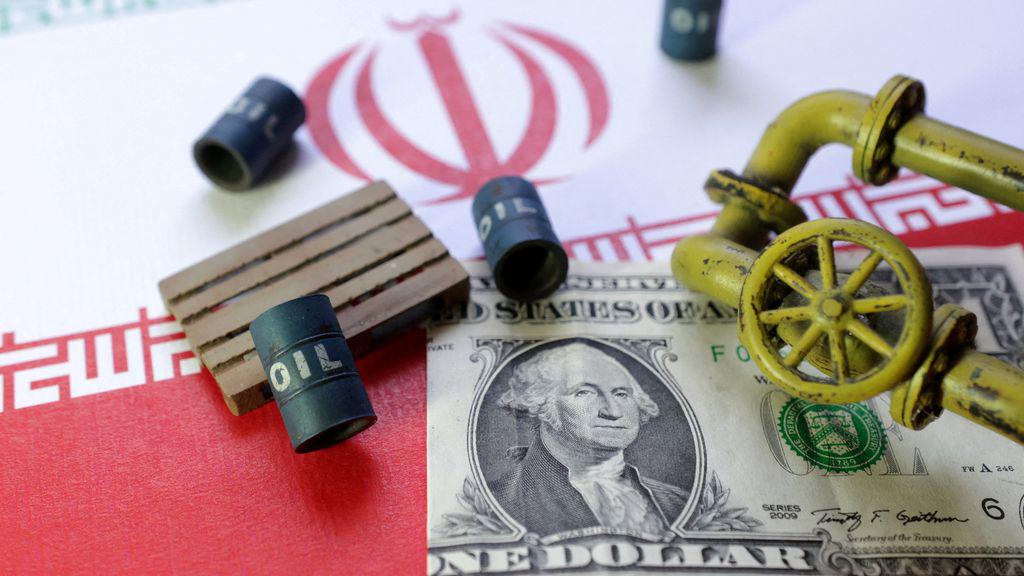
Since last week, Iran has been forcing countries to make their oil payments in Chinese yuan. In doing so, the country is going against an international agreement that oil must be settled in dollars. Deutsche Bank wrote in an analysis last week that the conflict could go down in the history books as “the catalyst for the erosion of dollar dominance.”
Dutch economists do indeed see confidence in the dollar declining, but they temper Deutsche Bank’s analysis somewhat. “Countries that are not friends of America, including China and Iran, have been saying for twenty years that they want to pay in another currency,” says economist Mathijs Bouman. “That sentiment is now more widely shared, but actually knocking the dollar off its throne is very difficult.”
*”The entire international financial system runs on the dollar as a unit of account.” – Mathijs Bouman*
**But first: how did the dollar come to hold such a position of power?**
Which currency dominates the world market is tied to economic dominance, explains ING chief economist Bert Colijn. Whereas at the beginning of the 20th century the economic center of gravity still lay with the United Kingdom, after the two world wars it shifted to the US. “The dollar became the lubricant of the world economy.”
This dominance became even stronger in 1974, when the US and Saudi Arabia agreed that all oil would henceforth have to be settled in dollars. Other oil-exporting countries joined in. In return, Washington would guarantee security in the region. The international role of the dollar is largely based on this oil agreement, also known by economists as the petrodollar system.
“The entire international financial system runs on the dollar as a unit of account,” says Bouman. With one advantage for America: because of that rock-solid confidence, the US can borrow a great deal at a relatively low interest rate. Bouman: “Everyone always wants to have that dollar anyway. America can therefore go very far with financing deficits without interest rates going up.”
**Currency of the arch-enemy**
But cracks are beginning to appear in that confidence. And that had already started before the war. The Gulf states now sell much more oil to Asia than to the US, and not every country is happy that an American bank has to be involved in that process. Bouman: “Many countries, Iran first and foremost, find it ideologically very difficult that they have to settle in the currency of the arch-enemy.”
And now that America does not seem to be fulfilling its side of that 1974 agreement – namely, guaranteeing security in the Gulf region – doubts are also growing among countries friendly to the US. According to Deutsche Bank’s analysis, this could well be the “perfect storm” for the breakdown of the petrodollar system.
Economist Colijn agrees that the economic dominance of the US is declining. He attributes that partly to the rise of other economies, such as China’s, but also to growing nervousness in the world market about America’s economic policy. “Central banks find it pleasant not to keep all their reserves in dollars. They do not want to run the risk that the US can get at them, for example if there is a dispute.”
**Trump’s policy**
Trump’s economic wild swings in the past year, such as imposing high import tariffs and appointing loyalists to the American central bank, contribute to that, says Bouman. “Trump is now going so far that he is undermining the value of the dollar. As a result, people start to think: do I still want to have that currency?”
A Dutch example of this is pension fund ABP, which last year got rid of 10 billion euros’ worth of American government bonds. “This shows that doubt is arising about the reliability of the American financial system,” says Colijn. According to him, more major parties are taking this step. But, he emphasizes, “on the total market it is negligible.” “At the margins, the dominance of the dollar is certainly declining, but I do not quickly see another candidate breaking that hegemony.”
Bouman agrees. “Yes, a change can be seen, but you have to do it all together at the same time. I can well imagine that, even if America is no longer a world power, we will still use the dollar as the world currency.”

1 Comment
Because of the war in the Middle East, the dollar is being put to the test as a global means of payment. For decades, the American currency has been the currency for world trade, but because of the war, the already shaky confidence in the dollar has taken another hit. Has the dollar had its best days as the world currency?
Since last week, Iran has been forcing countries to make their oil payments in Chinese yuan. In doing so, the country is going against an international agreement that oil must be settled in dollars. Deutsche Bank wrote in an analysis last week that the conflict could go down in the history books as “the catalyst for the erosion of dollar dominance.”
Dutch economists do indeed see confidence in the dollar declining, but they temper Deutsche Bank’s analysis somewhat. “Countries that are not friends of America, including China and Iran, have been saying for twenty years that they want to pay in another currency,” says economist Mathijs Bouman. “That sentiment is now more widely shared, but actually knocking the dollar off its throne is very difficult.”
*”The entire international financial system runs on the dollar as a unit of account.” – Mathijs Bouman*
**But first: how did the dollar come to hold such a position of power?**
Which currency dominates the world market is tied to economic dominance, explains ING chief economist Bert Colijn. Whereas at the beginning of the 20th century the economic center of gravity still lay with the United Kingdom, after the two world wars it shifted to the US. “The dollar became the lubricant of the world economy.”
This dominance became even stronger in 1974, when the US and Saudi Arabia agreed that all oil would henceforth have to be settled in dollars. Other oil-exporting countries joined in. In return, Washington would guarantee security in the region. The international role of the dollar is largely based on this oil agreement, also known by economists as the petrodollar system.
“The entire international financial system runs on the dollar as a unit of account,” says Bouman. With one advantage for America: because of that rock-solid confidence, the US can borrow a great deal at a relatively low interest rate. Bouman: “Everyone always wants to have that dollar anyway. America can therefore go very far with financing deficits without interest rates going up.”
**Currency of the arch-enemy**
But cracks are beginning to appear in that confidence. And that had already started before the war. The Gulf states now sell much more oil to Asia than to the US, and not every country is happy that an American bank has to be involved in that process. Bouman: “Many countries, Iran first and foremost, find it ideologically very difficult that they have to settle in the currency of the arch-enemy.”
And now that America does not seem to be fulfilling its side of that 1974 agreement – namely, guaranteeing security in the Gulf region – doubts are also growing among countries friendly to the US. According to Deutsche Bank’s analysis, this could well be the “perfect storm” for the breakdown of the petrodollar system.
Economist Colijn agrees that the economic dominance of the US is declining. He attributes that partly to the rise of other economies, such as China’s, but also to growing nervousness in the world market about America’s economic policy. “Central banks find it pleasant not to keep all their reserves in dollars. They do not want to run the risk that the US can get at them, for example if there is a dispute.”
**Trump’s policy**
Trump’s economic wild swings in the past year, such as imposing high import tariffs and appointing loyalists to the American central bank, contribute to that, says Bouman. “Trump is now going so far that he is undermining the value of the dollar. As a result, people start to think: do I still want to have that currency?”
A Dutch example of this is pension fund ABP, which last year got rid of 10 billion euros’ worth of American government bonds. “This shows that doubt is arising about the reliability of the American financial system,” says Colijn. According to him, more major parties are taking this step. But, he emphasizes, “on the total market it is negligible.” “At the margins, the dominance of the dollar is certainly declining, but I do not quickly see another candidate breaking that hegemony.”
Bouman agrees. “Yes, a change can be seen, but you have to do it all together at the same time. I can well imagine that, even if America is no longer a world power, we will still use the dollar as the world currency.”
Source: https://nos.nl/nieuwsuur/artikel/2609276-vertrouwen-in-dollar-neemt-af-door-oorlog-heeft-de-wereldmunt-beste-tijd-gehad