
Alberta Justice Minister set new limits for election regulator when his friend, Sam Mraiche, was under investigation
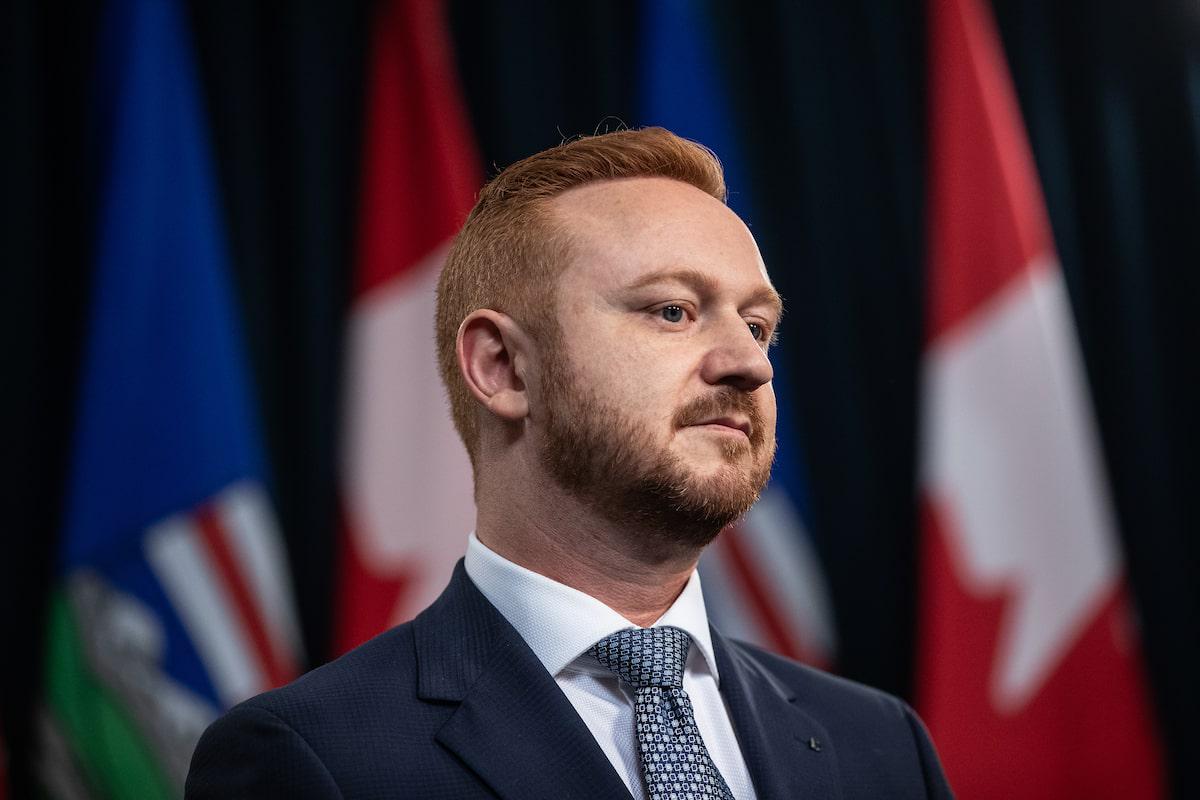
Alberta Justice Minister Mickey Amery shortened the amount of time Elections Alberta has to penalize political finance violations while his friend and relative Sam Mraiche was under investigation by the regulator, a Globe and Mail investigation has found.
In May, 2025, Mr. Amery pushed through a series of amendments he said would “strengthen public trust” in the integrity of the province’s elections. Among the changes, Elections Alberta now has a one-year deadline to pursue sanctions arising from political finance complaints, instead of three.
At the time, Elections Alberta was investigating Mr. Mraiche after receiving a complaint the Edmonton businessman had allegedly made illegal donations to the province’s United Conservative Party and New Democratic Party. Mr. Mraiche denies the allegations.
When the bill became law, it had been more than a year since Elections Alberta had launched its investigation into Mr. Mraiche – raising questions about whether the authority’s window to sanction him had closed. In response to questions from The Globe about the status of the probe, Elections Alberta said it was prohibited by law from commenting on its investigations.
The legislative change raises further questions about Mr. Amery’s potential conflicts of interest given his relationship with Mr. Mraiche, who is at the centre of a health procurement controversy in the province. The government’s dealings with Mr. Mraiche and his company, MHCare Medical Corp., have prompted investigations, including by the RCMP.
Mr. Amery told The Globe in April 2025 that his relationship with the businessman did not conflict with his government role. At the time, the existence of Elections Alberta’s probe was not publicly known.
Mr. Amery’s office and Elections Alberta disagree about how the government’s change affected investigations the regulator had under way at the time. In a statement, Elections Alberta spokesperson Robyn Bell said that the law made no distinction between cases launched before or after the amendments and that the authority understood the changes to affect all probes, “regardless of whether investigations were ongoing” when the law came into force.
The Justice Minister’s office takes a different view. The changes did not include a “relevant retroactivity provision related to any ongoing investigations,” said Heather Jenkins, a spokesperson for Mr. Amery, and the government’s “intent was to avoid impacting” those probes. Ms. Jenkins said the minister “was not aware” of the investigation into Mr. Mraiche, and did not specify when Mr. Amery learned of the probe. She characterized The Globe’s questions about whether the legislative change had anything to do with the investigation as a “conspiracy theory.”
The Globe asked Mr. Amery’s office to explain his reasoning for the change. In response, Ms. Jenkins said that “the bill in question amended hundreds of provisions in various acts in order to streamline processes and make our democratic system more accountable and transparent.”
A review conducted by The Globe found that Alberta’s new deadline for pursuing sanctions related to election finance violations is among the shortest in the country. Two experts said it is not realistic for an elections agency to wrap up an investigation and pursue penalties within a year of an alleged contravention.
For more than a year, Mr. Mraiche has found himself at the centre of a controversy involving alleged conflicts of interest and political pressure surrounding the purchasing decisions at Alberta Health Services. A Globe and Mail investigation published last year detailed Mr. Mraiche’s connections to senior officials in the Alberta government, including Mr. Amery. The Justice Minister told The Globe in April 2025 that he had been friends with Mr. Mraiche for “a very long time,” and that the two were “loosely related” through marriage. Photos obtained by The Globe show Mr. Amery has attended hockey games with Mr. Mraiche in the businessman’s private suite.
Mr. Mraiche has repeatedly denied any wrongdoing in connection to the health procurement controversy. As for the election finance allegations, in legal filings he denied having improperly provided funds to others for the purpose of political donations. Lawyers for Mr. Mraiche did not respond to a request for comment for this story.
The existence of Elections Alberta’s probe into Mr. Mraiche was not known publicly until December, when The Globe revealed the authority had asked an Alberta court to find the businessman in contempt for failing to make himself available for an interview. The authority ultimately withdrew its application after Mr. Mraiche sat for an interview, according to his lawyer. By then, Mr. Amery’s changes had taken effect.
Elections Alberta’s contempt application, filed last July, disclosed several details about its investigation.
The probe began in April 2024 after the authority received an anonymous complaint concerning straw donations allegedly made in the two months prior to the May 2023 provincial election. Straw donations are an illegal practice in which an individual circumvents political donation limits by making contributions through others.
By June 2025, Elections Alberta was scrutinizing the political donations made by 60 people, the authority’s court filing shows. A Globe and Mail analysis of contribution records found that 59 people whose names matched those on the list donated the then-maximum of $4,300 in 2023, totalling $253,700. The UCP received $103,200, while the NDP received $150,500. UCP spokesperson Dave Prisco said the party follows all of Alberta’s election finance rules, and Heather Wilson, the Alberta NDP’s executive director, said that party is ready to comply with any requests from Elections Alberta.
The elections authority spent roughly six months attempting to interview Mr. Mraiche beginning in January 2025, according to its court submissions.
Representatives for the authority phoned Mr. Mraiche three times without response and made four separate requests to one of his lawyers for an in-person interview, filings show. Eventually, Elections Alberta exercised its power to compel Mr. Mraiche to attend an interview. After he declined to attend one scheduled for July 3 – one day before Mr. Amery’s changes came into effect – the authority asked a court to find him in contempt.
Scott Hutchison, a lawyer for Mr. Mraiche, told The Globe last year that his client initially had “some reservations with respect to the fairness of the process.” After those concerns were addressed, he sat for an interview with the authority, Mr. Hutchison said. Elections Alberta withdrew its contempt application in September.
The restrictions Mr. Amery imposed on Elections Alberta evolved between when they were first proposed and when they became law.
As is the case with most Canadian elections authorities, Elections Alberta is able to pursue different types of sanctions, including monetary fines – often called administrative penalties – and prosecutions. When Mr. Amery proposed the new time limits in April 2025 – part of a larger package of amendments – he reduced the amount of time the authority had to pursue either option, from three years after the date of an alleged contravention to one.
A week later, Gordon McClure, Elections Alberta’s chief electoral officer, wrote to the legislature to express his concerns about several of the changes, including the tweak to the time limits. “This change will eliminate most substantive financial investigations and remove the related compliance functions performed by the Election Commissioner,” he said. “None of the significant investigations undertaken by the Election Commissioner in the last five years would have been completed if this reduced time period had been in place. Several current investigations will not be completed.”
Citing Mr. McClure’s feedback, Mr. Amery adjusted his proposed legislation on May 14, splitting up the time limits for administrative penalties. In cases where Elections Alberta “knew or ought to have known” of a potential violation, the authority would have two years to issue sanctions. Penalties for investigations arising from complaints, as was the case with the probe into Mr. Mraiche, would still need to be issued within a year of when the complaint was received. Mr. Amery’s proposed time limit for prosecutions – one year from the date of the offence – remained the same. The amended changes became law the next day.
Marc Mayrand, a retired public servant and Elections Canada’s chief electoral officer from 2007 to 2016, said the timelines established by the Alberta government are “not realistic.”
“I’ve never seen an investigation completed within a year of the commission of an offence,” he said. “It would be extremely difficult to imagine an acceptable rationale for such a short time period. Twelve months from the commission of an offence – it’s almost unimaginable to think that it can be done.”
A former British Columbia chief elections official also expressed concerns about Mr. Amery’s change.
“One year seems unusually short,” said Keith Archer, who served as the province’s chief electoral officer from 2011 to 2018 and is now retired. “It raises your eyebrows.”
“My experience in British Columbia – having a two-year time frame – meant that you always had to continue moving a file forward, because generally, there’s more than one file under review at any given time.”
If B.C. had been using Alberta’s new rules when he was in charge, “some investigations would not have been completed,” Mr. Archer said.
For prosecutions, the only jurisdictions with a similar or shorter timeline than Alberta are Nunavut, the Northwest Territories, the Yukon and Newfoundland and Labrador. While Manitoba also has a one-year deadline, its cut-off is tied to when its elections commissioner has “reasonable and probable grounds” to believe an offence had occurred. Other jurisdictions, including New Brunswick, Quebec and the federal government, have prosecution time limits of four to seven years.
More than four months after Elections Alberta began reaching out to Mr. Mraiche – and more than three weeks after Mr. Amery’s amendments became law – lawyers for the authority sent the businessman a letter with six questions, court records show. That letter named 60 individuals whose donations the authority wanted to learn more about.
Six people whose names are listed – Ali Haymour, Houssam Ismail, Kamal Mansour, Khawla Al-Tamimi, Majida Kiki and Salim Kherbatly – were found in contempt by an Alberta court in July after Elections Alberta said they had not made themselves available for an interview related to an investigation. Court records for their and Mr. Mraiche’s contempt cases show that both matters concerned a straw-donor investigation launched on April 30, 2024, and shared the same internal Elections Alberta case file number.
Documents filed in the six individuals’ cases show that on May 16 – the day after Mr. Amery’s changes passed in the legislature – their lawyer, George Samia, wrote to Elections Alberta to point out the new time limit.
“Given that the events under investigation occurred more than one year ago, and considering the legislative intent to enforce a one-year limitation period, we submit that the window for investigation into this matter has closed and the investigation has been rendered moot,” he said. “Therefore, our Clients will not be submitting to any further questioning or investigations related to this case.” Mr. Samia did not respond to a request for comment.
The six individuals each agreed to pay the elections authority $1,445 in early January as part of their contempt cases, court records show. They have received no penalty related to the alleged illegal donations, according to Elections Alberta’s website.
Posted by IHateTrains123