* The article is about South Africa’s Democratic Alliance (DA) party, which is a pro-business, liberal party which governs the City of Cape Town, the Western Cape province it is in and which is in a coalition with the African National Congress at national level.
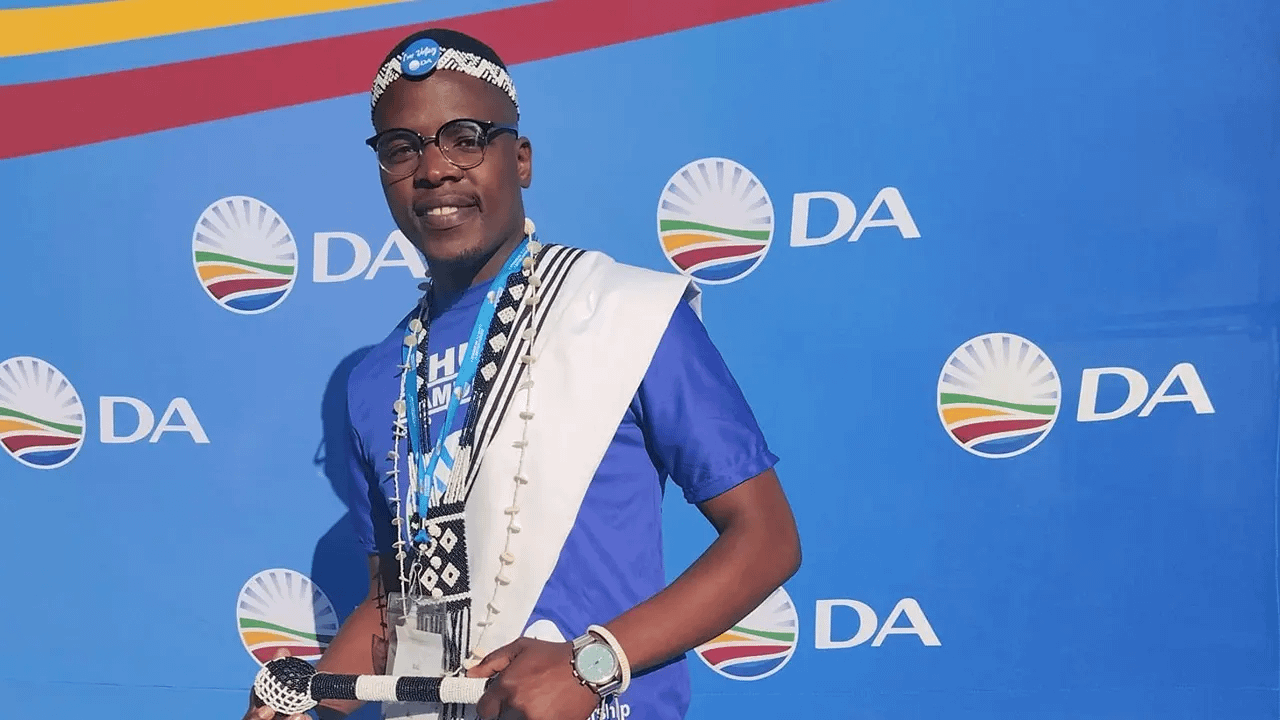
* The DA are having their electoral conference this weekend. The position of DA Leader is being contested by only two candidates: Geordin Hill-Lewis, the mayor of Cape Town, and Sibusiso Dyonase, who is a regional caucus leader for the party in the Gauteng region.
* Hill-Lewis is widely understood to have this in the bag. In fact, Dyonase only entered the race close to the last minute because he believes in contestation and didn’t want Hill-Lewis to run alone. More cynically, this is just window dressing to make Hill-Lewis’ coronation appear democratic.
* The DA has multiple senior leaders, including cabinet ministers, none of whom were brave enough to take on Hill-Lewis because they understood he has already won. Instead, they are all contesting various other leadership positions in the party.
**Relevance**
* This is actually an important article to understand South African democracy, and this will be a wonderful weekend to follow what happens.
* This article is valuable to read because it shows how the DA select their leadership. You should read it together with the official DA Constitution [[PDF](https://cdn.da.org.za/wp-content/uploads/2023/04/19132045/DA-Constitution-As-Adopted-on-1-April-2023.pdf)]
* South Africa political parties almost all run their elections through a delegate system, with no primaries. Meanwhile, government elections are pure proportional representation. As a result, the ordinary person who is not a party insider never really gets a chance to vote directly for an individual, except for their ward councillor at local elections.
* I have a hypothesis that South Africa’s democracy lacks dynamism because of this. Even if Sibusiso Dyonase was Barack Obama, he could never beat the establishment pick (Hill-Lewis) because it’s not ordinary DA members voting, nor members of the public. It’s the party leaders and insiders who have already lined up behind Hill-Lewis in alignment with the funders. How else can you explain 13 of the DA’s most senior leaders, including cabinet ministers, contesting for a deputy federal chairperson position?
* In addition, other than the ANC, most political parties in South Africa are dominated by just one or two political leaders and factions. This includes the DA, which is dominated by the figures of Helen Zille and Tony Leon. The DA is more democratic and pluralistic than other parties, but much less so than the ANC. I maintain that parties in South Africa win votes in rank order of a combined pluralism-democracy-dynamism index. The ANC is chaotic and wild. The media bemoans our inability to figure out who comes next. Tiny parties know exactly who will run the party for the next 15 years.
* The efficiency, integrity *and dynamism* of political parties drives their performance. I believe that the lack of dynamism in every political party other than the ANC is the reason they have failed to grow and, therefore, the reason the corrupt in the ANC was allowed to corrupt the state for so long.

1 Comment
**Summary**
* The article is about South Africa’s Democratic Alliance (DA) party, which is a pro-business, liberal party which governs the City of Cape Town, the Western Cape province it is in and which is in a coalition with the African National Congress at national level.
* The DA are having their electoral conference this weekend. The position of DA Leader is being contested by only two candidates: Geordin Hill-Lewis, the mayor of Cape Town, and Sibusiso Dyonase, who is a regional caucus leader for the party in the Gauteng region.
* Hill-Lewis is widely understood to have this in the bag. In fact, Dyonase only entered the race close to the last minute because he believes in contestation and didn’t want Hill-Lewis to run alone. More cynically, this is just window dressing to make Hill-Lewis’ coronation appear democratic.
* The DA has multiple senior leaders, including cabinet ministers, none of whom were brave enough to take on Hill-Lewis because they understood he has already won. Instead, they are all contesting various other leadership positions in the party.
**Relevance**
* This is actually an important article to understand South African democracy, and this will be a wonderful weekend to follow what happens.
* This article is valuable to read because it shows how the DA select their leadership. You should read it together with the official DA Constitution [[PDF](https://cdn.da.org.za/wp-content/uploads/2023/04/19132045/DA-Constitution-As-Adopted-on-1-April-2023.pdf)]
* South Africa political parties almost all run their elections through a delegate system, with no primaries. Meanwhile, government elections are pure proportional representation. As a result, the ordinary person who is not a party insider never really gets a chance to vote directly for an individual, except for their ward councillor at local elections.
* I have a hypothesis that South Africa’s democracy lacks dynamism because of this. Even if Sibusiso Dyonase was Barack Obama, he could never beat the establishment pick (Hill-Lewis) because it’s not ordinary DA members voting, nor members of the public. It’s the party leaders and insiders who have already lined up behind Hill-Lewis in alignment with the funders. How else can you explain 13 of the DA’s most senior leaders, including cabinet ministers, contesting for a deputy federal chairperson position?
* In addition, other than the ANC, most political parties in South Africa are dominated by just one or two political leaders and factions. This includes the DA, which is dominated by the figures of Helen Zille and Tony Leon. The DA is more democratic and pluralistic than other parties, but much less so than the ANC. I maintain that parties in South Africa win votes in rank order of a combined pluralism-democracy-dynamism index. The ANC is chaotic and wild. The media bemoans our inability to figure out who comes next. Tiny parties know exactly who will run the party for the next 15 years.
* The efficiency, integrity *and dynamism* of political parties drives their performance. I believe that the lack of dynamism in every political party other than the ANC is the reason they have failed to grow and, therefore, the reason the corrupt in the ANC was allowed to corrupt the state for so long.