
South Korea will hold local elections in June. Unlike presidential or parliamentary elections, migrant residents living in the country are allowed to vote. South Korea remains the only country in Asia to grant voting rights to eligible migrants. Introduced in 2006, the policy has now been in place for 20 years.
Over time, as the number of ethnic Chinese residents in Korea increased and Korea–China relations cooled, anti-China sentiment has at times been leveraged for political gain. Critics argue that granting voting rights unilaterally violates the principle of reciprocity.
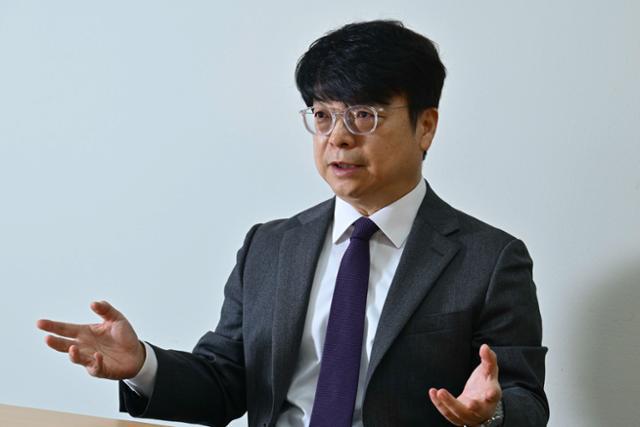
In an interview on the 24th, Yoon Jong-bin, president of the Korean Political Science Association and professor at Myongji University, stated, “Migrant voting rights symbolize the level and openness of Korean democracy. Especially in an era of regional population decline, they serve as a catalyst for strengthening migrants’ sense of belonging and promoting social integration.” He emphasized that beyond the right to vote, the policy has broader positive effects in sustaining local communities.
Conservative groups, however, raise concerns about reciprocity with China. Yoon countered, “Calling for the abolition of migrant voting rights simply because China does not offer the same rights is effectively an admission of democratic backsliding.” He added that migrant voters make up only a tiny fraction of the electorate and that attempts to link Chinese voters with election fraud are politically motivated and unlikely to resonate with moderate voters.
Why is participation of migrant residents necessary?
“It demonstrates Korea’s commitment to universal democratic values and enhances its international standing. Migrants who pay taxes and settle in Korea should be recognized as members of the community. Granting voting rights fosters inclusion rather than exclusion and helps build integrated local societies. It also encourages the development of policies in education, welfare, and the economy tailored to migrant residents, which is crucial in addressing the growing problem of regional depopulation. Diplomatically, it strengthens Korea’s case when advocating for voting rights for its own citizens abroad.”
Can migrant votes influence election outcomes?
“So far, there is little evidence that they are a decisive factor. In the 2022 local elections, there were about 127,000 migrant voters, 78.9% of whom were Chinese nationals, and the number is expected to exceed 150,000 this year. They are concentrated mainly in the Seoul metropolitan area. However, turnout is low. For example, in the Gwangjin District mayoral race in Seoul, which was decided by a narrow margin of 3,747 votes, no meaningful impact from migrant voters was observed.”
(Migrant voters accounted for only 0.29% of the total electorate in 2022. Their turnout rate was 13.3%, significantly lower than the overall turnout of 50.9%, and has declined steadily from 35.2% in 2010 and 17.6% in 2014.)
Why are they not allowed to vote in presidential or parliamentary elections?
“Expanding voting rights beyond local elections would be inappropriate. The current scope is sufficient. Korea is already ahead of global trends in granting migrant voting rights. Allowing participation in national elections could negatively affect foreign policy, which is directly tied to national interests. In particular, presidential elections could become problematic if migrant voters mobilize around specific issues.”
Is it fair that Chinese nationals can vote in Korea while Koreans in China cannot?
“China operates under a fundamentally different political system. While it has adopted aspects of a market economy, political participation and the meaning of suffrage differ greatly from those in a democracy. Applying strict reciprocity would mean abolishing migrant voting rights unless China grants similar rights, but that would damage Korea’s international image.”
(Originally, migrant voting rights were introduced partly to support voting rights for ethnic Koreans in Japan. Although Korea implemented the policy first in 2005, Japan did not reciprocate. As the number of Chinese residents in Korea increased, the issue shifted from a Korea–Japan matter to a Korea–China issue.)
What about the principle of reciprocity?
“If reciprocity was to be enforced, it should have been from the beginning. Korea chose instead to act first as a leading democracy. If we now reverse course, we lose both our credibility and the basis for continuing to demand reciprocal rights abroad. This is not the time to retreat.”
Has the focus shifted from Japan to China?
“That is true. When the policy was introduced in 2006, the current demographic situation could not have been anticipated. Today, in some rural elementary schools, eight out of ten students are migrants. Without integrating them as members of society, the risks to social cohesion will only grow.”
(Globally, only 22 countries grant local voting rights to migrants regardless of nationality, mostly in the EU. Outside Europe, examples include South Korea, Israel, and Venezuela. Some countries, such as New Zealand and Chile, even allow migrants to vote in national elections.)
What risks are there in the upcoming elections?
“There is concern about a narrative linking election fraud, Chinese voters, and reciprocity. Such framing attempts to create a false connection among these issues and could inflame political and diplomatic tensions.”
Will this become a major election issue?
“Even if it is used as a campaign strategy, it is unlikely to have a significant impact. There is no clear evidence of bloc voting or unified political preferences among migrant voters.”
Why does public opinion lean against migrant voting rights?
“When framed simply as a reciprocity issue, opposition is understandable. However, when considered in the broader context of social integration, democratic values, and regional decline, opinions can change. Without proper information, people may overestimate the influence of migrant voters.”
(A survey of 3,000 adults conducted last December found that 69% opposed granting voting rights to nationals of countries that do not grant the same rights to Koreans, while only 12% supported
Posted by Freewhale98