
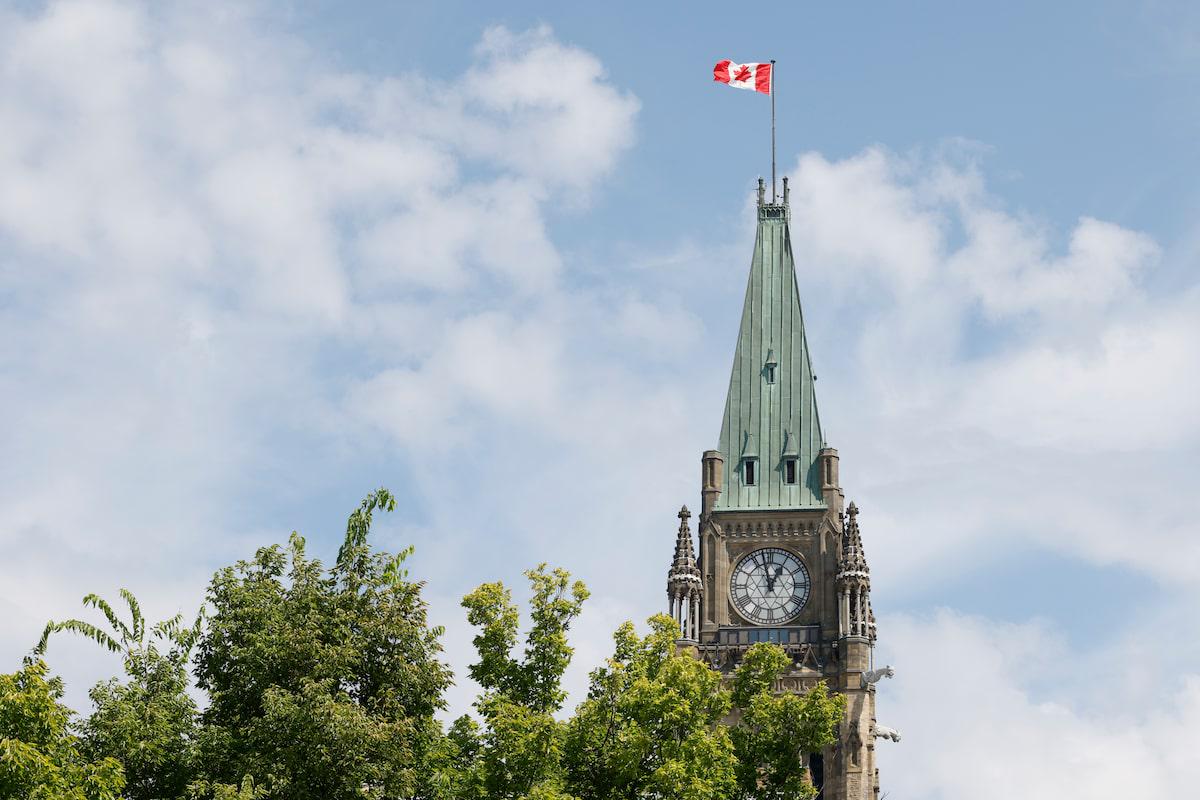
The federal government plans to kick off Monday’s return of parliamentary sittings with the introduction of major legislation aimed at accelerating project approvals and updating Canada’s labour laws.
Three federal ministers are scheduled to speak at a news conference Monday afternoon: Government House Leader and Transport Minister Steven MacKinnon; Dominic LeBlanc, whose responsibilities include Intergovernmental Affairs and One Canadian Economy; and Jobs and Families Minister Patty Hajdu.
Ottawa said in a news release Sunday that the ministers will discuss the introduction of legislation “that will build Canada strong and create certainty for a more competitive, resilient, and independent Canadian economy.”
Prime Minister Mark Carney told Liberal MPs in a public speech Friday that the government plans to introduce a bill called the Building Canada Strong Act that would ensure that federal projects face a single review and a decision within one year.
“This is a crucial session of the House of Commons,” he said. “We are going to introduce some of the most consequential legislation – not just of this government, but in decades.”
The government held consultations on the proposals earlier this year and recently released four reports summarizing feedback it has received related to proposed changes.
Mr. Carney said the government has adjusted its planned legislation based on that feedback. Its own summaries of the responses indicate that the government received some pushback, including from Indigenous leaders and labour unions.
The Canadian Labour Congress has already expressed concern with some of the proposals, which they say would limit bargaining power and encourage federal intervention to end strikes and lockouts.
Conservative Leader Pierre Poilievre released an open letter Sunday to the Prime Minister, outlining the Official Opposition’s priorities for Parliament’s return.
Mr. Poilievre said the government should simplify the tax code, repeal development laws that delay project approvals, improve immigration and public safety, and give MPs clarity on its plans amid talk of Canada becoming an associate member of the European Union.
“Canadians are not pawns on a global chessboard,” Mr. Poilievre wrote. “They are real people with kids to feed, rent and mortgages to pay, jobs to protect and retirements to secure. They do not need another season of speeches, summits and symbolic announcements.”
Another government bill that could be introduced as soon as Monday will enable the extension of the federal gas tax break, which Finance Minister François-Philippe Champagne announced earlier this month.
In addition to new legislation, MPs and senators will return to debate several bills still making their way through Parliament.
These include some contentious legislative proposals, notably the lawful access bill, C-22, which is now before the Senate after a heated debate in the House of Commons.
Bill C-22 would give the Public Safety Minister, currently Gary Anandasangaree, the power to issue secret orders to force electronic service providers to facilitate the interception or retrieval of data to help police and intelligence officials with investigations.
Police services have long called for such measures, but the proposals have met with stiff opposition, including from Canadian and U.S. tech companies.
Mr. Anandasangaree approved several amendments to the bill in June in an attempt to assuage criticism from civil-liberties advocates, tech giants Google, Apple and Meta, and the Canadian Chamber of Commerce. They were concerned that the bill could threaten encryption, privacy and cybersecurity.
American congressional leaders and European civil-society groups have also raised concerns about the bill.
The government introduced multiple bills shortly before the summer break, including one designed to combat online harms that includes a ban on youth under the age of 16 using social media in Canada.
Bill C-34, also known as the Safe Social Media Act, would also regulate artificial-intelligence chatbots. The legislation would require social-media companies to label content created using AI, as well as harmful posts generated by bot farms.
Evan Solomon, the Minister of Artificial Intelligence and Digital Innovation, introduced Bill C-36 in June. The privacy-related legislation would establish the responsibility of tech companies to protect data on children, and require them to delete the personal information of Canadians upon request.
That bill would also give a new federal regulator the power to combat surveillance pricing, where retailers adjust prices for particular items based on users’ shopping habits.
Mr. Solomon is expected to face pressure to provide more detail on the government’s artificial-intelligence policies, including in regards to copyright and superintelligent AI, having introduced a long-awaited AI strategy before the summer break.
During the summer break, tech leaders called for a slowdown in the pace of AI development, saying that proper guardrails are needed to keep it in check.
Parliamentarians will also discuss a bill to block imports of products made using forced labour that would require shippers to prove their goods are compliant. Bill C-35 would allow the Foreign Affairs Minister to designate specific goods, producers, countries or regions where there are “reasonable grounds to suspect” forced labour.
Another long-awaited bill introduced in June, C-37, aims to guarantee safe drinking water for First Nations. Dozens of long-term drinking water advisories exist across First Nations communities in Ontario, Manitoba and Saskatchewan.
A potentially divisive issue that will surface this fall is whether the government will proceed with the planned expansion of access to medical assistance in dying for those whose sole underlying condition is a mental illness.
Earlier this year, a joint House of Commons and Senate committee studying the expansion of MAID recommended against expanding access, though it was not a unanimous conclusion. Justice Minister Sean Fraser held consultations over the summer on next steps; should the government decide not to proceed, legislation will be required.
Posted by IHateTrains123