
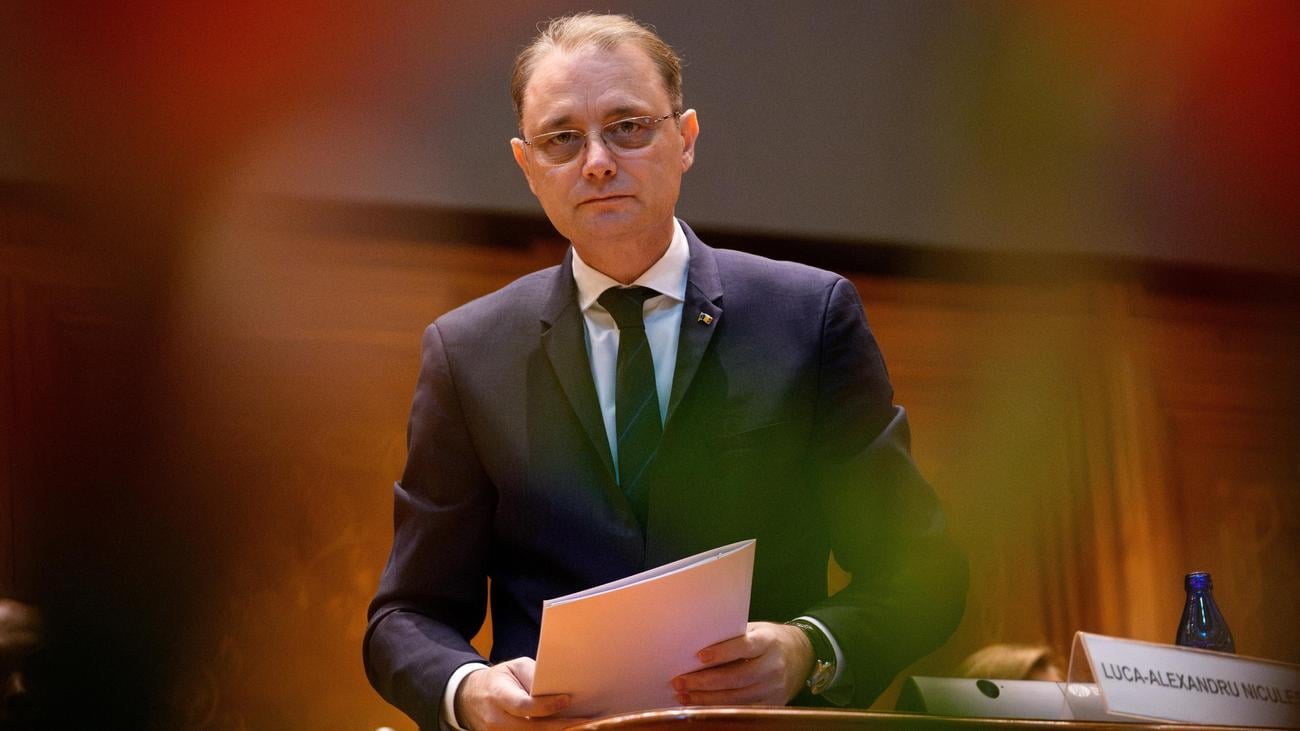
Romania’s parliament has elected the independent diplomat Luca Niculescu as the new prime minister. Prior to this, the country had been without a functional government for months.
Following months of political deadlock, the Romanian parliament has approved the pro-European government led by the independent diplomat Luca Niculescu. According to Romanian media, 280 members of the Chamber of Deputies and the Senate voted in his favor, while 58 voted against him. This means that the EU and NATO member state once again has a prime minister, ending a government crisis that had lasted more than five months. The vote marked the fourth attempt to elect a new head of government.
Niculescu’s administration is a social-democratic minority government that also includes several technocrats. Twelve of his 18 ministers hail from the left-wing party, while the other six are non-partisan technocrats. Although the liberal-conservative PNL supported his election as prime minister, it remains an opposition party. Niculescu must secure a majority in parliament on a case-by-case basis. He was nominated by President Nicușor Dan.
"Romania needs a government with full capacity to act," Niculescu said in parliament. "We live in an increasingly uncertain world. There is a war on Romania's border, and the threats to European security are greater than they were just a few years ago."
Ousting of the predecessor
Niculescu previously served as State Secretary at the Ministry of Foreign Affairs, most recently working on Romania’s accession process to the Organisation for Economic Co-operation and Development (OECD). Prior to that, he held various diplomatic posts, including serving as ambassador—most notably in France.
Niculescu’s predecessor, Ilie Bolojan of the PNL, had been ousted in a vote of no confidence in May, remaining in office only on an interim basis thereafter. He had attempted to initiate reforms and austerity measures that proved highly unpopular in the country. He was ultimately brought down by the Social Democrats (PSD)—who were part of the governing coalition—and the far-right, pro-Russian party AUR.
His succession proved difficult. One candidate nominated by the president withdrew his application before the vote; another was rejected by parliament in June, and a third met the same fate at the end of September. The president refused to call for new elections.
Translated by Google Translate, mistakes are my own.
Posted by IHateTrains123