
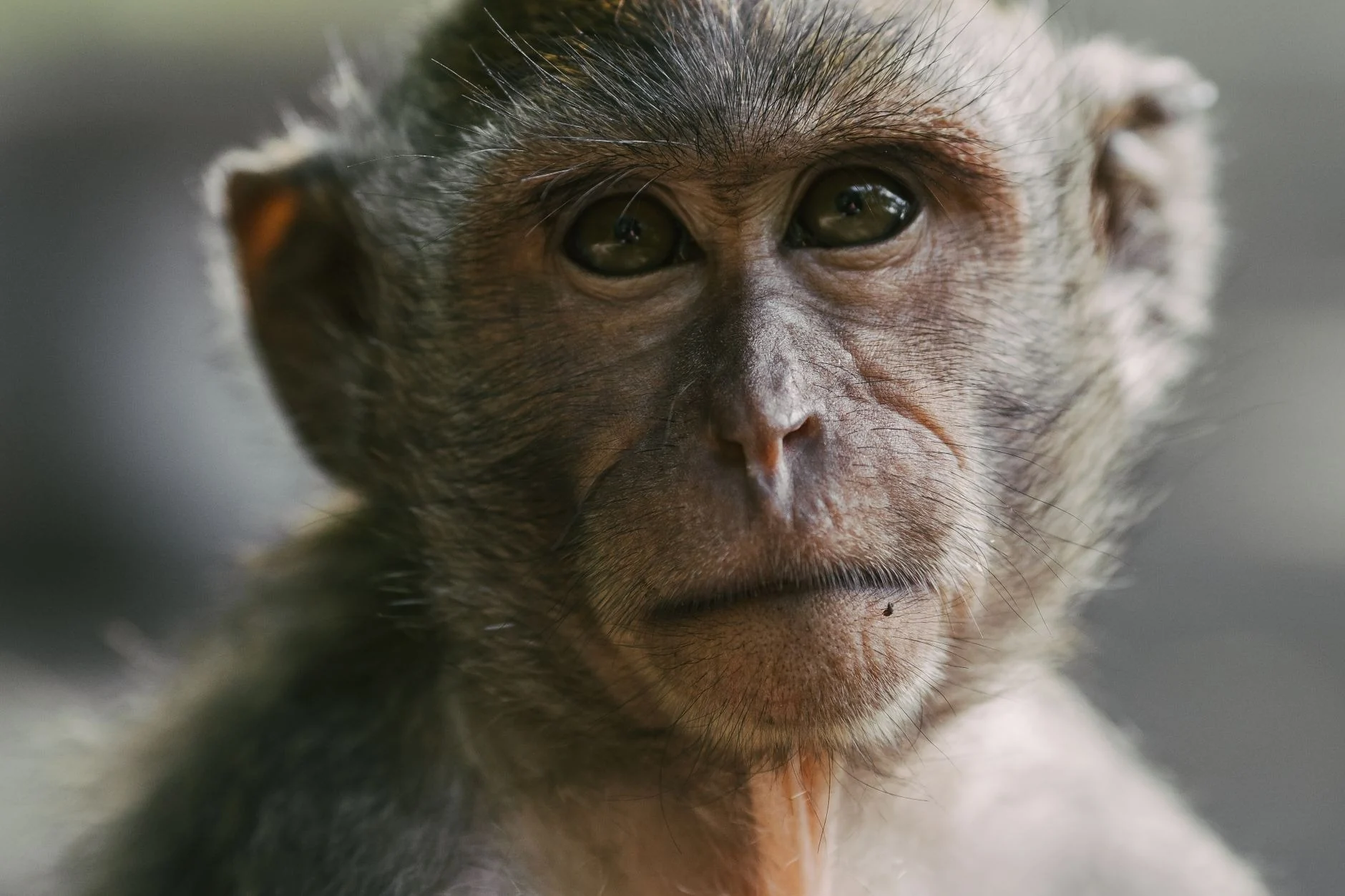
Joe Lonsdale, a co-founder of Palantir Technologies, is tied to a plan to breed up to 30,000 long-tailed macaques in southwest Georgia, according to TechRadar and other reports. His venture firm, 8VC, reportedly put $20 million into Safer Human Medicine, the startup behind the proposed macaque breeding facility in Bainbridge. The story spread online under a punchier headline: AI jacked up monkey prices by 700% in seven years. That exact figure is unconfirmed, and so is the claim that AI caused any price move at all.
What Was Reported About the 30,000-Macaque PlanSafer Human Medicine and 8VC: Who Is Funding ItThe Bainbridge, Georgia Proposal in NumbersChecking the 700% in Seven Years ClaimDid AI Raise Macaque Prices? What the Evidence SaysThe Demand-Side ArgumentThe Supply-Side ArgumentWhy “Monkey Farm” Is the Wrong LabelWhy Research Labs Want a Domestic Primate SupplyMarket Impact: Who Gains and Who LosesCompetitive Comparison: Five Ways to Source Research AnimalsHistorical Context: From $2,500 to $22,000Where AI Actually Touches Drug ResearchRisks and Open Questions for the Georgia FacilityFive Predictions for the Macaque Supply DebateThe Takeaway: A Real Price Spike, an Unproven AI LinkFAQ: Palantir Cofounder and the Macaque FacilityWho is the Palantir co-founder behind the macaque plan?How many macaques would the facility hold?Is the facility built or approved?Did AI raise macaque prices by 700% in seven years?How much did a research macaque cost in 2019?Is it accurate to call it a monkey farm?What did Lonsdale say about the plan?
The distinction matters for anyone who follows AI in medicine. Tools like the system in our coverage of the AMIE patient-facing study pitch faster, cheaper science. A story that links the same technology to a spike in primate costs deserves a hard look, not a retweet. This analysis separates what the reports establish from what the headline adds on top.
Industry insights, the latest tech news, and special interviews, all in the Tech Insider Newsletter.
One email a week. No spam, unsubscribe anytime.
Google · Preferred Sources
Don’t miss new tech stories on Google
Add Tech Insider once in the Google app and our stories appear in your news suggestions.
What Was Reported About the 30,000-Macaque Plan
Reports describe a proposal by Safer Human Medicine to build a breeding operation in Bainbridge, Georgia, in Decatur County. The facility could eventually house up to 30,000 long-tailed macaques. It would not start there. The plan reportedly begins with 500 to 1,000 animals sourced from Asian breeding facilities and grows toward the 30,000 mark over roughly 20 years.
Lonsdale framed the effort as a national supply question. He said, “America needs a reliable domestic supply of research primates to help rapidly advance cures for our kids.” That sentence is the clearest statement of the pitch. It treats primate supply as infrastructure, in the same bucket as chip fabs or pharmaceutical plants.
Here is the catch. Reports do not confirm that the facility is built, approved, operational, or that the land has been acquired. Everything about Bainbridge is a proposal today. Readers who saw “monkey farm” and assumed a finished site should adjust their expectations.
You may like
Safer Human Medicine and 8VC: Who Is Funding It
Safer Human Medicine was founded in 2023 and has reportedly raised $28 million. 8VC, Lonsdale’s venture firm, reportedly accounts for $20 million of that. Simple division shows 8VC would supply about 71% of the capital raised so far. That concentration tells you something about how early this company is. A single backer carries most of the weight, and the project has no public track record of operating a facility.
ItemReported detailStatusPalantir linkJoe Lonsdale is a co-founder of Palantir TechnologiesReportedStartupSafer Human Medicine, founded 2023ReportedFunding raised$28 millionReportedly8VC investment$20 millionReportedlyProposed siteBainbridge, Decatur County, GeorgiaProposedLong-run capacityUp to 30,000 long-tailed macaquesProposedStarting herd500 to 1,000 animals from Asian breedersReported planRamp-up periodAbout 20 yearsReported planBuilt, approved, or land acquiredNo confirmationNot confirmed
The table matters because the story mixes tiers of certainty. The funding and the proposal are reported. The construction status is explicitly unconfirmed. And two of the headline claims (the 700% rise and the AI cause) sit in a third tier that the reporting does not support as stated.
The Bainbridge, Georgia Proposal in Numbers
Scale is the striking part. Growing from 500 to 1,000 animals to 30,000 means a herd 30 to 60 times larger than the starting point. Spread evenly across 20 years, that works out to roughly 1,450 to 1,475 added animals a year on average. The reports do not publish a year-by-year schedule, so treat that as arithmetic and not as a forecast from the company.
A 20-year runway also says something about the business. Nobody builds a two-decade ramp for a short-term arbitrage on this year’s prices. Breeding programs take time because primates mature slowly and produce few offspring. The long horizon suggests the backers see structural scarcity, not a one-off squeeze. Whether that bet pays off depends on demand staying high for as long as it takes to fill the buildings.
The initial herd also reveals a dependency. The plan starts with animals sourced from Asian breeding facilities. A domestic supply chain, at least at first, would still lean on the overseas suppliers it aims to reduce reliance on. That is a normal bootstrapping move, but it complicates the energy-independence style framing that “domestic supply” invites.
Checking the 700% in Seven Years Claim
The viral line says macaque prices rose 700% in seven years. The reports we can confirm give different numbers. Estimates from Evercore, cited by The Washington Post, put the price of research monkeys supplied by Charles River Laboratories at about $2,500 in 2019 and $22,000 in 2022. Other reports cite roughly $3,000 per animal in 2019 and more than $20,000 later.
Data pointPrice or changeHow derivedEvercore estimate, 2019 (via The Washington Post)About $2,500ReportedEvercore estimate, 2022 (via The Washington Post)About $22,000ReportedChange, 2019 to 2022About +780% (8.8x)Our arithmeticOther reports, 2019About $3,000ReportedOther reports, laterMore than $20,000ReportedChange from $3,000 to $20,000At least +567% (6.7x)Our arithmeticA true 700% rise from $2,500$20,000 (8x)Our arithmeticA true 700% rise from $3,000$24,000 (8x)Our arithmetic
So the order of magnitude holds up. Prices moved from the low thousands to the low tens of thousands, and a jump near 600% to 800% fits both data sets. The precise phrase “700% in seven years” does not appear in the sourced figures, though. The Evercore estimates span three years (2019 to 2022), not seven. And the “more than $20,000” figure carries no stated end date. We mark the exact claim unconfirmed and treat 700% as a rough headline approximation of a real, large increase.
Did AI Raise Macaque Prices? What the Evidence Says
The causal link is the weakest part of the story. No sourced figure ties the price rise to artificial intelligence. The Evercore estimates cover 2019 to 2022, a window that predates the current AI investment boom by a wide margin. Anyone arguing AI drove that specific move needs evidence the reports do not provide.
The Demand-Side Argument
A plausible story exists, and it is worth stating as a hypothesis. If AI-assisted drug discovery generates more candidate compounds, more of them eventually need testing in animal models, and that could lift demand for primates. The logic is coherent. It is also untested in the material we have. Pipelines take years, and an AI-generated candidate in 2024 would not reach primate studies in volume until well after the 2019 to 2022 price move.
The Supply-Side Argument
The supply side offers simpler explanations. Research primates come from a limited number of breeding sources, and Lonsdale’s own pitch centers on the lack of a reliable domestic supply. Constrained supply plus steady demand lifts prices without any help from AI. Our read is that the supply story fits the facts better, while the AI story is an attractive label that spreads well on social media.
Why “Monkey Farm” Is the Wrong Label
The word “farm” suggests commodity livestock. The reporting describes something different, a facility to breed long-tailed macaques for research use. The headline term is also unconfirmed as a description of the proposal. Language shapes how readers judge the project, so precision helps here.
That does not mean the project is uncontroversial. Breeding primates for research draws sustained debate over animal welfare, the necessity of animal models, and the ethics of confinement at scale. A 30,000-animal capacity would sit at the large end of any such debate. Calling it a “farm” can sharpen the outrage, and calling it a “facility” can soften it. Neither word changes the underlying facts, which remain a proposal with no confirmed approvals.
Why Research Labs Want a Domestic Primate Supply
Lonsdale’s stated rationale is speed. He ties domestic supply to advancing cures, and he specifically mentions children. Supporters of that view argue that reliance on overseas breeders exposes research programs to shipping disruptions, trade friction, and price swings. A US-based herd would, in theory, shorten the chain and steady the cost.
You may like
Skeptics would answer that a facility starting with imported animals does not remove foreign dependence in its first years. They would also point out that cost relief only arrives if the herd scales, and the reported scaling path runs 20 years. For a lab that needs animals in 2027, a facility maturing in the 2040s offers little. The pitch is a long-term hedge, not a near-term fix.
Market Impact: Who Gains and Who Loses
The immediate market effect is thin because nothing is built. The longer-term implications are easier to map. Incumbent suppliers like Charles River Laboratories, which the Evercore estimates name as a supplier of research monkeys, benefit from scarcity as long as prices stay high. A new domestic entrant with a 30,000-animal ambition would, if it ever reached scale, put downward pressure on that pricing.
Investors face a stranger setup. The backers are buying exposure to a scarce biological input, not software. Margins in software scale with users. Margins here scale with animals, buildings, and time, and a 20-year ramp ties up capital far longer than a typical venture fund cycle. That mismatch is worth watching. It hints that the economics may depend on follow-on funding, strategic partners, or long-term supply contracts, none of which the reports describe.
The broader AI market context matters too. Spending on compute is enormous, as our look at the $828 billion AI capex boom shows, and investors are hunting for physical-world bottlenecks that AI progress might exacerbate. Primate supply fits that hunting pattern even if the evidence for an AI link is thin.
Competitive Comparison: Five Ways to Source Research Animals
Labs have a handful of routes to the animals or data they need. The table compares them qualitatively. We avoid cost and timing numbers here because the sourced figures do not cover them.
RouteMain advantageMain weaknessStatus in this storyImport from Asian breedersExisting capacity and established channelsExposure to overseas disruption and high pricesSource of the planned starting herdDomestic breeding facilityShorter supply chain and local controlSlow ramp, capital intensity, public opposition riskProposed in Bainbridge, Georgia, not confirmed builtEstablished US suppliersOperating track recordPricing power when supply is tightEvercore estimates name Charles River LaboratoriesReduced animal use (software and lab models)Fewer animals needed per studyNot a full substitute for every study typeNot part of the proposalDo nothingNo capital at riskPrices stay high and supply stays concentratedStatus quo
The fourth row is where AI genuinely intersects with this story, in the opposite direction from the viral claim. If AI tools reduce the number of animals a study needs, they would soften primate demand, not inflate it. We cannot size that effect from the available sources, but the logic cuts against a clean “AI raised prices” narrative.
Historical Context: From $2,500 to $22,000
The Evercore numbers anchor the history. A price near $2,500 in 2019 and near $22,000 in 2022 is an 8.8x move in three years. Few inputs in life sciences climb that fast. Whatever the cause, it turned a quiet corner of the research supply chain into a line item that finance teams noticed.
That timeline also undercuts the AI framing. The big jump in the sourced estimates landed before the current wave of generative AI spending, which our report on Anthropic’s compute commitments shows has since ballooned. Narratives often attach themselves to the biggest story of the moment. AI is that story now, so it shows up in explanations for price moves that had other roots.
Read next Musk Backs Tesla-SpaceX Merger as SpaceX Nets $4.4B [2026]Hardware · Oct 21
We should say what we do not know. The sourced material does not explain why prices rose, so we cannot say how much came from supply limits, regulation, or demand. We can only say the rise was real and large.
Where AI Actually Touches Drug Research
AI is changing how science gets done, just not yet in a way this story proves. In health care, systems like the one covered in our piece on Aidoc’s CARE platform help clinicians triage and read scans. In materials science, the Texas A&M AI foundry aims to compress alloy discovery into about a week. Both examples show AI shrinking physical lab cycles.
Biology is harder. Living systems resist the clean simulation that metallurgy allows, which is partly why animal models persist. If AI reaches the point where it can predict drug behavior reliably in primates, demand for the animals could fall. If it only speeds up candidate generation, demand could rise. Which outcome wins is an open scientific question, and no source in this story answers it.
Risks and Open Questions for the Georgia Facility
The list of unknowns is long. Reports do not confirm land acquisition, construction, or approvals. They do not describe how local officials in Decatur County have responded. They do not publish the facility’s welfare standards, its oversight arrangements, or its customer pipeline. Each of those could change the outlook.
Execution risk also looms. Importing an initial herd of 500 to 1,000 animals requires cooperation from overseas breeders. Growing it to 30,000 requires sustained funding and a market willing to buy. A startup that has raised $28 million, with $20 million from one investor, will need far more capital to fill a facility of that size. The reports do not say where that money comes from.
Labor and workforce planning is another gap. As our coverage of Gartner’s rehiring forecast shows, automation promises often hit real-world staffing limits. A facility caring for tens of thousands of animals needs trained people, and nothing in the reports sizes that workforce.
Five Predictions for the Macaque Supply Debate
These are our judgments, not reported facts. We offer them as a way to track whether the story matures.
Local approval becomes the headline. If the Bainbridge plan advances, permitting and community reaction will drive coverage more than price statistics.The AI claim fades. Without sourced evidence, the AI-causes-price-spike framing will lose force as better reporting arrives.Animal-welfare groups engage early. A proposal at this scale invites organized opposition, and we expect public statements before any construction milestone.More startups pitch domestic supply. Investors who see scarcity as an opportunity may fund rivals, which would test the thesis in the market.Alternatives get more attention. Funding for approaches that reduce animal use will rise in the argument, because every large breeding proposal strengthens the case for them.
For ongoing coverage of AI’s effects across industries, see our AI and machine learning section.
The Takeaway: A Real Price Spike, an Unproven AI Link
The Palantir co-founder’s connection is real and the facility is a proposal. Safer Human Medicine, backed by a reported $20 million from 8VC, wants a Georgia site that could one day hold 30,000 macaques. Macaque prices did climb sharply between 2019 and 2022 in the Evercore estimates. But the exact 700%-in-seven-years figure and the claim that AI caused the rise stay unconfirmed. Readers should treat the headline as a compressed and partly unverified version of a story that is interesting enough without the embellishment.
FAQ: Palantir Cofounder and the Macaque Facility
Who is the Palantir co-founder behind the macaque plan?
Reports identify Joe Lonsdale, a co-founder of Palantir Technologies. His venture firm, 8VC, reportedly invested $20 million in Safer Human Medicine.
How many macaques would the facility hold?
The proposed site in Bainbridge, Georgia, could eventually house up to 30,000 long-tailed macaques. The plan reportedly starts with 500 to 1,000 animals and grows over about 20 years.
Is the facility built or approved?
No. Reports do not confirm that it is built, approved, operational, or that the land has been acquired. It remains a proposal.
Did AI raise macaque prices by 700% in seven years?
That exact claim is unconfirmed, and so is any AI cause. Sourced estimates show prices rising from about $2,500 in 2019 to about $22,000 in 2022, roughly 780%, with no AI link established.
How much did a research macaque cost in 2019?
Evercore estimates cited by The Washington Post put the price at about $2,500 for monkeys supplied by Charles River Laboratories. Other reports cite roughly $3,000 per animal that year.
Is it accurate to call it a monkey farm?
The reported description is a macaque-breeding facility for research. The “monkey farm” label is a headline shorthand, and it is not confirmed as the right description of the proposal.
What did Lonsdale say about the plan?
He said, “America needs a reliable domestic supply of research primates to help rapidly advance cures for our kids.”
More on this topicAI & Machine LearningSoftwareCloud ComputingCybersecurityTrending nowQwen4: 4 Variants Named, 0 Open Weights Confirmed [2026]Best AI Assistant: 6 Picks, $0 to $200 a Month [2026]French Tech Central Day Nov. 19: What’s Confirmed [2026]Top Gear Probes Tesla Roadster’s 0.59s Claim [2026]SpaceX Orbital Data Centers: $470B vs 100x Cost Gap [2026]
 Marcus Chen
Gaming & Consumer Tech Editor
The Tech Insider Newsletter
Industry insights, the latest tech news, and special interviews, every week.
One email a week. No spam, unsubscribe anytime.