
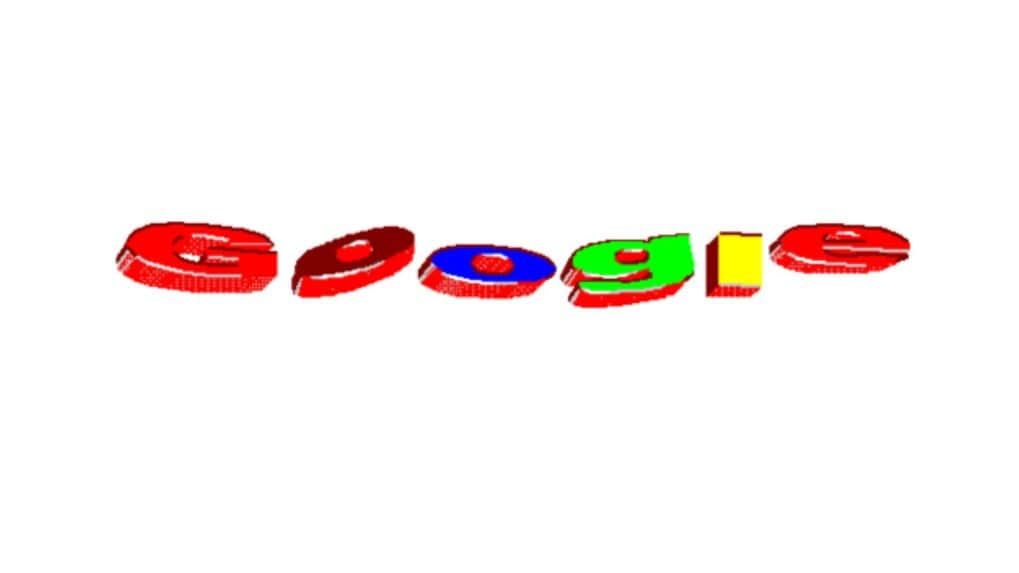
Google is marking its 28th birthday on September 27, 2026, with a special Doodle on its homepage that looks back at the company’s early identity.
The company was started by Stanford University PhD students Larry Page and Sergey Brin, who began developing a search engine project in the late 1990s. Initially known as BackRub, the project used PageRank to organise web pages by examining links and relevance.
Google Inc. was incorporated on September 4, 1998. Before that, Sun Microsystems co-founder Andy Bechtolsheim had written a $100,000 cheque to Page and Brin in August 1998, an event that marked the formal beginning of the company.
The name Google was derived from “googol”, the mathematical term for the number represented by 1 followed by 100 zeros. Although the company was incorporated on September 4, September 27 later became the date used for its annual birthday celebration.
From search to Gmail, Maps and YouTube
Google’s expansion gathered pace after its 2004 public listing. Gmail launched that year with 1 GB of free storage, followed by Google Maps in 2005.
In 2006, Google acquired YouTube for $1.65 billion. The company added another major product with the launch of Chrome in 2008, alongside Android as an open-source mobile operating system.
Over time, the company expanded well beyond search, building a portfolio that includes email, maps, online video, mobile software and web browsing.
Google’s corporate structure changed in 2015 with the creation of Alphabet Inc. as its parent company. Sundar Pichai became Google’s CEO as part of the restructuring, while Google’s core internet businesses were separated from other ventures within the broader Alphabet group.
AI becomes a bigger focus
Artificial intelligence has increasingly become central to Google’s products and technology efforts. Its machine learning work includes BERT, which was developed to improve how systems understand language and search queries.
Google later expanded its generative AI efforts through the Gemini family of models. Gemini is designed to handle different types of information and support tasks such as reasoning, coding and content creation. AI has also become increasingly integrated into Google’s search products and other services.
Google’s role in education
Google’s ecosystem has also extended into education. Google Scholar provides access to academic literature, while Google Classroom helps schools and educators manage assignments, lessons and communication.
YouTube has added another layer to Google’s education footprint, with videos covering everything from school-level subjects to specialised academic topics.
Twenty-eight years after its incorporation, Google is celebrating a journey that began with a search project and expanded into a broad technology ecosystem spanning search, Gmail, Maps, YouTube, Android and artificial intelligence.
Follow Storyboard18 on Google for the latest and breaking digital news and industry updates, along with in-depth coverage of digital media and gaming news. Stay informed with the latest perspectives only on Storyboard18.
First Published on September 27, 2026, 11:01:02 IST