
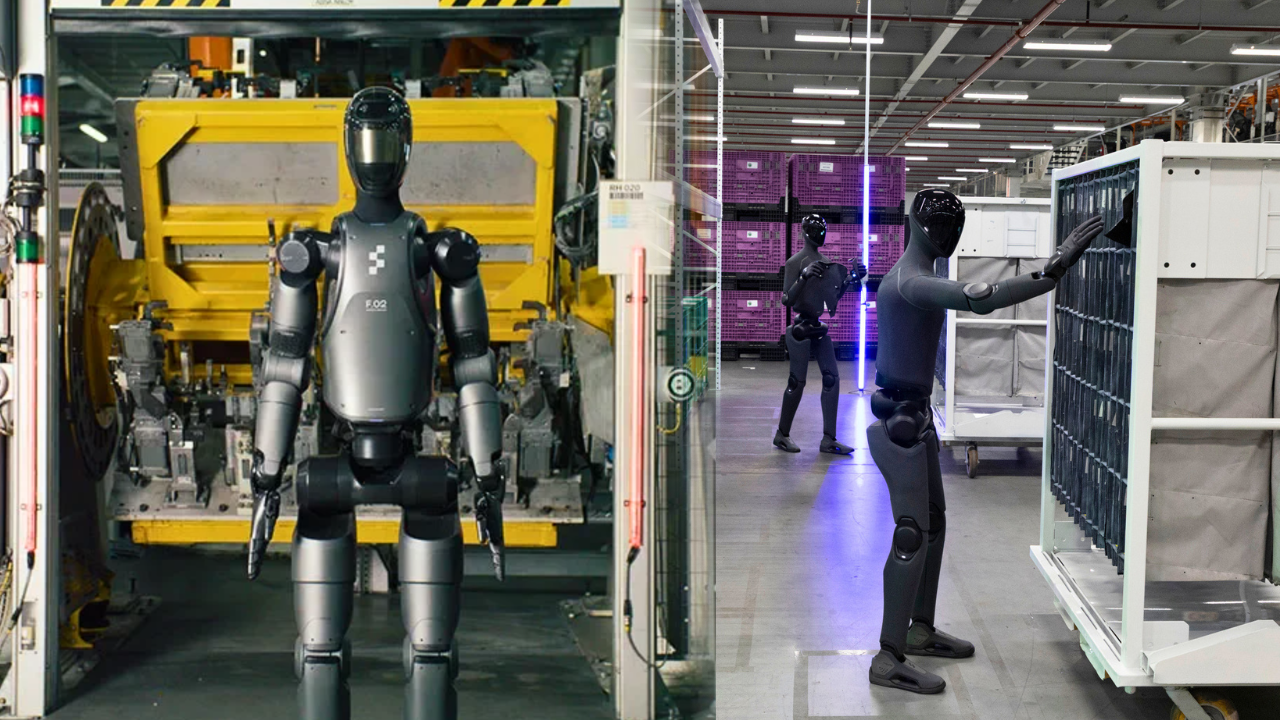
 Figure 02 and Figure 03 robots at BMW Spartanburg (Source: BMW)
BMW’s announcement about expanding its partnership with Figure AI confirms the substance of a 2025 Fortune article that Figure founder Brett Adcock threatened to sue over.
In an April 2025 piece, reporter Jason Del Rey questioned whether the billionaire founder was “exaggerating his startup’s work with BMW” at its Spartanburg, SC plant. It cited insiders at BMW who said the pilot involved a single robot doing limited part handling (picking and placing sheet metal) during off-hours initially followed by short intervals in live production.
 Screenshot of Fortune article about Figure AI from April 2025
Adcock responded forcefully. On social media, he said “Figure cannot take this lying down and must make sure nothing like this happens again.”
The threat never evolved into litigation. It looked more like a pressure tactic than a lawsuit Figure was likely to pursue. The article remains live on Fortune’s website and the publication never dug further.
 Source: @adcock_brett/X
Last week, BMW announced it’s testing Figure’s third-generation humanoids for logistics at the Spartanburg plant, which is the luxury automaker’s largest manufacturer by volume.
In its latest press release, BMW’s framing of the 2025 largely supports Fortune’s reporting, just without the skeptical language. BMW never describes a fleet of Figure humanoids working at the plant. Instead, it refers to a single robot performing a narrowly defined task.
“In collaboration with the technology company Figure AI, the Figure 02 robot supported the production of more than 30,000 BMW X3 vehicles over ten months. In the body shop, the robot inserted sheet-metal parts for the welding process – a task that demands high speed and accuracy and can be physically demanding.”
Multiple robots could’ve rotated through the workstations, as Figure demonstrated during its recent eight-day logistics livestream. But Adcock’s earlier description made it seem as though a fleet of the humanoids was doing end-to-end production work at the plant
The math makes a single robot working at a time much more plausible than several.
BMW says Figure supported the production of more than 30,000 X3s over 10 months, while working 10-hour shifts Monday through Friday. That amounts to about:
200-220 production days
2,000-2,200 available shift hours
14-15 vehicles supported per scheduled hour
one vehicle every 4 minutes
That workload is entirely plausible for one robot performing one repetitive sheet-metal placement task. If several robots were needed to achieve the output, the result would look much less impressive. It would actually slow down production.
Ultimately, it doesn’t matter. People don’t remember things. By September 2025, Figure had announced more than $1 billion in Series C commitments for a $39 billion post-money valuation. Investors clearly cared more about the broader humanoid-robotics opportunity than litigating the definition of the word “fleet.”
Both things can be true at once. Adcock appears to have overstated the scale and scope of the initial deployment. The exaggeration resulted in little lasting commercial consequence. He’s been much more measured with his language since.
Figure benefits enormously from BMW’s credibility, but the Silicon Valley startup is probably secondary to the message BMW is sending about itself. It shows it’s experimenting with next-gen physical AI before the tech becomes standard, countering the narrative that Chinese manufacturers have pulled ahead in factory automation.
That message carries more weight amid reports that Volkswagen is considering cutting as many as 100,000 jobs worldwide and closing four German plants.