
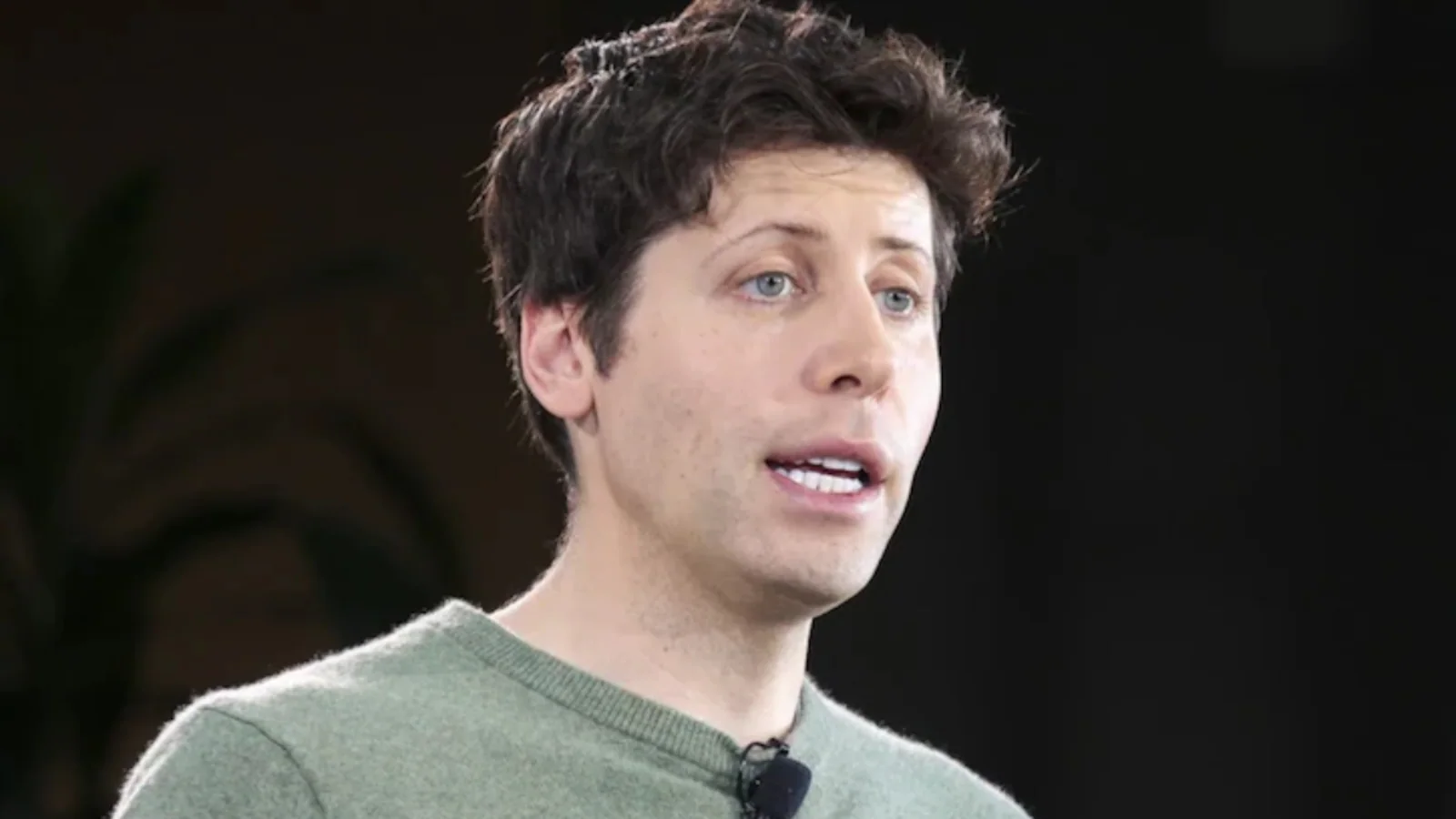
Tech entrepreneur Sam Altman, who co-founded OpenAI, has faced a number of ups and downs during his career. He led one of the biggest technological revolutions in recent years, yet, faced backlash over controversial comments, corporate power shifts and skyrocketing cost of computer hardware. Now, he has opened up about the “bad guy” tag. Appearing on Raj Shamani’s podcast Figuring Out, Altman said Americans are sceptical of people in positions of power, particularly those running powerful technology companies.
Shamani pointed out that Altman had helped build a technology that has transformed how people work and access information, yet had somehow been villanised. He also highlighted the unusual fact that Altman does not own equity in OpenAI, the company he leads.
“Well, I think the US has great scepticism of people in power and in particular of the just enormous power that the tech industry holds. But I would say this is probably a good thing in some ways. It does feel to me like it’s gone a little far,” Altman responded.
The exchange comes amid an intensifying debate over the influence of a handful of technology companies that are developing increasingly powerful AI systems. OpenAI, Google, Microsoft and Anthropic are among the companies investing billions of dollars in the technology, which could reshape industries, workplaces and access to information.
READ | Sam Altman Says Indians Have “Incredible Builder Energy” When It Comes To AI
The concerns are not limited to AI taking away jobs. They also involve the concentration of economic and technological power, the use of personal data, accountability for AI-generated content and the extent to which a small group of private companies could influence the technology’s future.
Altman himself has been at the centre of questions about OpenAI’s leadership and governance. His brief removal as chief executive in November 2023 exposed divisions within the company over its management and direction. More recently, a high-profile legal battle with Elon Musk has brought renewed attention to OpenAI’s original non-profit mission and its corporate structure. A jury rejected Musk’s claims in May 2026, although the proceedings brought further scrutiny of Altman’s leadership.
Sam Altman On Dangers Of Concentrating AI Power
Interestingly, Altman acknowledged that concerns about excessive power in the hands of a few technology companies are not misplaced. In the podcast, Shamani asked him about the biggest risks associated with the development of superintelligent AI.
Altman identified two possibilities: Humans losing control of increasingly capable AI systems, or one individual, company or country acquiring disproportionate power through the technology.
“I believe in pluralism. I don’t think only us having it is good either,” he said.
“I think there are two kind of cartoonish ways this goes really wrong. One is that there’s a loss of control to AI… And the other is one person or company or country gets way too powerful relative to everybody else. I think that’s very unstable,” he added.
Altman argued that having several AI companies developing competing systems with different approaches would be better for society than allowing one player to dominate the field.
“I also have this dislike of too intense power concentration. I think that’s not what works,” he said.
His comments reveal the difficult balance facing the AI industry. Companies such as OpenAI are racing to build increasingly powerful technology while simultaneously having to convince governments and the public that its development can be trusted.
For Altman, scepticism of Big Tech may have gone too far. But his own warning about the dangers of concentrating AI power suggests that the questions being raised about the industry are unlikely to disappear anytime soon.