
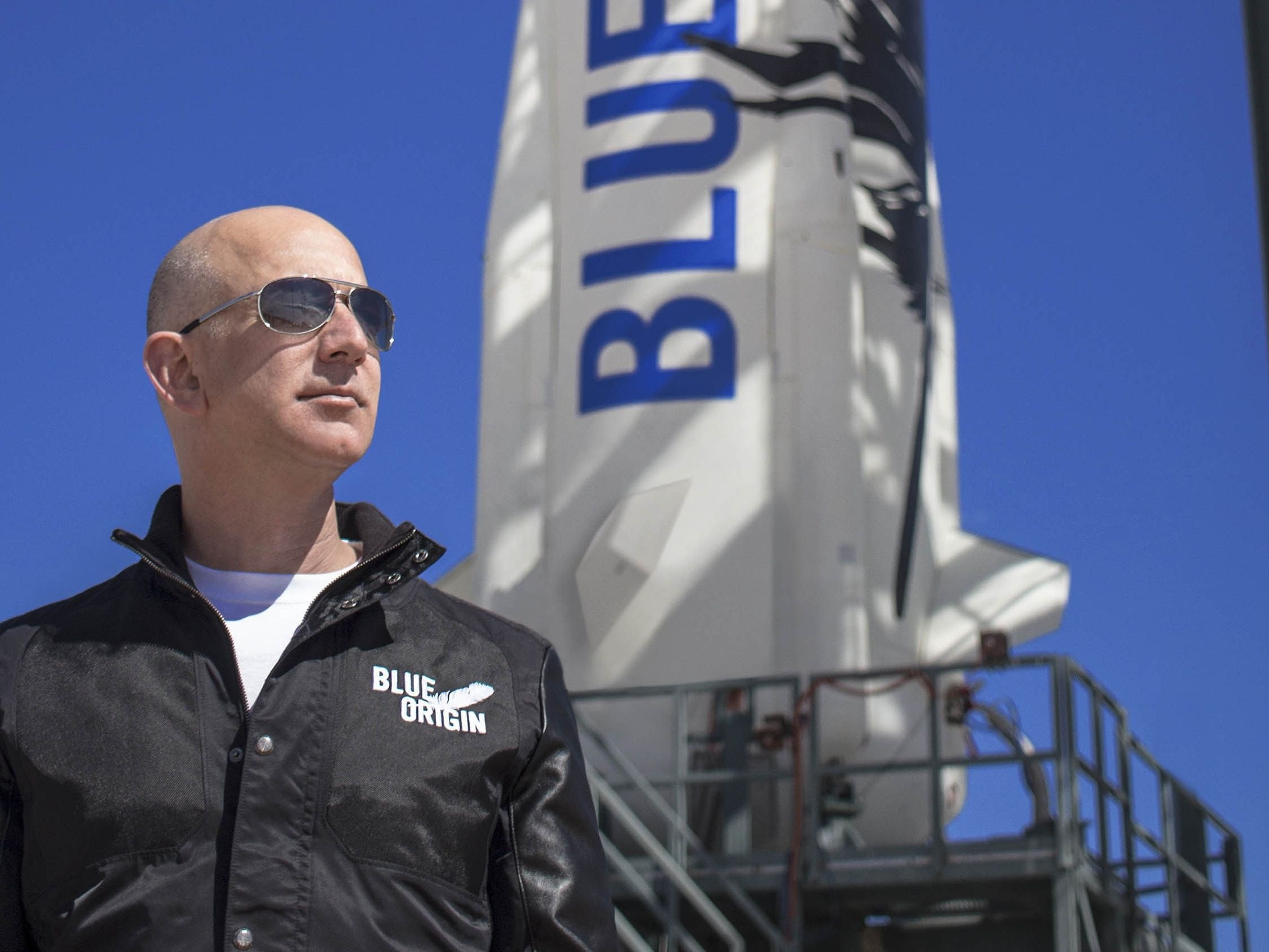
Jeff Bezos told everyone he wanted to be an astronaut. He was fascinated by the science fiction collection someone had donated to the Cotulla Library, particularly drawn to Isaac Asimov and Robert Heinlein. At home, he devoured Star Trek episodes every day after school. When playing role-playing games with friends using laser guns and cardboard scanners, he often played the Enterprise’s computer—a model that later inspired the Alexa voice assistant.
Calling Jeff Bezos a die-hard fan doesn’t quite capture his passion for Star Trek. Decades later, he sought to make a cameo appearance in Star Trek Beyond and sent 90-year-old William Shatner—the original Captain Kirk—to the edge of space.
Blue Origin was founded out of passion.
As a teenager, Bezos attended NASA’s high school program in Huntsville, Alabama, a town known as Space City. His most influential book was Gerard K. O’Neill’s “The High Frontier: Human Colonies in Space” (1976).
Professor O’Neill, a physics professor at Princeton, has argued for the possibility of building human settlements between Earth and the Moon, housing tens of thousands of people in a sealed environment with Earth-like gravity and climate.
At Princeton, he told his classmates about his ambition to build a company capable of space exploration. He attended O’Neill’s seminars and led the Students for the Exploration and Development of Space (SV) chapter at the school. Bezos soon concluded he would never become a leading physicist. His path to space had to be through business.
In 2000, Bezos founded the space company Blue Origin. In his early days in Seattle, he launched homemade rockets in a public park with science fiction writer Neal Stephenson.
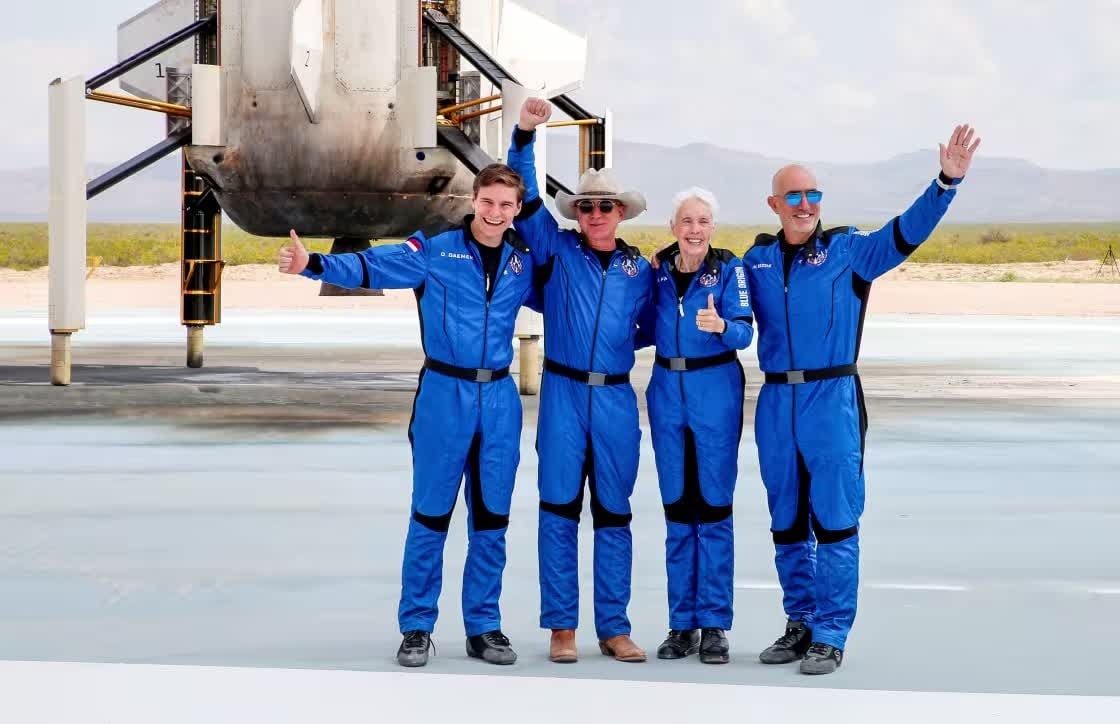
Jeff Bezos (second from left) and crew members at the landing pad after Blue Origin’s first flight to the edge of space, in Texas on July 20, 2021. Photo: Reuters .
Bezos began building the necessary infrastructure to boldly venture into uncharted territory. The program to take tourists on near-orbital flights aboard the New Shepard rocket progressed slowly, with the company losing its unmanned test vehicles in 2011 and 2015.
Meanwhile, Elon Musk poured all his resources into SpaceX, hiring ten times the number of employees and achieving billions of dollars in revenue. Musk launched commercial and military satellites into orbit using Falcon 9 rockets and won contracts from NASA to resupply the International Space Station.
These two men differed sharply in personality and career path. Bezos wasn’t heavily influenced by his childhood, nor did he build his brand as a brilliant engineer or a talented technology inventor. He wasn’t a showman; his private life was like that of any other ordinary person, while his career was shaped by taking rational risks.
Their motivations for conquering space are also different. Optimism, a love of exploration , and a commitment to problem-solving shaped Bezos’ belief that Blue Origin’s mission is to expand humanity’s potential. Musk, on the other hand, wants to build a self-sufficient city on Mars.
Both faced similar technical and economic challenges: How to land and reuse rockets? How to turn space into a sustainable business? In these respects, SpaceX significantly outperformed Blue Origin. While Musk focused on contracts with NASA and the Pentagon, Bezos didn’t pursue government projects until 2010.
After successfully launching and landing in orbit in 2017, he announced he would sell one billion dollars worth of Amazon stock annually to expand operations. He began dedicating a day each week to Blue Origin and initiated the process of finding its first true CEO. He accelerated the development of New Glenn—Blue Origin’s first orbital rocket, competing with SpaceX’s Falcon 9—and began pursuing satellite launch contracts.
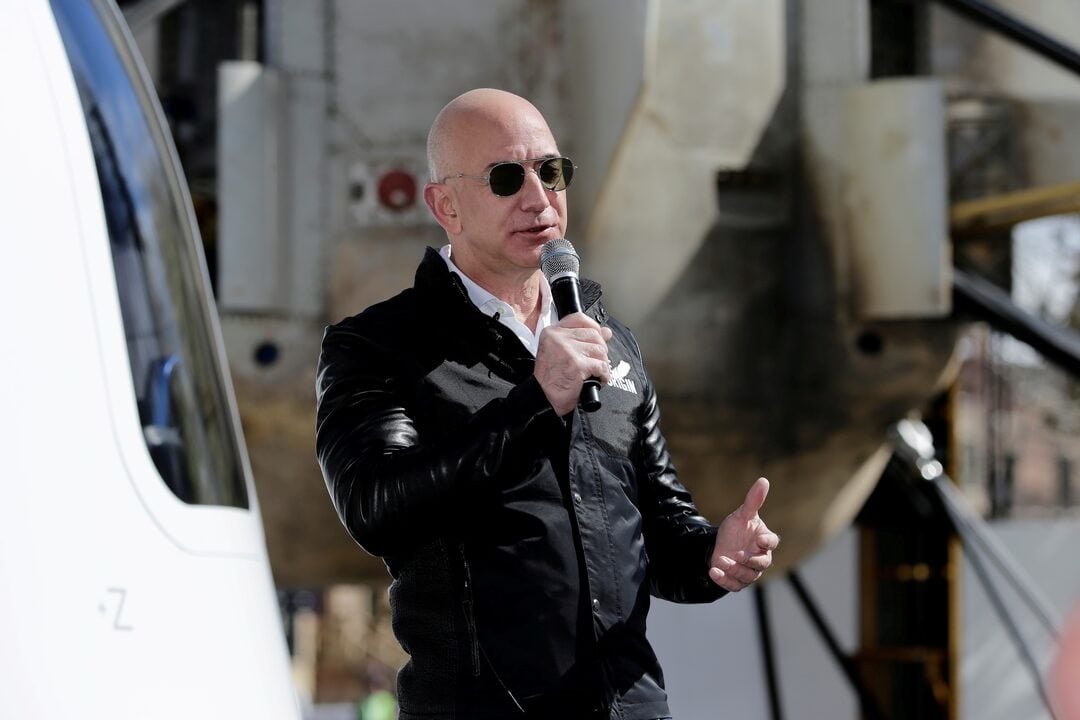
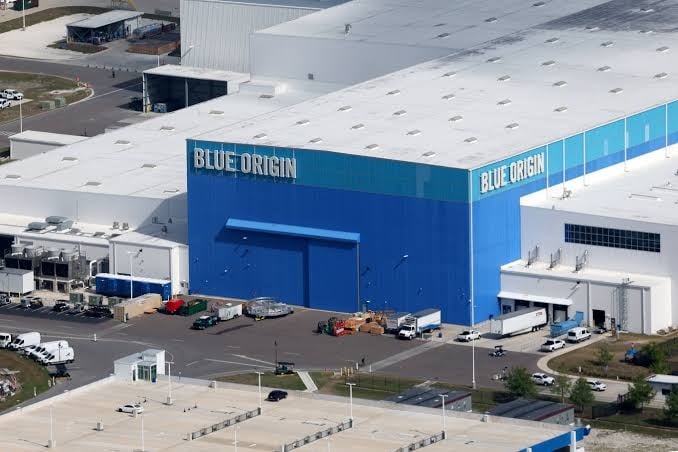
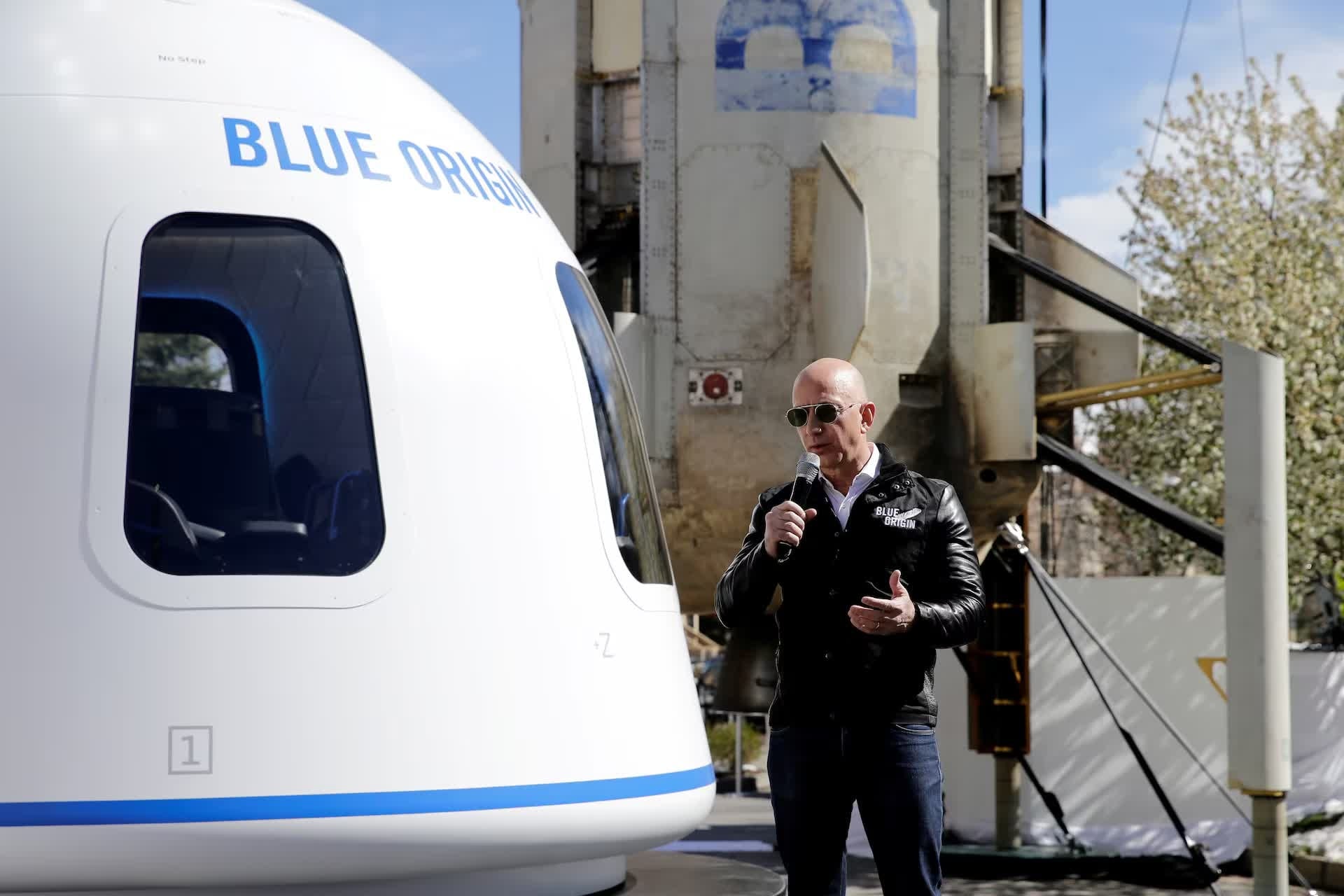
Blue Origin initially appears to have been created to serve Jeff Bezos’s personal interests rather than as a highly profitable business idea. Photo: Reuters .
When a passion for space intersects with politics.
In August 2013, the Graham family announced the sale of the Washington Post to Bezos for $250 million . The newspaper had been losing money for years, and Bezos provided exactly what they needed: a long-term vision and substantial capital. The Graham family made it clear that the Washington Post could not become a political tool, and the Amazon CEO agreed. Bezos declared he would protect the newspaper’s core values while investing in products and technology.
Meanwhile, Donald Trump argued that owning a newspaper simply gave him more leverage. In May 2016, Trump harshly criticized Bezos and the Washington Post for “serving political purposes, to save Amazon in tax and antitrust matters.” However, Bezos only said Trump’s threats were “not the appropriate behavior for a presidential candidate,” and the Washington Post never changed its reporting style despite Amazon being targeted.
In July 2019, despite being considered the market leader in cloud computing and the strongest candidate technically, Amazon Web Services lost to Microsoft Azure in a $10 billion contract to migrate all of the US Department of Defense’s data to a centralized cloud system.
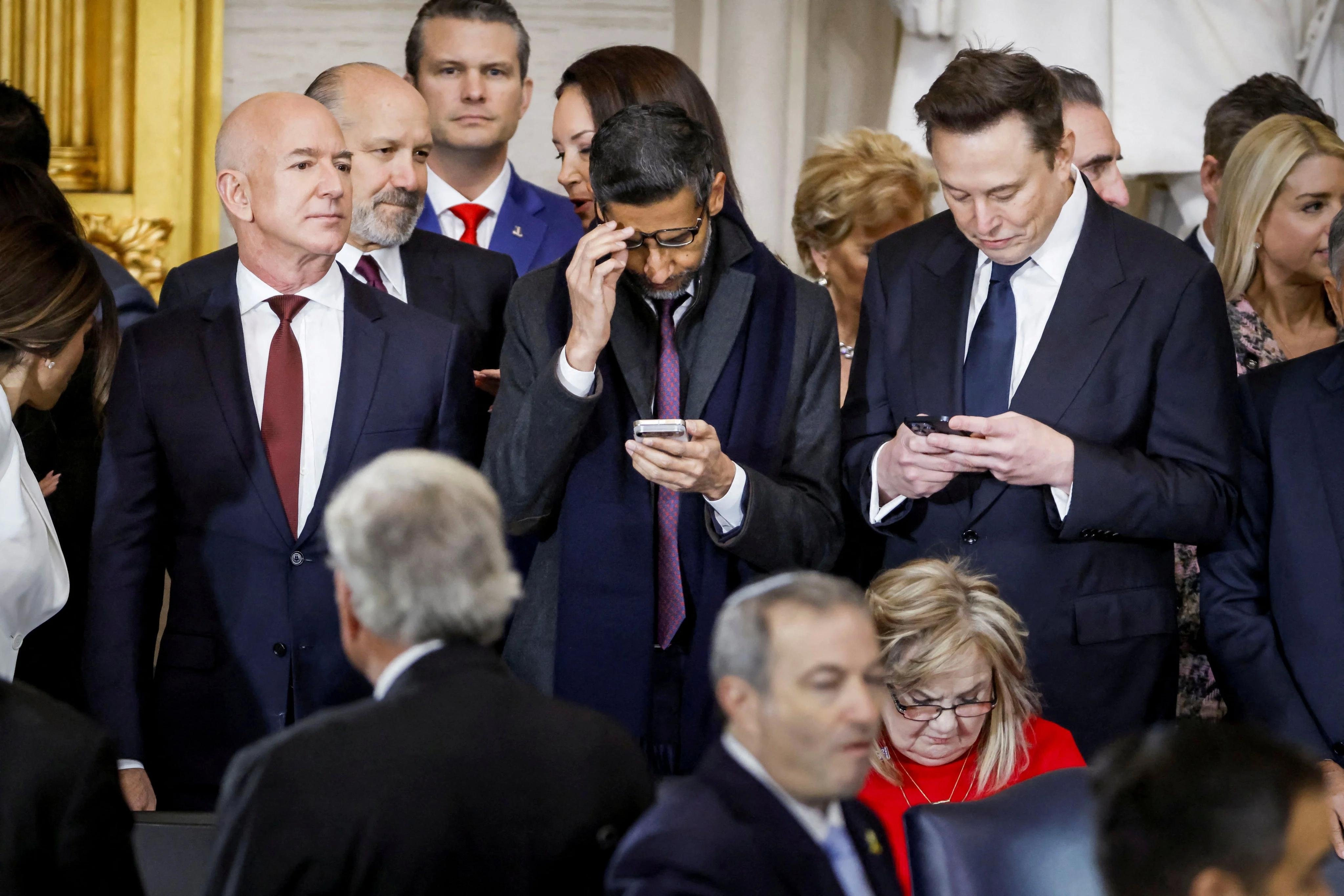
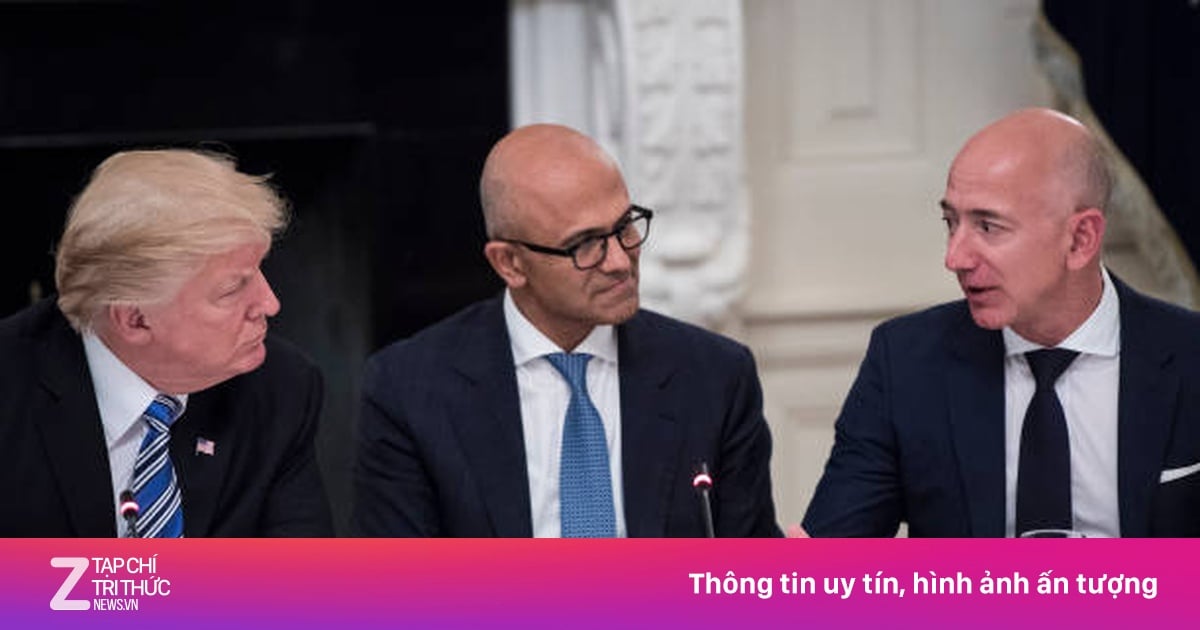
Jeff Bezos at Trump’s second inauguration, despite their not-so-pleasant first term together. Photo: Reuters .
Bezos’s 2019 divorce also garnered significant media attention. While Bezos was reorganizing his personal life, Elon Musk quickly forged close relationships with powerful figures. In May 2024, Musk met with Trump and reportedly discussed an advisory role in the future administration. Just minutes after Trump’s assassination attempt in Pennsylvania, Musk publicly expressed his support and began donating massive sums of money to Trump’s campaign.
Bezos began following in the footsteps of most other tech leaders. He praised the president’s “courage.” His most notable move was canceling the Washington Post’s endorsement plan for Democratic candidate Kamala Harris, citing concerns it would create a “sense of bias,” although many veteran staffers were unhappy about it.
There have been no reports of Bezos interfering with the reporting process. However, his concessions have cast a shadow over the newsroom, leading to the departure of numerous top political and investigative journalists. By February, the newspaper had laid off approximately 30% of its staff, reducing the number of newsroom employees to just over 300.
Meanwhile, Blue Origin is once again vying for government contracts, and now has the potential to be favored over SpaceX. In June 2025, Trump threatened to cancel all of SpaceX’s government contracts, enraging Musk. NASA, the Pentagon, and other agencies began calling Blue Origin, asking if they could fill that gap.
Amazon’s business also benefited. When information leaked that the company was considering displaying tariff costs at checkout, Trump called Bezos directly. Whether that plan actually existed remains to be seen, but the possibility evaporated overnight. Bezos—who always considered his personal interests intertwined with humanity’s future expansion beyond Earth—understood he needed to appease the president.
“Jeff Bezos was very polite. He was great, he solved the problem quickly. He did the right thing. He’s a good friend,” Trump said after the call.