
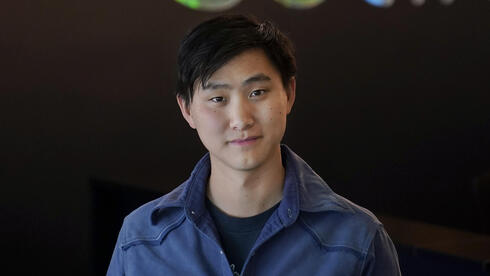
The head of Meta’s artificial intelligence operations has warned that humanity is approaching a turning point in the development of artificial intelligence, arguing that the arrival of superintelligence is no longer a distant possibility and that decisions made over the coming year could determine the kind of future people inherit.
In a lengthy post titled “Superintelligence is Arriving,” Alexandr Wang said a recent attempt to prove the Riemann Hypothesis with the help of artificial intelligence marked the beginning of a major shift in human history. The problem, first formulated by German mathematician Bernhard Riemann in 1859, is one of the most famous unresolved questions in mathematics. It concerns the distribution of prime numbers and has resisted generations of mathematicians.
1 View gallery
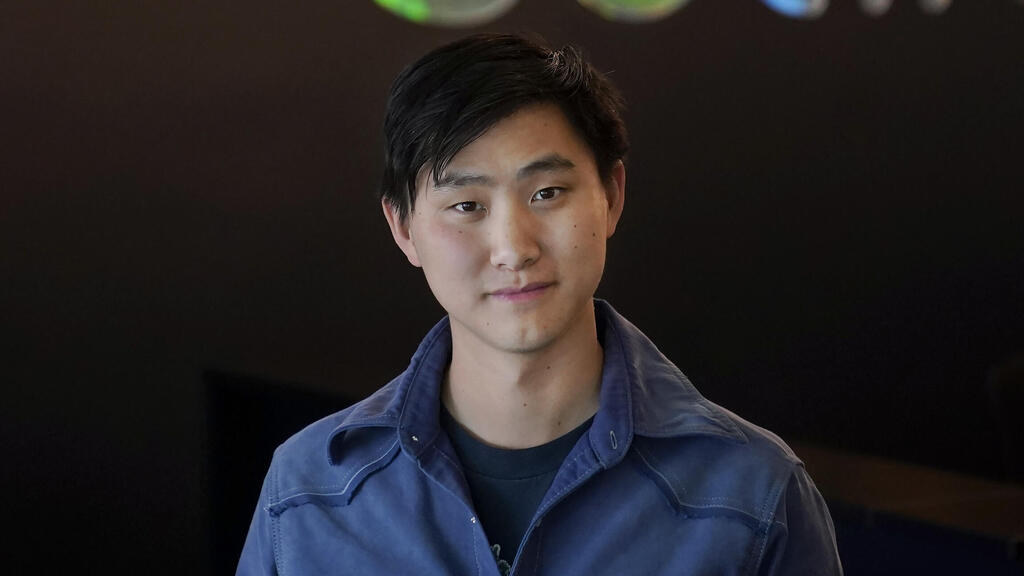
Alexandr Wang.
(Photo: AP Photo/Jeff Chiu)
Wang described the achievement as an intellectual milestone without precedent, arguing that solving the hypothesis requires a level of abstract reasoning beyond almost anything else humans have attempted. “It is hard to overstate the magnitude of discovery that we have just witnessed,” he wrote, describing it as having been “completed with the help of an alien mind that we don’t understand.”
The claim refers to work by Levent Alpöge, a mathematician on Anthropic’s technical staff, who said he had found a proof of the hypothesis in collaboration with the company’s Claude AI model. The proposed proof was released as approximately 17 million lines of code in Lean, a system used to formalize mathematical proofs. The announcement has attracted considerable attention, but the claim has not yet been accepted as a settled mathematical result. Mathematicians are still working to understand and assess the argument, and the Clay Mathematics Institute continues to list the hypothesis as unsolved.
For Wang, however, the significance extends beyond whether this particular proof ultimately withstands scrutiny. He sees it as evidence that AI systems have reached a level of raw intellectual capability that could soon make them superior to humans in a wide range of disciplines.
He compared the moment to the reaction among mathematics students when OpenAI’s o3 model began performing exceptionally well on the American Invitational Mathematics Examination, or AIME, in late 2024. The competition, aimed at high-achieving high school students, tests difficult mathematical problem-solving. Wang argued that the hardest questions in such competitions demand a level of abstract reasoning greater than that required for much of the work performed by engineers, executives and other professionals.
The distinction, he said, is that AI systems initially lacked the domain-specific knowledge, context and practical capabilities needed to apply their reasoning to real-world tasks. Over the past two years, he argued, progress in those areas has removed many of the remaining obstacles. He pointed to advances in coding, cyber capabilities and AI agents that can perform increasingly complex tasks as evidence that models are becoming useful across a growing range of fields.
“The remaining gaps for models to greatly surpass humanity in every field are no longer intelligence; they are domain-specific know-how, plumbing, and experimentation,” Wang wrote.
That shift, in his view, could have consequences far beyond the technology industry. AI could become a major driver of scientific and economic progress, accelerating research in biology, weapons development and other disciplines. Crucially, he believes the technology will also be capable of advancing the field that creates it.
“The models are clearly going to be intelligent enough to automate all of AI research and be clearly superhuman at improving themselves,” he wrote. Such a development could create a feedback loop in which increasingly capable systems help develop the next generation of even more capable systems, potentially accelerating progress at a pace human researchers and institutions would struggle to follow.
Wang said it was difficult to imagine humans retaining control over systems capable of unrestricted recursive self-improvement, or over a superintelligence that could be 1,000 times more capable than people across every field. He argued that the challenge is no longer limited to making AI systems more powerful, but increasingly involves ensuring that their development remains aligned with human interests and subject to meaningful oversight.
The warning quickly prompted a pointed response from Jon Favreau, who described Wang’s comments as “fucking madness” and called for political intervention. “The people we’ve elected should be doing everything they possibly can to stop the frontier labs from handing over control of humanity to superintelligent machines,” Favreau wrote, quoting Wang’s remarks about the difficulty of maintaining human control over recursive self-improvement and systems vastly more capable than people.
Wang responded by arguing that the outcome he had described was not inevitable. “To be clear, much of what I said has been said by the leaders of other labs. What I am saying is this path is not inevitable,” he wrote.
He defended Meta’s approach, saying that he and CEO Mark Zuckerberg had made safety a central priority. Wang pointed to the company’s decision to delay the launch of its Muse model for months, its participation in the SI Accords, and what he described as growing investment in safety and rigorous internal review processes.
“Leaders and leadership matter more than ever,” Wang wrote. He also cited Zuckerberg’s call for AI labs, including Meta, to direct the vast majority of their computing resources toward serving people and customers rather than recursive self-improvement.
“I notice a particular form of lazy thinking within the AI industry, which is that ASI is inevitable and the only problem to solve is how to do it safely, but there is much more at stake,” Wang added.
His concern is not simply that AI could become dangerous, but that the industry might accept a future in which increasingly powerful systems take over decisions and functions that have traditionally belonged to people. “We should not be okay with a ‘handover’ of society to AI,” he wrote.
Instead, Wang argued, the objective should be to develop technology that gives people more control over their lives rather than diminishing their role. “We should endeavor ourselves to build a technology which delivers a positive future for humanity, where all humans have greater agency and empowerment.”
Wang joined Meta in 2025 as its first chief AI officer and leads the company’s Meta Superintelligence Labs. Before joining Meta, he founded Scale AI, which became a major provider of data and infrastructure services to AI developers.