
NEWYou can now listen to Fox News articles!
America’s AI industry is about to find out how much of its financing depended on Jensen Huang’s word.
Huang has said he would be willing to return to Nvidia. On Tuesday, board chair Harvey Jones said the board does not intend to reinstate him as CEO. For independent companies raising money now, the question is whether Nvidia will still commit early enough to bring other investors into their rounds.
According to PitchBook, rounds Nvidia joined accounted for 27.2% of global venture deal value through mid-November. That includes every investor’s contribution, and a handful of very large rounds drove much of the total. Nvidia separately reported $99 billion in equity investments as of July 26. That was the value of its holdings at the time. We don’t know how much Nvidia put into independent open-model developers or how often it led their rounds.
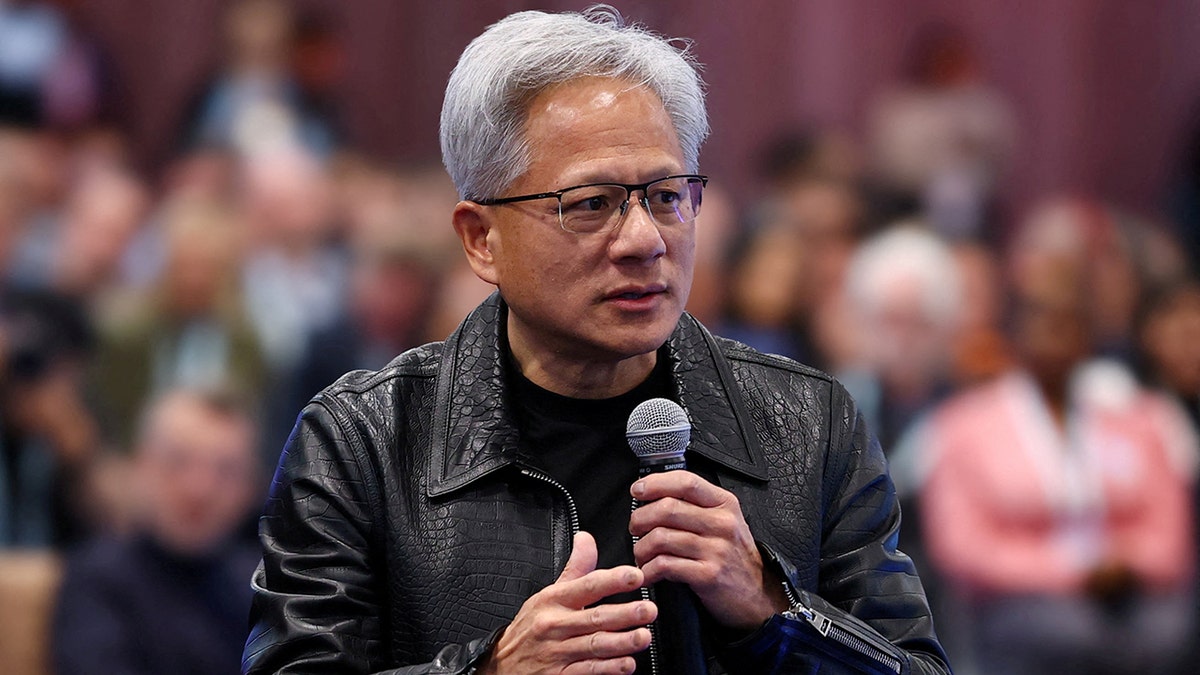
Nvidia CEO Jensen Huang speaks at Dreamforce 2026 summit in San Francisco, Calif., on Sept. 15, 2026.
Reflection AI shows what Nvidia could do when it chose to lead. Huang reportedly committed Nvidia to half of Reflection’s initial $1 billion target and urged other investors to join. The round grew to $2 billion, and Nvidia put in about $800 million. It was an unusually large deal. The sequence is important: Huang committed Nvidia’s money first, then brought other investors in. Nvidia stood to sell chips to Reflection, and that kind of financing deserves scrutiny. It also shows why a lead investor’s decision can
shape a round.
Nvidia still has the means to invest. On Tuesday it reported $115.8 billion in quarterly revenue, up 103% from a year earlier. Its board has said it expects operations, customer commitments and the product roadmap to continue without interruption. Interim CEO Colette Kress said the company is scrutinizing future investments, commitments and guarantees. She also said Nvidia had made no change to the financing conditions on its existing agreements with specialist cloud providers. I expect Nvidia to be more selective about taking new risks. The question for founders and co-investors is which deals it will still lead and how quickly it will decide.
JENSEN HUANG’S NVIDIA DEBACLE REVEALS AMERICA’S REAL PROBLEM: NO SKILLED BUILDERS
As an AI founder and investor, I see how quickly a delay can become a problem for a smaller company. Microsoft, Meta and Google can fund much of their own expansion. An independent lab can have paying
customers and still need to raise money to train its next model. A specialist cloud provider has to finance the chips before it can sell the computing time. If the lead investor waits, others can wait too. The company still has to decide whether it can afford to reserve the computing capacity or keep the people it hired to do the work.
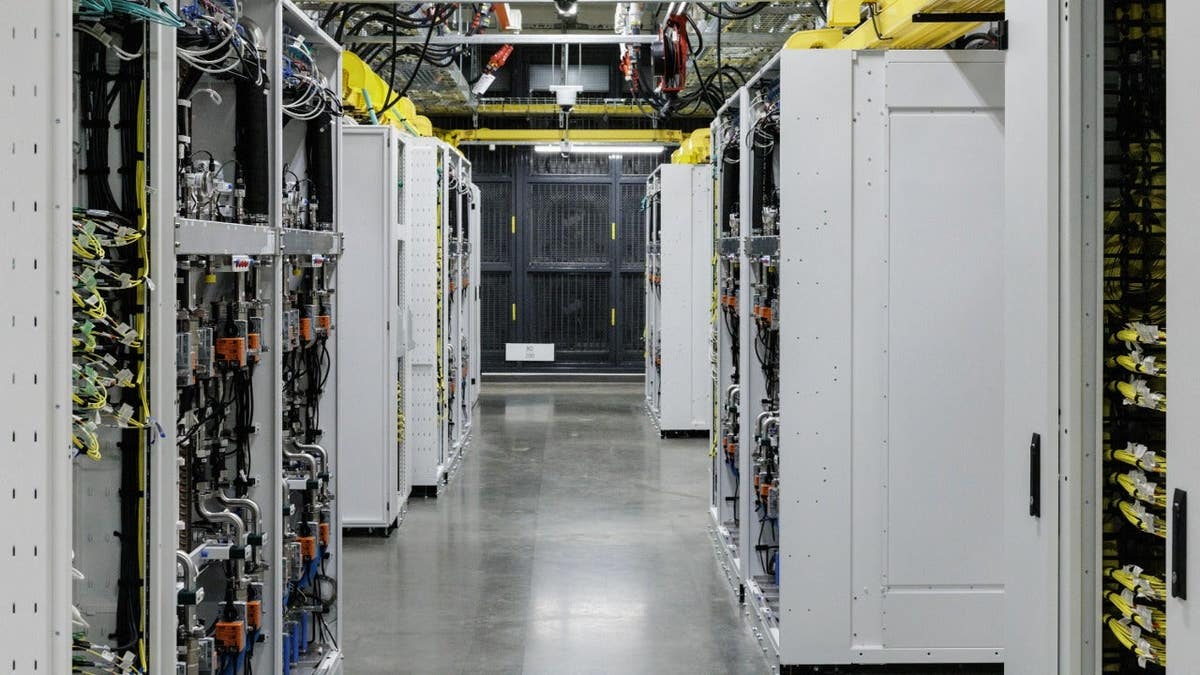
Racks of GPUs with a closed-loop liquid cooling system are seen inside an operational Microsoft data center in Indonesia on Feb. 4, 2026. (Yasuyoshi Chiba / AFP via Getty Images)
China is already competing for the customers those companies could serve. The Lowy Institute counted nearly 1.8 billion downloads of Chinese models on Hugging Face in the third quarter, compared with 500 million for American models. Huawei shows customers how to run Alibaba’s Qwen on its Ascend chips. As more developers use Qwen, Huawei has a chance to sell them the systems that run it. Beijing’s AI action plan promotes both open-source cooperation and computing infrastructure abroad. That combination could become the next chapter of China’s Digital Silk Road.
BEYOND KILLER ROBOTS: CHINA’S REAL AI THREAT TO AMERICA IS ALREADY HERE, EXPERTS WARN
Governments that want to run AI on their own infrastructure should have a competitive American choice in models and hardware. That means Nvidia and AMD, Broadcom’s custom accelerators and systems from specialists such as Cerebras and d-Matrix. Once a government buys the equipment, adapts its software and trains its engineers, switching suppliers is expensive. Americans can disagree about which chips Nvidia should be allowed to sell to China. Weakening Nvidia or the American companies that build with its technology would give Beijing an advantage while other countries are making those choices.
Nvidia should continue backing independent AI companies. Kress and Jones should tell founders and co-investors who can approve pending deals, when decisions will come and whether Nvidia intends to provide follow-on financing. Institutional investors, sovereign wealth funds and independent venture firms should start putting together rounds of their own. Elon Musk, who has welcomed the idea of hiring Huang, could bring investors together for one such partnership. It would need firm capital commitments and the freedom to make investment decisions independently of xAI and his other companies. If we make a model’s weights public, Beijing can get them too. Our allies also need American models they can run on their own infrastructure, with their own data and under their own rules. If we leave that market to China, we make it easier for Beijing to sell the systems those countries will depend on for years. Before taxpayers guarantee financing for an open-model project, an independent review should establish which U.S. security interest it serves and whether the benefits of releasing the weights justify the risks.
CHINA COULD EXPLOIT US TECHNOLOGY TO THREATEN AMERICAN FORCES, CONGRESSIONAL WATCHDOG LEADERS WARN
I believe private investors should decide which companies deserve their money. I would make a narrow exception when a documented financing gap threatens a viable project vital to national security. The Treasury should convene private investors this week to find out which projects are at risk and how much private capital is ready to move. I would set an initial target of $100 billion in combined public and private commitments. Congress should act urgently to authorize a temporary federal credit guarantee under bipartisan oversight, drawing on the Pentagon’s Office of Strategic Capital. Congress should
separately cap taxpayer exposure and set an expiration date. An independent committee should apply published criteria, require recusals for conflicts and approve guarantees only where private investors keep their own capital at risk.
CLICK HERE TO DOWNLOAD THE FOX NEWS APP
If Nvidia and private investors fill the gaps, the guarantees can go unused. It could take months to learn which deals will proceed. A lab can lose the team it took years to assemble in weeks. Nvidia can give founders answers now, and the Treasury can bring investors together while there are still deals to do.
Disclosure: The author has an indirect investment in Reflection AI through her limited-partner interest in a fund managed by 1789 Capital.
Noosheen Hashemi is a Silicon Valley entrepreneur, former Oracle executive and founder and CEO of January AI, using artificial intelligence to transform how people understand and manage their health.