
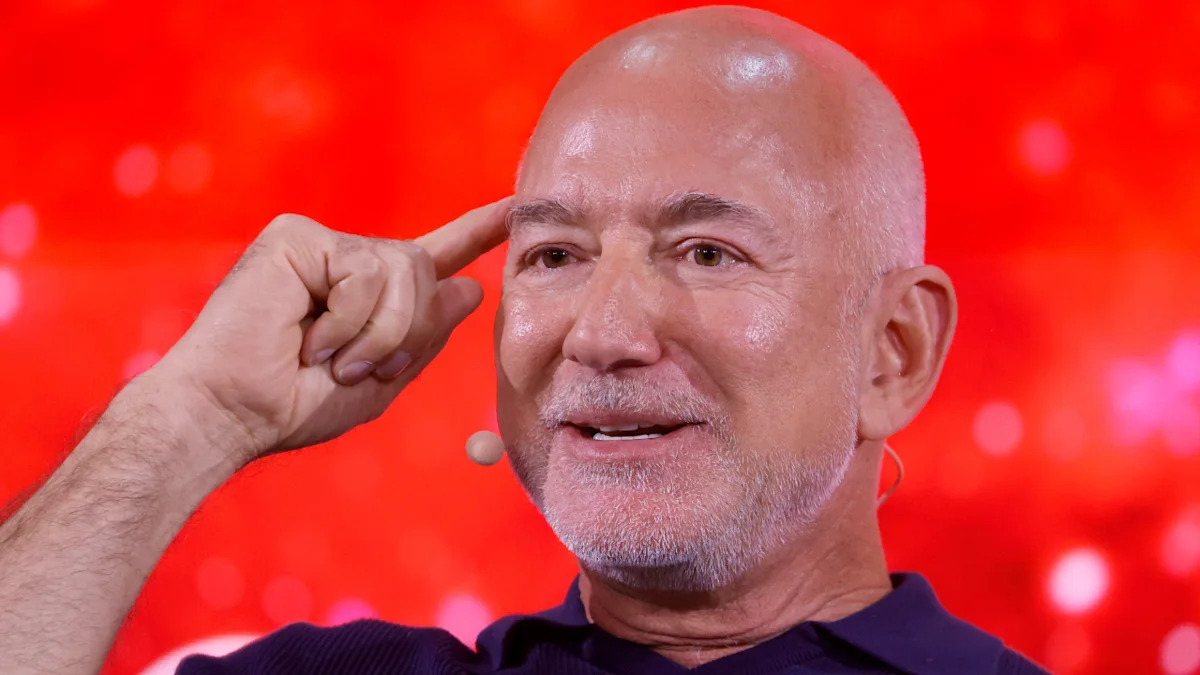
 Chesnot / Getty Images
Could your family live comfortably on one paycheck? Jeff Bezos thinks AI, at its rapid rate of progress, could make that pipe dream a real choice for many.
“You’re not going to need to have a two-earner household,” the Amazon (NASDAQ:AMZN) founder told Fox News in an Oct. 7 interview. “If you want it, fine. If you don’t want to have it, one of the people might drop out.”
Must Read
Bezos also predicted employers will feel the squeeze. “You’ll have a labor shortage,” he said.
In his view, rising productivity means people who don’t want to work two jobs won’t have to.
For a typical two-earner household, though, dropping to just one paycheck could mean a steep pay cut — and possibly the loss of workplace benefits.
What layoffs, AI warnings and today’s households say
The timing is awkward. Amazon cut about 14,000 jobs in October 2025, then followed with about 16,000 more roles in January 2026, according to an email from Amazon senior vice president of people, Beth Galetti. On those cuts, Bezos pointed to the pandemic: “Amazon is in a very special position where coming out of COVID, we had hired so many people.”
He’s also building the technology behind his forecast. As co-CEO of the AI startup Project Prometheus, Bezos said the goal is tools “so easy to use that anyone will be able to be an engineer.”
Others see a harsher road. Anthropic CEO Dario Amodei told Axios in 2025 that AI could wipe out half of entry-level white-collar jobs within five years and push unemployment to between 10% and 20%.
For now, though, dual incomes are common. The Bureau of Labor Statistics (BLS) found both spouses worked in nearly half of married-couple families in 2025, while only one worked in a roughly quarter of those families.
The math on 1 income
Say each partner earns the national median. BLS data shows full-time wage and salary workers had median weekly earnings of $1,232 in the third quarter of 2026, which works out to about $64,064 a year before taxes, or $128,128 for two earners.
That single paycheck would sit about 27% below the Census Bureau’s real median household income of $87,460 for 2025. Rent, groceries and loan payments won’t shrink just because AI got better.
Bezos also floated a middle path, saying some people will decide, “I can support my family by working three days a week.”
If pay scales with the number of days worked, a three-day week at the median would bring in about $38,438 a year, or 60% of a full-time paycheck.
But other costs are easy to overlook. Census data shows employment-based insurance covered 53.5% of Americans in 2025, so one partner leaving a job could mean having to replace a health plan.
Retirement savings can take a hit too. The IRS has set 2027 limits of $25,500 for a 401(k) and $7,500 for an IRA. Losing a paycheck can also mean losing a workplace plan.
Before anyone quits
Bezos is making a prediction, not a promise, so it pays to run your own numbers before anyone gives notice.
Start by totaling your fixed monthly bills to see whether a single paycheck would cover them. Then find out what a replacement health insurance plan would cost. If one of you does step back, keep contributing to retirement accounts in both names, and build extra cash beforehand, since a layoff could threaten your remaining paycheck.
What To Read Next
Join 250,000+ readers and get Moneywise’s best stories and exclusive interviews first — clear insights curated and delivered weekly. Subscribe now.
This article originally appeared on Moneywise.com under the title: Jeff Bezos says your family’s ‘not going to need’ 2 paychecks thanks to AI. Before you quit, here’s the math on 1 income
This article provides information only and should not be construed as advice. It is provided without warranty of any kind.