
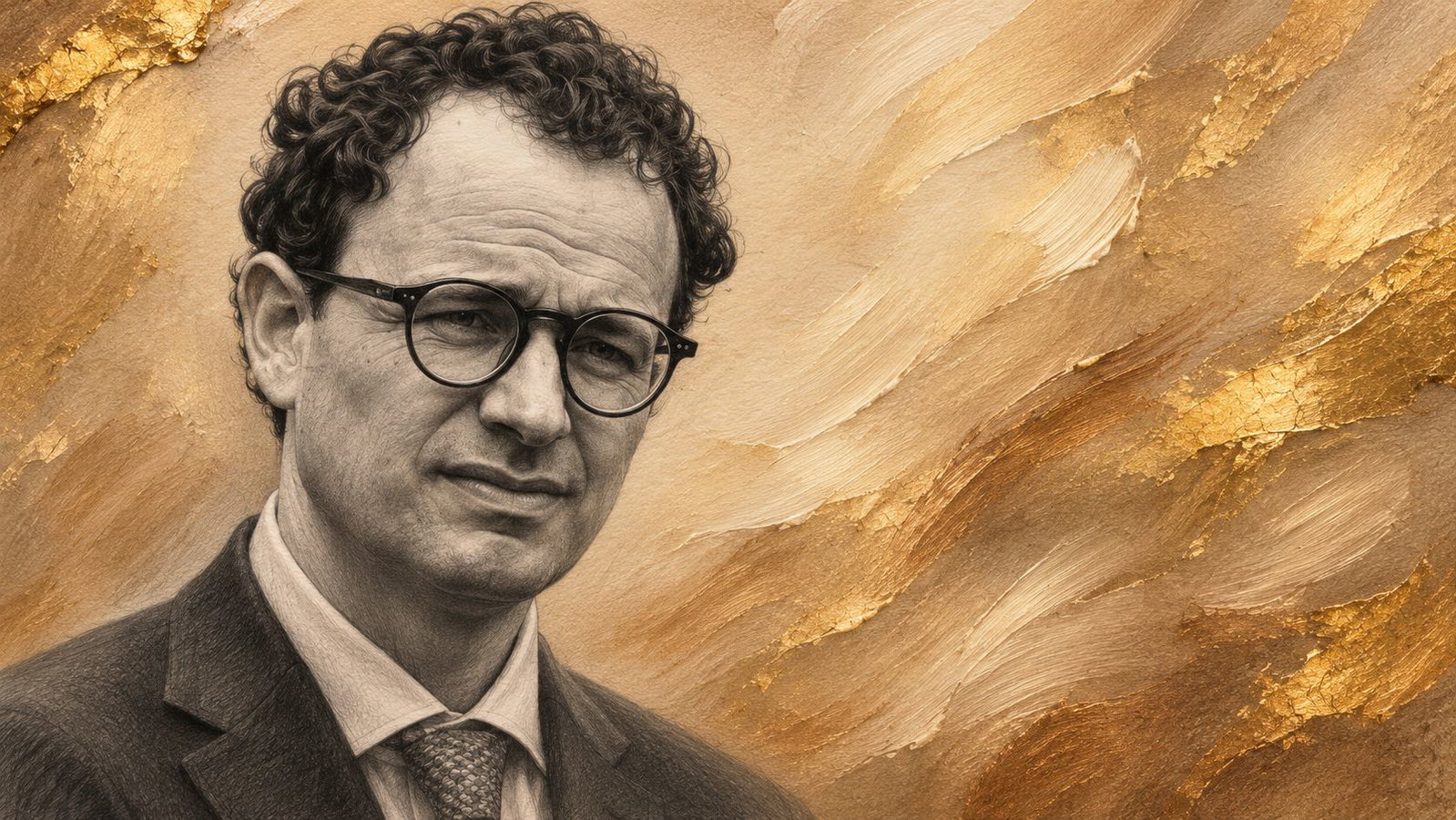
The largest stock offering on record made seven former OpenAI colleagues very rich on nearly identical terms, and left public shareholders with almost no say over the company they bought.
The seven Anthropic founders each owned a stake worth about $19.6 billion when Anthropic priced its initial public offering at $83 a share on Wednesday, November 18. The sale of 980 million shares raised $81.3 billion, the largest offering on record, and valued the maker of the Claude AI models at roughly $1.5 trillion on a fully diluted basis.
The size of the fortunes is the obvious story. The structure behind them is the more instructive one. Seven people hold almost exactly the same number of shares, about 240 million each before the offering. Together they own less than a tenth of the company and control just over half of its votes. They have said they will give most of the money away, in a pledge the prospectus describes as non-binding. Each of those facts tells boards and investors something about how the most valuable AI company to list so far has chosen to be governed.
Who the Anthropic founders are
All seven worked at OpenAI and left at the end of 2020. They incorporated Anthropic in January 2021.
Dario Amodei, 43, is chief executive. He studied physics at Caltech and Stanford, took a doctorate in biophysics at Princeton and did postdoctoral research at Stanford’s medical school before working at Baidu, Google and then OpenAI, where he was vice president of research. His sister Daniela Amodei, 39, is president and chairs the board. She read literature at the University of California, Santa Cruz, and worked in politics and at the payments company Stripe before joining OpenAI.
Jared Kaplan, 42, the chief science officer, has a physics doctorate from Harvard and was a professor at Johns Hopkins. Sam McCandlish, 36, the chief architect, earned a doctorate in theoretical physics at Stanford. Tom Brown, 39, the chief compute officer, studied engineering at MIT and was among OpenAI’s first 20 employees. Jack Clark, 38, who leads the Anthropic Institute, studied English literature at the University of East Anglia and covered technology as a journalist. Chris Olah, 34, who leads interpretability research, went to work on neural networks after receiving a Thiel Fellowship in 2012, a grant given to young people who pursue projects outside university.
The group is often described as a product of elite universities, and four of the seven did study at Stanford, Harvard or MIT. The pattern in their training is more specific. Three hold doctorates in physics or biophysics. None of the seven built a career on a computer science doctorate, and two came from the humanities.
Seven nearly identical stakes
Founding teams rarely split equity evenly, and almost never seven ways. Chief executives usually hold a multiple of what their co-founders own. At Anthropic the prospectus showed each founder with about 240 million Class A shares, roughly 1.4 percent of the company apiece and about 10 percent together.
CEOWORLD Magazine calls this the seven-way split: an equal division of founder equity that removes the usual argument over who contributed most and ties every founder’s fortune to the same share price. It has a practical consequence. No founder can gain by leaving, and none holds enough alone to matter in a vote, so the group acts as a bloc or not at all.
The founders sold about $2 billion of stock between them in the offering and kept the rest. At the offer price each retained stake was worth an estimated $19.6 billion to $19.7 billion. The shares closed their first day, Thursday, November 19, at $97.17 and their second at $88.91, which puts each stake near $21 billion by CEOWORLD Magazine’s calculation. Before the listing, at the $58.90 a share implied by a private funding round in May, the same holdings were worth about $14 billion.
Control sits with the founders and a trust
Economic ownership and voting power have been separated more sharply here than at most listed companies. A company owned by the seven founders holds a single share of Class F stock that carries 50.1 percent of the vote on most shareholder matters. A second special share, Class T, belongs to the Anthropic Long-Term Benefit Trust, whose five trustees have no financial interest in the company and can elect a majority of the board.
Buyers of the Class A shares sold in the offering therefore have economic exposure and little else. The prospectus says as much, warning that the arrangement may effectively remove ordinary shareholders’ ability to influence important decisions. Anthropic is also a public benefit corporation under Delaware law, which permits directors to weigh a stated public mission alongside shareholder returns.
Dual-class shares are familiar from Alphabet and Meta. Anthropic’s version differs in one respect: the founders do not control the board. The trust does. That is a check on the founders as well as on investors, and it is unusual among companies of this size. How the trustees use the power when commercial and safety interests diverge is untested.
A $112 billion promise that can be withdrawn
The seven have said they intend to give 80 percent of the wealth from their Anthropic shares to philanthropy. At the offer price that amounts to about $112 billion. The company separately plans to put 5 percent of its shares into a new Anthropic Public Benefit Fund.
The prospectus states that the founders’ pledge is not legally binding and can be revoked. That is normal for pledges of this kind, and it means the commitment rests on reputation. It also interacts with control. The founders can give away most of their economic interest and still direct the company, because the 50.1 percent vote attaches to the special share and not to the Class A stock they would donate.
The business the fortunes rest on
The valuation is supported by growth that few companies of any size have recorded. Revenue was $386 million in 2024 and $4.59 billion in 2025. In the first half of 2026 it reached $16.3 billion, about fourteen times the same period a year earlier, and the second quarter produced the company’s first operating profit, $974 million.
The reported net loss for the half was $80.7 billion. Most of it, $72.4 billion, was a non-cash charge from revaluing convertible financing as the company’s worth rose; the operating loss was $693 million. Cash and short-term investments stood at $131.7 billion on June 30.
A valuation near $1.5 trillion still assumes that this growth continues and that the cost of computing power does not consume it. The first week of trading showed how quickly sentiment can turn: the shares opened at $111.50 on their first day and ended the second 20 percent below that level, during a wider selloff in AI stocks.
What the first year as a public company will show
The founders’ holdings are subject to lock-up agreements, so the first real evidence on the pledge will come when those restrictions end and donations can begin. The first annual meeting will show how the trust and the founders’ voting company use their powers in practice. Quarterly results will show whether the operating profit of the second quarter was a start or an exception.
The principal uncertainty is whether a governance design built to restrain a commercial company holds once that company has public shareholders, quarterly targets and a stock price. Other AI developers preparing to list will study the answer. The seven founders have arranged matters so that the decision stays with them and five trustees, whatever the market thinks.
Executive Takeaways
Anthropic priced its IPO at $83 a share on November 18, raising $81.3 billion at a fully diluted valuation of about $1.5 trillion. Each of the seven Anthropic founders kept a stake worth roughly $19.6 billion at that price.
The founders hold nearly identical positions of about 240 million shares each. Together they own under a tenth of the company and, through one Class F share, 50.1 percent of the vote.
The Long-Term Benefit Trust, with five financially disinterested trustees, can elect a majority of the board. Class A shareholders have limited influence, as the prospectus acknowledges.
The founders have pledged 80 percent of their Anthropic equity, about $112 billion at the offer price, to philanthropy. The pledge is non-binding and revocable, and donating shares would not reduce their voting control.
Investors and boards should assess Anthropic on operating results and governance conduct over the first year, and treat projected philanthropy and valuation headlines as intentions until lock-ups expire and the trust’s decisions become visible.
Have you read?
Ranked: These are the world’s most depressed cities, 2023
Ronaldo, Messi and Beckham: How Football Produced Its First Billionaires
Billionaire Gwynne Shotwell gives 2 million SpaceX shares to children’s Trump Accounts
Willie Nelson’s $200 Million THC Drinks Brand Faces a Federal Ban
Ranked: Safest Cities in the World, 2025
CEOWORLD Daily Brief
Note: The views expressed are those
of the authors and do not necessarily reflect those
of CEOWORLD Magazine, its Editorial Board, or
management. Content is provided “as is,” may
contain monetized links, and is not professional
advice. See our
Ethics & Guidelines
for details. Reproduction requires prior written
permission.
Contact
for inquiries or media requests.