
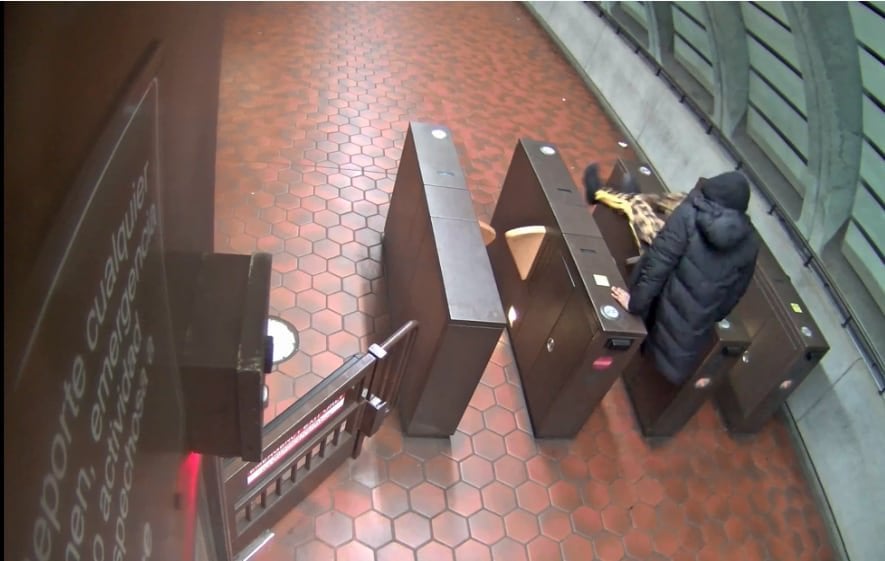
With the earlier post about crime on public transportation, I thought a discussion about DC metro would be a helpful example for potential strategies for reducing crime on public transportation.
In 2018, the DC council decriminalized fare evasion, overriding Mayor Mariel Bowser’s veto and citing disproportionate racial policing.
https://www.washingtonpost.com/transportation/2018/12/05/dc-council-decriminalizes-metro-fare-evasion-giving-its-final-approval-contested-measure/
In March 2023, DC passed the “Secure DC” bill, which allowed Metro Transit police officers to issue citations, arrest, and fine fare evaders in DC. Prior to this bill, fare evaders did not have to identify themselves to police officers, and Metro Transit officers could not detain anyone who refused to identify themselves. https://www.washingtonian.com/2024/03/14/metro-police-can-now-issue-fines-and-make-arrests-for-fare-evasion-in-dc/
In conjunction with this bill, the fare gates at all 98 stations were altered to become more difficult to jump over.
Fare evasion cost WMATA (DC metro’s parent organization) $40 million a year. More importantly, WMATA’s general manager, Randy Clarke, said that “almost universally … 99.9% of people that commit criminal acts in our system fare evade.”
https://wtop.com/dc-transit/2023/04/metro-ceo-dcs-fare-evasion-law-needs-changing/
WMATA crime stats display a corresponding decrease in crimes.
As of October, there were 139 motor vehicle thefts reported in 2024 versus 308 at the same point in 2023. Attempted motor vehicle thefts fell from 179 in 2023 to 60 in 2024.
As of October, aggravated assaults had also seen a huge drop, from 237 as of October 2023 to 175 in 2024.
Homicides investigated by either Metro Transit Police or other agencies fell from seven in 2023 to one in 2024.
On the other hand, some crimes, such as drug usage, went up.
However, some offenses classified as “Part 2 Crimes” – which tend to be less serious than "Part 1 Crimes" – have increased. Most notably, drug offenses on the system increased from 299 as of October 2023 to 458 in 2024.
The largest increase in any “Part 2” crime involved incidents of police catching someone fare evading. As of October 2023, 4,894 people had been cited for fare evasion. As of October 2024, a whopping 12,847 people had been caught evading the fare.
However, Metro said that is a result of increased enforcement, not more people fare evading. Metro said changes to D.C. law that allow officers to arrest someone who refuses to give their name and address after fare evading have allowed them to do better enforcement against those who don’t pay.
Overall fare evasion decreased by 82%.
What about public perception?
A survey of Metrorail riders shows that from July through September of this year, 7% of riders who responded were dissatisfied with the safety of Metrorail. During the same time period in 2023, 21% of Metrorail riders were not satisfied with safety.
Overall, it seems that fare enforcement had a positive but mixed effect on crime on the metro. A large portion of the decrease in crime was due to a drop in vehicle theft, which may not be directly affected by fare enforcement. However, assaults and fare evasion dropped significantly, and most notably, public perception of safety improved significantly.
Posted by BombshellExpose