
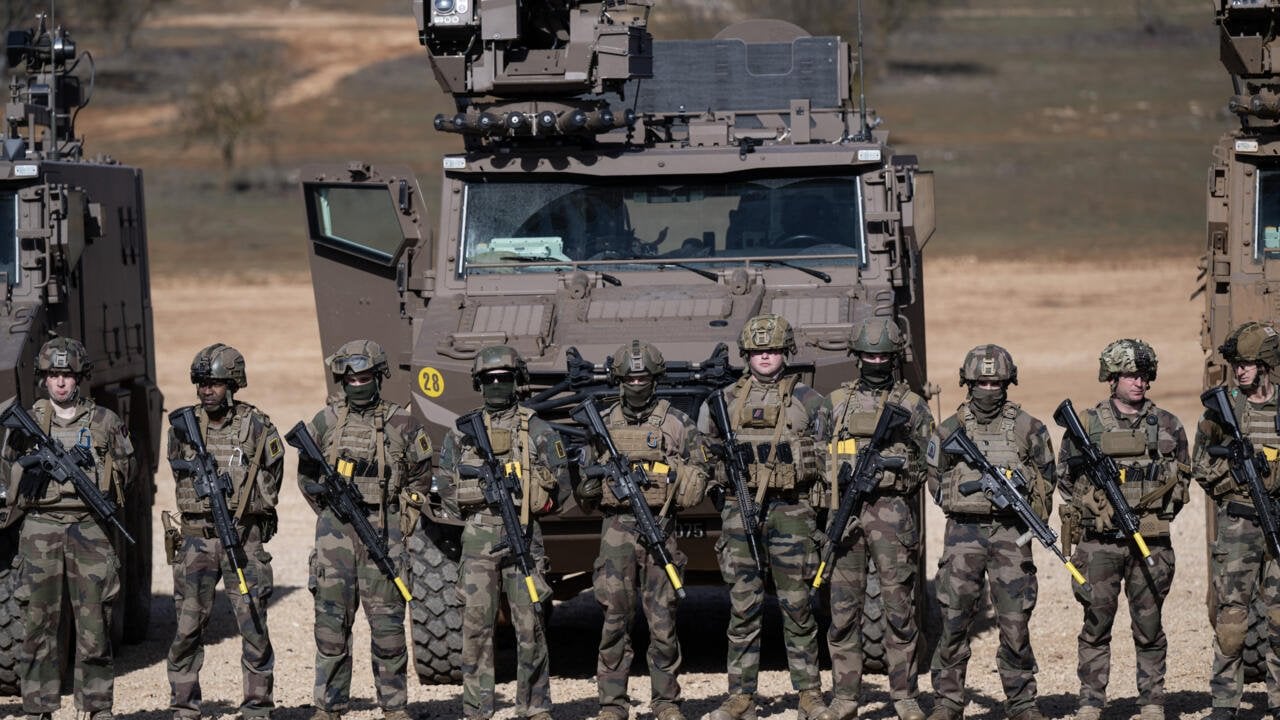
Russia's invasion of Ukraine caught Europe off guard, and fears about the strength of the NATO alliance rose further after US President Donald Trump cast doubt on his commitment to Article 5 – its mutual defence clause – despite Washington having used it to marshal European support in the wake of 9/11. It was the first and only time that Article 5 has ever been invoked.
The US president's shift toward a more conciliatory approach to the Kremlin has also set off alarm bells, with the United States twice siding with Russia last month in votes on Ukraine at the UN.
From Paris to Warsaw, leaders have been looking to boost defence spending in the face of US threats to withdraw its European security guarantees. But many countries, including France and Britain, have struggled with recruiting and retaining troops. Reintroducing some form of national service – compulsory or voluntary – might be even more difficult.
Lithuania reintroduced conscription in 2015, a year after Russia annexed Crimea. Sweden followed suit in 2017 and Latvia in 2023. But mindful of political and economic costs, most of NATO's five biggest European spenders – France, Germany, the UK, Italy and Poland – are not planning to make participation in armed forces mandatory.
Poland, which ended conscription in 2008, recently announced plans to offer military training to 100,000 civilians a year, starting in 2027. The scheme will be voluntary but the authorities are planning a system of "motivations and incentives", said Prime Minister Donald Tusk.
Germany's likely future chancellor, Friedrich Merz, has said he favours the reintroduction of a compulsory year in which young people could perform either military or community service. Italy's Defence Minister Guido Crosetto has ruled out reintroducing national service but supports the idea of a reserve force.
Posted by John3262005