
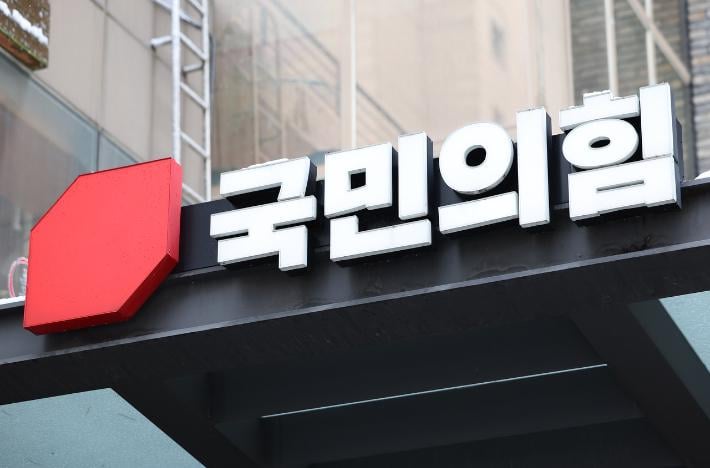
No matter how broken it becomes, it should never come to this. The government has provided hundreds of billions of won annually in subsidies to encourage democratic party development—only to see the People Power Party (PPP) openly join hands not just with far-right forces, but also with pseudo-religious groups like Shincheonji and the Unification Church. One can’t help but compare this to shaking hands with the devil. Where does this greed come from?
Looking at the past decade or more, it is the mainstream vested interests within the PPP—driven by extreme selfishness—that have wrecked the party. They have dictated candidate nominations, party leadership, even presidential nominees to suit their own preferences.
Those who resist or criticize are branded as traitors or disruptors. Evil recognizes evil. These pseudo-religious groups approached the party under a “give-and-take” logic—more likely out of necessity than ideology.
Now, serious signs are emerging inside and outside the PPP that the party has secretly and closely collaborated with heretical pseudo-religious groups.
Former Daegu Mayor Hong Joon-pyo recently revealed that Shincheonji followers joined the PPP en masse to support Yoon Suk-yeol’s 2021 presidential primary bid. According to Hong, Shincheonji leader Lee Man-hee said he helped Yoon “to repay the favor” after Yoon, as Prosecutor General, blocked two search-and-seizure operations against the group.
Hong said he became aware right after the 2021 primary that Shincheonji members had joined the party between July and September—when only one party fee payment was enough to vote. He later confirmed this in August of the following year by meeting Lee Man-hee in person.
The PPP responded by saying, “There is no evidence Shincheonji members joined the party” and dismissed Hong’s claim as relying solely on Lee’s words.
But is that true?
CBS reported in March that Shincheonji had systematically managed its members’ PPP membership. In October 2023, a Telegram group used by Shincheonji leaders issued a notice titled “Pilates Guidelines”—with “Pilates” seemingly being a code name to protect confidentiality. The notice outlined how members were to join the party and what rules to follow.
This secretive “Pilates Project” reportedly led to real party memberships. Across regions, personal information like names, resident registration numbers, and phone numbers of new party members were collected and reported. In many areas, more than half the members were instructed to join the party. After joining, members were told to report to superiors and destroy any related documentation.
CBS also reported that in May 2023, an Excel file containing the names, Shincheonji member IDs, and contact info of 667 new party members in Daejeon’s Seo-gu Eul constituency was leaked on Reddit before being deleted.
While the PPP denies any link with Shincheonji due to a “lack of evidence,” religious watchdogs downloaded the file before it was deleted. Comparing it with the PPP’s official party registry could easily determine the truth.
The Unification Church has also been implicated—not just in the presidential race, but in trying to sway the 2023 PPP party leadership election by enrolling members to support lawmaker Kwon Seong-dong. In November 2022, a text exchange between Jeon Seong-bae, a known mystic involved in the election, and former Unification Church executive Yoon Young-ho, allegedly discussed the number of members being mobilized.
If it’s proven that Shincheonji and Unification Church members were forcibly registered as party members and participated in elections, it would amount to a serious violation of democratic process.
The special prosecutor is also investigating allegations that the Unification Church bribed First Lady Kim Keon-hee with an expensive diamond necklace and Chanel bag in exchange for influence over its Mekong River development project, a stake in YTN’s acquisition, and invitations to the presidential inauguration.
Who brought the party to this state? Likely the pro-Yoon faction, whose extreme selfishness cares only about preserving their power, regardless of whether it destroys the party. This explains why the PPP, even two months after its presidential election defeat, still cannot move beyond its crisis. The entrenched establishment and a corrupted membership structure—willing to compromise values for votes—have paralyzed reforms.
The symbiotic equation between the PPP and pseudo-religious groups is simple: votes in exchange for power and influence. While this must be proven through investigation, Shincheonji and the Unification Church appear to have offered mass party enrollment in return for policy favors.
To the entrenched elite in the PPP, votes are everything—their only path to controlling the party and retaining power. This may also explain why current leadership clings to the “80% party member vote” rule, even as the party sinks.
If Hong Joon-pyo’s revelations are true, the PPP can no longer be considered a democratic political party. If Yoon Suk-yeol, as Prosecutor General, protected Shincheonji and in return received mass membership support from its followers, that is a democratic betrayal on par with sedition—a clear violation of the constitutional principle separating church and state.
And if they partnered with cults, what more needs to be said? Shincheonji has been linked to divorce, abuse, runaway cases, and even suicides, causing serious social harm. In Japan, the Unification Church’s excessive fundraising was cited as a key factor in the assassination of former Prime Minister Abe. In both Korea and Japan, cults consistently attempt to infiltrate political power.
Thus, ahead of the party convention scheduled for August 22, the PPP must identify and expel all party members connected to specific religious groups.
The Political Parties Act prohibits dual party membership. It is also urgent to identify and remove those who hold concurrent membership with the Liberty Unification Party, led by Pastor Jeon Kwang-hoon. And given that a special prosecutor is already investigating the involvement of the Unification Church and Shincheonji, a thorough investigation into party registration processes and any quid pro quo arrangements must follow.
If a political party is the body, the PPP’s head and backbone—the mainstream leadership—are already broken. Its blood and flesh—the party members—are also gravely ill. At this rate, the PPP, infected by entrenched privilege, cult politics, and far-right extremism, will be difficult to revive.
Unless the party rises up to wage a principled battle for reform, and unless it replaces the elite drunk on privilege and power, the PPP will remain a diseased party, forever floundering in the river of impeachment.
P.S. The collusion with Shincheonji is especially outrageous. Shincheonji is known for being “COVID cult”, as they are responsible for trigger the first mass outbreak of COVID outbreak in South Korea through coverups and disturbing quarantine efforts.
Posted by Freewhale98