
🌱 Rise (1800s – early 1900s)
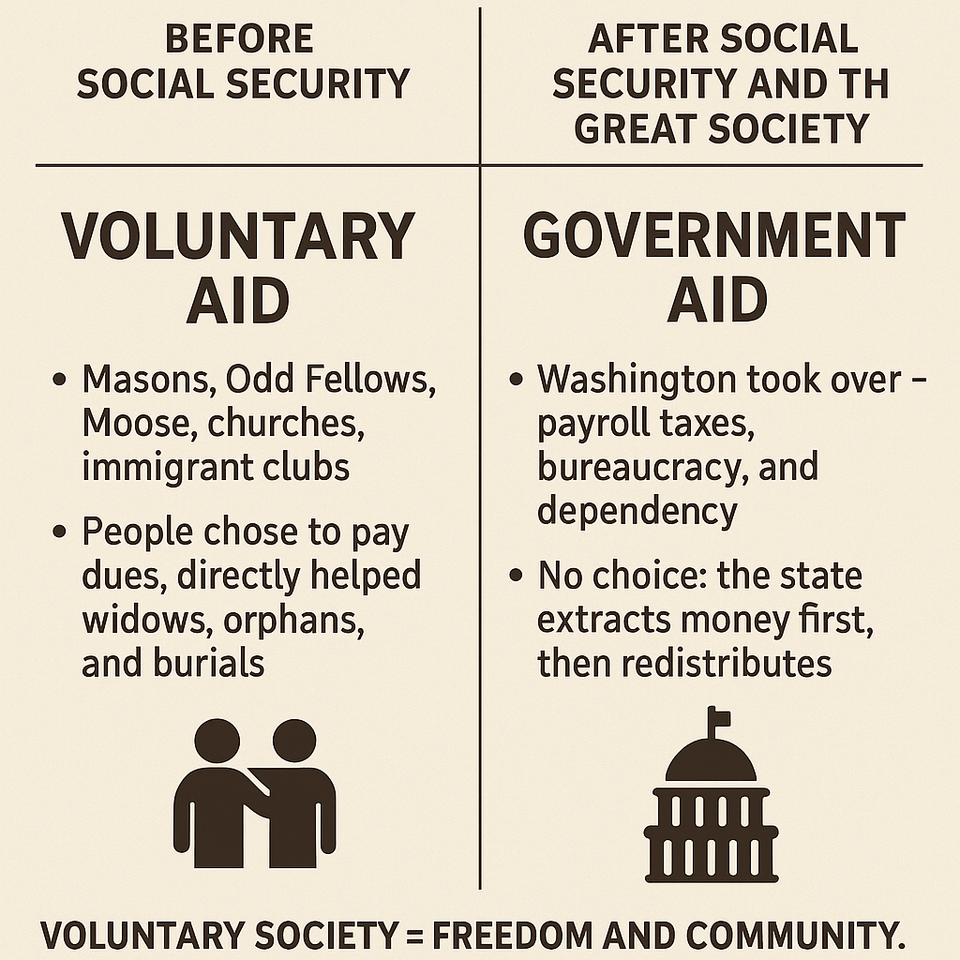
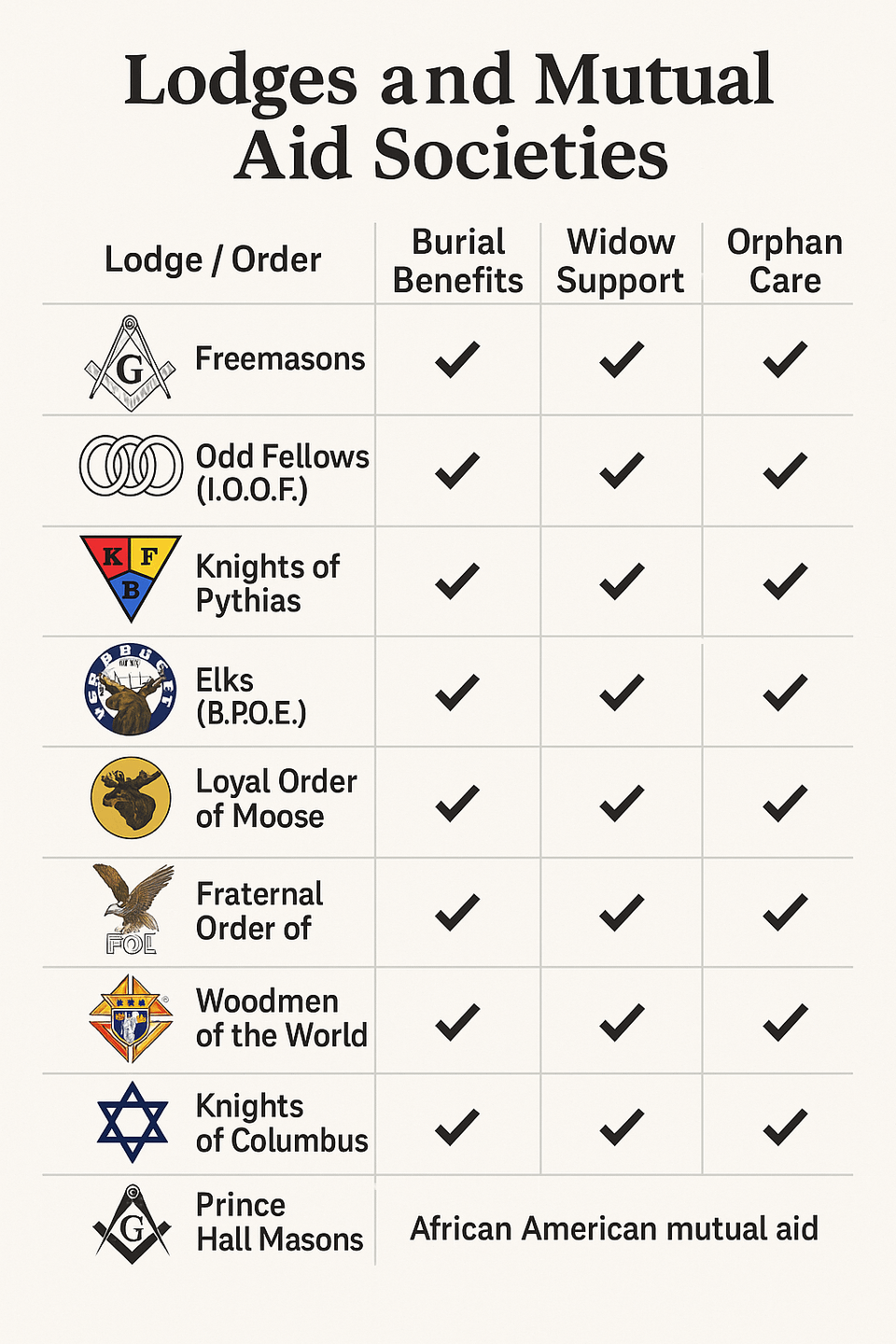
Immigrants, workers, and African Americans built fraternal lodges and mutual aid clubs (Masons, Odd Fellows, Moose, Elks, Knights of Pythias, Prince Hall, etc.).
Members paid small dues → got burial insurance, widow/orphan care, sickness benefits.
These groups built orphanages, hospitals, and homes for widows.
By 1920, 1 in 3 men belonged to a lodge.
📈 Peak (1900s – 1920s)
Mutual aid societies were the main welfare system in America.
Offered death benefits, pensions, medical care, schools, hospitals.
For many immigrants & Black communities → this was the only safety net.
Lodges were also social hubs → parades, sports clubs, dances, libraries.
📉 Fall (1930s onward)
New Deal (1935): Social Security + unemployment insurance replaced core lodge functions.
Great Society (1960s): Medicare + Medicaid replaced lodge hospitals/health funds.
Culture shift: TV, urbanization, and commercial insurance companies eroded lodge life.
Regulation: Made fraternal insurance less competitive.
⚰️ By the 1970s–80s:
Most lodges collapsed or turned into social clubs. What used to be voluntary, local safety nets became tax-based, bureaucratic welfare.
💡 Lesson (esp. for libertarians):
Communities can self-organize without the state.
Voluntary systems worked — until the government crowded them out.
We didn’t just gain Social Security… we lost community independence.
Posted by ravishing84