lead author is a professor of political science at the University of Toronto. emphasis mine:
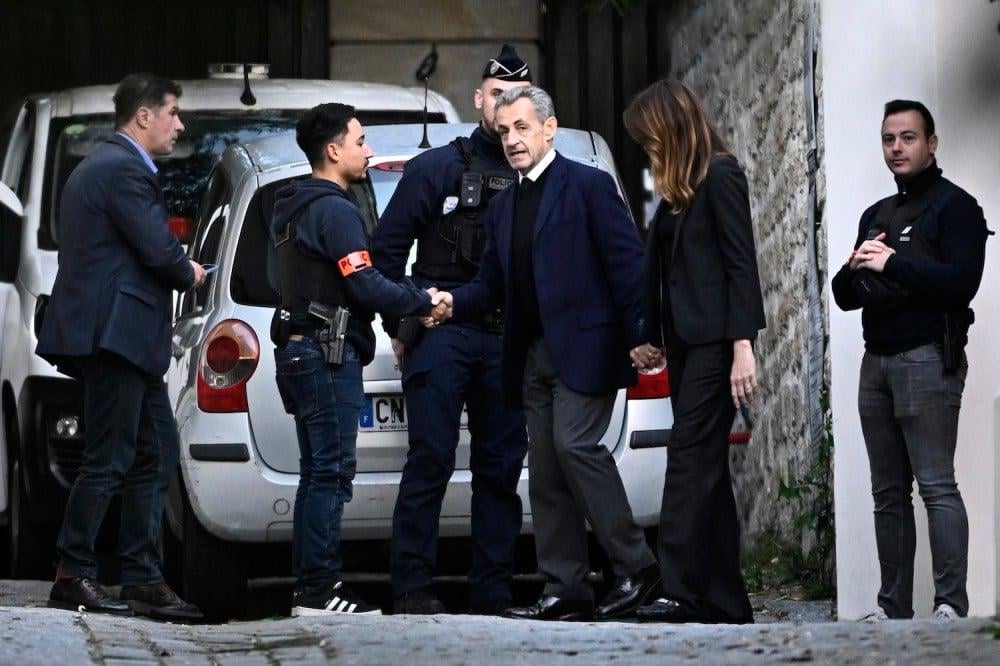
> Last week, France’s Nicholas Sarkozy became the first former president of a European Union state to serve time in prison. He will be held in solitary confinement, with limited phone access and scheduled visitation times. And while his case is unusual for the EU, it is far from unique. In democratic states, these types of prosecutions have become increasingly common in recent years. Countries like France, Brazil, and the United States have all seen intense legal and political battles over the prosecutions of their elected leaders.
> Proponents of these prosecutions argue that they strengthen democracy by reinforcing accountability, while opponents counter that they erode trust and drive polarization. But what effect do these prosecutions actually have? To answer this question, we have created a comprehensive new dataset of modern leaders who have been prosecuted by their own governments. Our research confirmed that despite what men like Sarkozy, U.S. President Donald Trump, and former Brazilian President Jair Bolsonaro may insist, prosecuting a former president or prime minister is a normal and healthy thing for advanced democracies to do.
> Between 1989 and 2021, more than three quarters of all democratic and hybrid regimes initiated at least one prosecution case against a former leader. (We excluded autocratic rulers since the politics of prosecutions follow a different logic in such regimes). Out of the more than 800 non-autocratic leaders who governed during that period, over a quarter were prosecuted by their own governments—sometimes more than once. Around two-thirds of those prosecuted faced just one charge. But others racked up multiple charges, with a few extreme outliers like former Bangladeshi Prime Minister Khaleda Zia and former Italian Prime Minister Silvio Berlusconi with 14 charges each.
> Looking back in history, there are roughly three phases in the spread of leader prosecutions: an increase between the late 1980s and 2000, a slowdown after the turn of the millennium, followed by another swift increase over the last decade.
> The geography is uneven, with South America leading and the Middle East lagging, but the overall direction is clear. **Neither a panacea nor an aberration, prosecutions now seem to be part of the normal repertoire of democratic contention. They do not, on average, seem to wreck a country’s political health. Our preliminary data found that democracies that indict former leaders do not become more polarized afterward, nor do they typically spiral into partisan vendettas.**
> The evidence, however, has suggested that far from being the specialty of “banana republics,” domestic prosecutions are just as likely to occur in wealthy and stable countries. We didn’t find any evidence that prosecutions increase the chance of democratic breakdown, and we found no link between economic wealth (measured in per capita GDP) and the likelihood of prosecution. State capacity does not seem to matter either—states with weak indicators of capacity were not more likely to prosecute than strongly institutionalized ones. In short, prosecutions can—and do—happen anywhere.
!ping LAW&DEMOCRACY
Freewhale98 on
Korea has “presidency-to-prison pipeline” since 1987. Lawmakers and mayors going to jail are just daily occurrence. But the country itself continued to develop and grow. There is no correlation between leaders going to jail and the deterioration of democracy. I think the avoidance on the prosecution of leaders are just political elites avoiding accountability in the name of political stability.

2 Comments
lead author is a professor of political science at the University of Toronto. emphasis mine:
> Last week, France’s Nicholas Sarkozy became the first former president of a European Union state to serve time in prison. He will be held in solitary confinement, with limited phone access and scheduled visitation times. And while his case is unusual for the EU, it is far from unique. In democratic states, these types of prosecutions have become increasingly common in recent years. Countries like France, Brazil, and the United States have all seen intense legal and political battles over the prosecutions of their elected leaders.
> Proponents of these prosecutions argue that they strengthen democracy by reinforcing accountability, while opponents counter that they erode trust and drive polarization. But what effect do these prosecutions actually have? To answer this question, we have created a comprehensive new dataset of modern leaders who have been prosecuted by their own governments. Our research confirmed that despite what men like Sarkozy, U.S. President Donald Trump, and former Brazilian President Jair Bolsonaro may insist, prosecuting a former president or prime minister is a normal and healthy thing for advanced democracies to do.
> Between 1989 and 2021, more than three quarters of all democratic and hybrid regimes initiated at least one prosecution case against a former leader. (We excluded autocratic rulers since the politics of prosecutions follow a different logic in such regimes). Out of the more than 800 non-autocratic leaders who governed during that period, over a quarter were prosecuted by their own governments—sometimes more than once. Around two-thirds of those prosecuted faced just one charge. But others racked up multiple charges, with a few extreme outliers like former Bangladeshi Prime Minister Khaleda Zia and former Italian Prime Minister Silvio Berlusconi with 14 charges each.
> Looking back in history, there are roughly three phases in the spread of leader prosecutions: an increase between the late 1980s and 2000, a slowdown after the turn of the millennium, followed by another swift increase over the last decade.
> The geography is uneven, with South America leading and the Middle East lagging, but the overall direction is clear. **Neither a panacea nor an aberration, prosecutions now seem to be part of the normal repertoire of democratic contention. They do not, on average, seem to wreck a country’s political health. Our preliminary data found that democracies that indict former leaders do not become more polarized afterward, nor do they typically spiral into partisan vendettas.**
> The evidence, however, has suggested that far from being the specialty of “banana republics,” domestic prosecutions are just as likely to occur in wealthy and stable countries. We didn’t find any evidence that prosecutions increase the chance of democratic breakdown, and we found no link between economic wealth (measured in per capita GDP) and the likelihood of prosecution. State capacity does not seem to matter either—states with weak indicators of capacity were not more likely to prosecute than strongly institutionalized ones. In short, prosecutions can—and do—happen anywhere.
!ping LAW&DEMOCRACY
Korea has “presidency-to-prison pipeline” since 1987. Lawmakers and mayors going to jail are just daily occurrence. But the country itself continued to develop and grow. There is no correlation between leaders going to jail and the deterioration of democracy. I think the avoidance on the prosecution of leaders are just political elites avoiding accountability in the name of political stability.
https://preview.redd.it/2fkk40k0cuzf1.jpeg?width=1170&format=pjpg&auto=webp&s=645ce33e0bded18b28d72a2697aa0ef71c2cd6e1