1. Recently a judge ruled that Alberta’s Bill 14, a law that would transfer powers to start petitions and refer petitions to the court from the chief electoral officer to the justice minister and allow citizen initiatives to go ahead even if it violated the constitution, was unconstitutional. Despite this ruling the Albertan government is now pushing through a bill that would make the recent ruling moot, with the real possibility of the government using the notwithstanding clause to shield their legislation from judicial review. This appears to be a problem as the government continues to court legit Albertan separatists and is continually abetting them with legislation, while stifling petitioners that are in favour of remaining in confederation.
2. Reading more about the situation, I think the Albertan government is clearly trying to cause trouble by allowing a minority voice to dominate the discussion over Albertan independence.
!ping Can
Ddogwood on
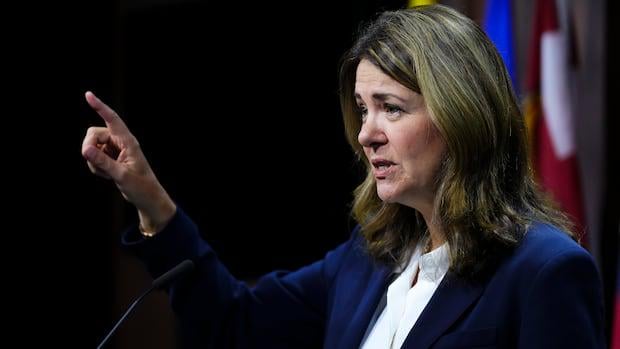
>”Whether it’s the chief electoral officer or the court, they seem to want to approve the ones they like and hold up the ones they don’t like, and that’s not democracy,” Smith said.
Fun fact – ramming through legislation that you explicitly “didn’t campaign on” isn’t democracy.
Having an independent judiciary that protects against the tyranny of the majority is, in fact, a key component of liberal democracy.
Mddcat04 on
Can someone more versed in this explain it to me? Is this just posturing or are there actual Alberta independence people? Scotland and Quebec I can sort of understand, but fully landlocked Alberta does not seem like it could be a viable independent country.
WOKE_AI_GOD on
This is the same way it is in America, courts will slap you down if you talk about succession. And quite frankly in the current environment an independence referendum invites interference from enemy nations.
Quebec was allowed to hold a referendum, but they had to negotiate directly with the federal gov at a constitutional level for it. And the threshold was 3/5.

5 Comments
What else does she want.
Submission statement:
1. Recently a judge ruled that Alberta’s Bill 14, a law that would transfer powers to start petitions and refer petitions to the court from the chief electoral officer to the justice minister and allow citizen initiatives to go ahead even if it violated the constitution, was unconstitutional. Despite this ruling the Albertan government is now pushing through a bill that would make the recent ruling moot, with the real possibility of the government using the notwithstanding clause to shield their legislation from judicial review. This appears to be a problem as the government continues to court legit Albertan separatists and is continually abetting them with legislation, while stifling petitioners that are in favour of remaining in confederation.
2. Reading more about the situation, I think the Albertan government is clearly trying to cause trouble by allowing a minority voice to dominate the discussion over Albertan independence.
!ping Can
>”Whether it’s the chief electoral officer or the court, they seem to want to approve the ones they like and hold up the ones they don’t like, and that’s not democracy,” Smith said.
Fun fact – ramming through legislation that you explicitly “didn’t campaign on” isn’t democracy.
Having an independent judiciary that protects against the tyranny of the majority is, in fact, a key component of liberal democracy.
Can someone more versed in this explain it to me? Is this just posturing or are there actual Alberta independence people? Scotland and Quebec I can sort of understand, but fully landlocked Alberta does not seem like it could be a viable independent country.
This is the same way it is in America, courts will slap you down if you talk about succession. And quite frankly in the current environment an independence referendum invites interference from enemy nations.
Quebec was allowed to hold a referendum, but they had to negotiate directly with the federal gov at a constitutional level for it. And the threshold was 3/5.