
The United States has for the first time criticized the Chinese military’s use of radar on Japanese fighter jets last week, as Tokyo refuted Beijing’s claims it had given sufficient advance notice of military drills near Japan.
“China’s actions are not conducive to regional peace and stability,” a State Department spokesperson told The Japan Times via email on Wednesday. “The U.S.-Japan Alliance is stronger and more united than ever. Our commitment to our ally Japan is unwavering, and we are in close contact on this and other issues.”
The criticism was the first comment by U.S. President Donald Trump’s administration following Saturday’s incident that saw Chinese fighters dispatched from the Liaoning aircraft carrier twice illuminate Air Self-Defense Force jets with radar, maneuvers that Tokyo has lambasted as “dangerous.”
The radar incident comes as Tokyo and Beijing remain embroiled in an increasingly acrimonious dispute following Prime Minister Sanae Takaichi’s Nov. 7 remarks that the Self-Defense Forces could be deployed under certain “worst-case” scenarios, such as a Chinese naval blockade of Taiwan, which she said would constitute a “survival-threatening situation” for Japan.
Trump himself has yet to weigh in publicly on either the radar incident or Takaichi’s comments, frustrating Japanese officials, who have reportedly urged the U.S. president to offer Tokyo more public support amid its tensions with Beijing.
But with Trump anxious to seal a trade deal with Chinese leader Xi Jinping during a planned state visit to Beijing in April, his administration has appeared to largely shy away from moves that could alienate China.
Japan’s top government spokesman on Wednesday welcomed the State Department’s comments, saying they “demonstrate the strength of the U.S.-Japan alliance.”
But Chief Cabinet Secretary Minoru Kihara also explicitly noted that “gaining other countries’ understanding” in Japan’s dispute with China remains “extremely important.”
Later Wednesday, China's Foreign Ministry urged the international community to "be clear-eyed and not be deceived" by Tokyo.
"Japanese allies, in particular, should be on alert and not be misguided by the Japanese side," Chinese Foreign Ministry spokesperson Guo Jiankun told a regular news conference.
For the first time, Beijing also appeared to link the radar illumination to its larger row with Tokyo over Takaichi's remarks.
"Japan must face up to the root causes of the (radar) incident and seriously reflect on their wrongdoings and retract the erroneous remarks of Prime Minister Takaichi," Guo said.
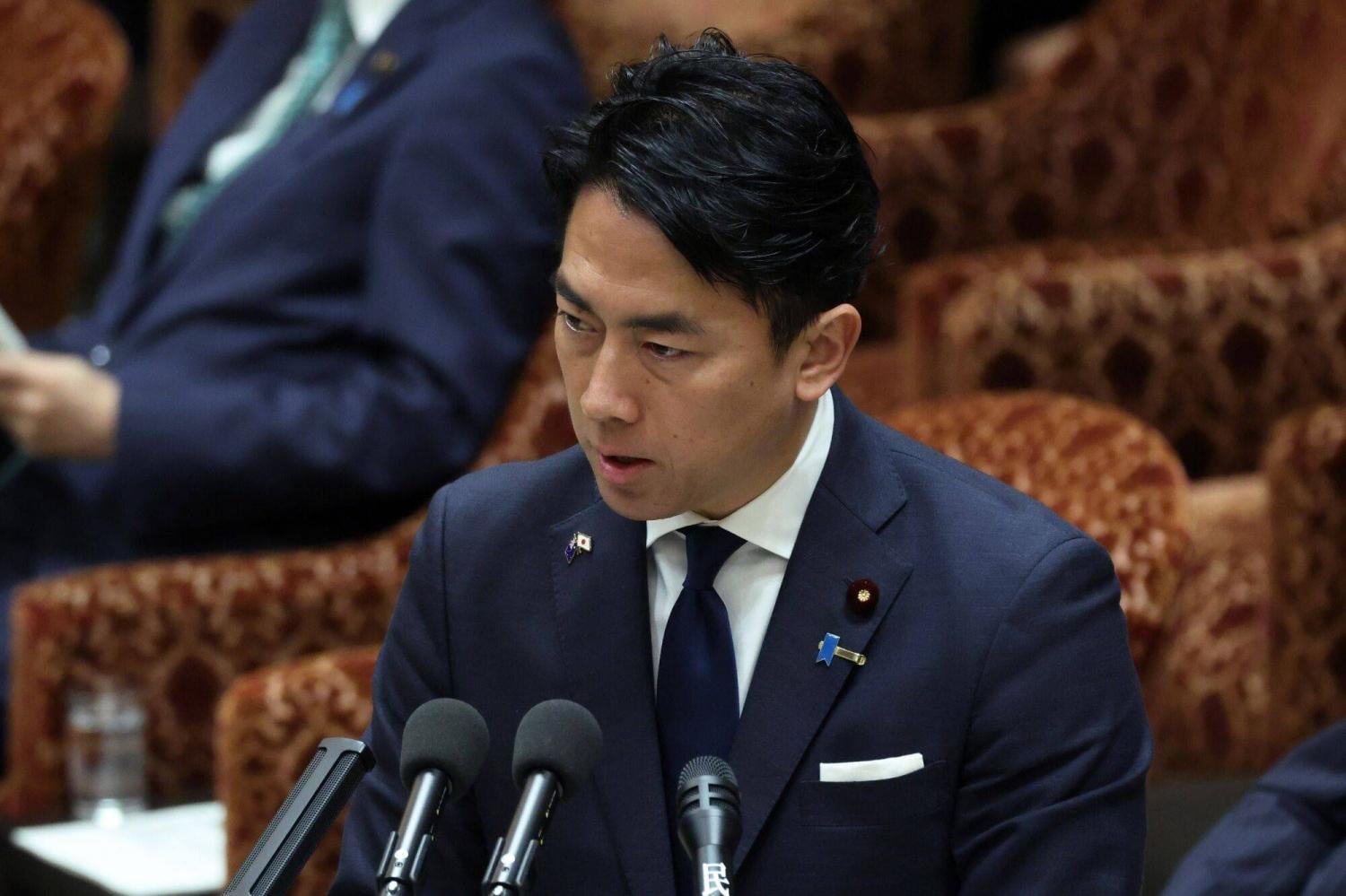
Earlier in the day, Defense Minister Shinjiro Koizumi disputed a report in Chinese state-run media that the Asian powerhouse’s military had given sufficient advance notice of training near Japan ahead of the radar incident.
China’s Global Times newspaper on Tuesday published audio purportedly of the Chinese military notifying a Maritime Self-Defense Force ship in Chinese and English via radio Saturday of aerial training. The MSDF vessel responded in English that it had received the message, the paper said, citing Yuyuan Tantian, a social media account affiliated with state-run China Central Television.
According to the Yuyuan Tantian account, notice of the Liaoning-based aircraft's training was given twice on Saturday, once at 2:01 p.m. and again at 2:28 p.m., less than an hour before the exercises began at 3 p.m. Despite this, it said, ASDF aircraft came within 50 kilometers of what it said was China’s designated “air and sea training area.”
Asked about the report, Koizumi confirmed that an MSDF ship had received notice Saturday from a Chinese naval vessel that flight training was “about to commence,” but said details were scant.
“Specific information regarding the scale of the training or the airspace where the Liaoning's carrier-based aircraft would operate was not provided to the SDF. Nor were the time, location or specific latitude and longitude of the training area indicated,” Koizumi said at an impromptu news conference.
He also emphasized that no other aviation information was provided, and no navigational warnings for vessels had been issued in advance.
“As a result, there was insufficient information to avoid danger,” Koizumi said.
The Japanese defense chief also reiterated that it was natural for Japan to scramble fighters to monitor the Liaoning flotilla in waters southeast of Okinawa Prefecture, “regardless of whether prior notification of the training was given.”
“The essence of the problem is that while our side was appropriately conducting countermeasures … the Chinese side conducted intermittent radar illumination for approximately 30 minutes,” Koizumi said, noting that ASDF fighters did not use radar on aircraft launched from the Liaoning.
Tokyo and Beijing have traded accusations over the radar encounter, with Japan calling China’s claims that the ASDF fighters harassed Chinese forces “unfounded.”
China has ramped up its military activities near Japan in recent months, moves that include what the Defense Ministry said were “unusually close” approaches to SDF aircraft conducting surveillance over the East China Sea and in the western Pacific Ocean in June and July.
This pattern continued on Tuesday, with the SDF scrambling fighter jets after Chinese and Russian military aircraft conducted joint patrols around Japan, the Defense Ministry in Tokyo said late Tuesday.
Two Russian Tu-95 nuclear-capable bombers flew from the Sea of Japan toward the East China Sea to join two Chinese H-6 bombers for a “long-range joint flight” above the western Pacific Ocean off the coast of Shikoku, the Defense Ministry’s Joint Staff Office said in a statement.
Four Chinese J-16 fighter jets joined the bombers as they made a round-trip flight between Okinawa’s main island and Miyako Island, the statement said, adding that it had simultaneously detected Russian early-warning aircraft and two Su-30 fighters in the Sea of Japan.
Koizumi said in a post on X that the repeated joint bomber flights, part of what China and Russia call annual exercises, “signifies an expansion and intensification of activities around Japan.”
“These clearly represent a show of force against Japan,” he wrote Wednesday. “This is a serious security concern for our country.”
Posted by 2Lore2Law
4 Comments
Would be too funny if China were to respond with “US actions in the Caribbean are not conducive to regional peace and stability”
Submission Statement:
Tokyo finally appears to get the Washington backing it’s been calling for following an incident in which Chinese military aircraft of the Liaoning carrier locked onto Japanese military aircraft assets near Japan.
Previously, Prime Minister Sanae Takaichi has hinted at a Japanese military response to Chinese incursions against Taiwan; something that has drawn the two Pacific nations into increased acrimony. In the backdrop of that acrimony, Tokyo had previously called upon Washington for more visible support; something that Pres. Trump may have rebuffed PM Takaichi for over the phone.
!ping Japan
Peter Theil should set up one of his “free states” in the nine dash line and force Trump into an impossible position of figuring out who to most submit to.