
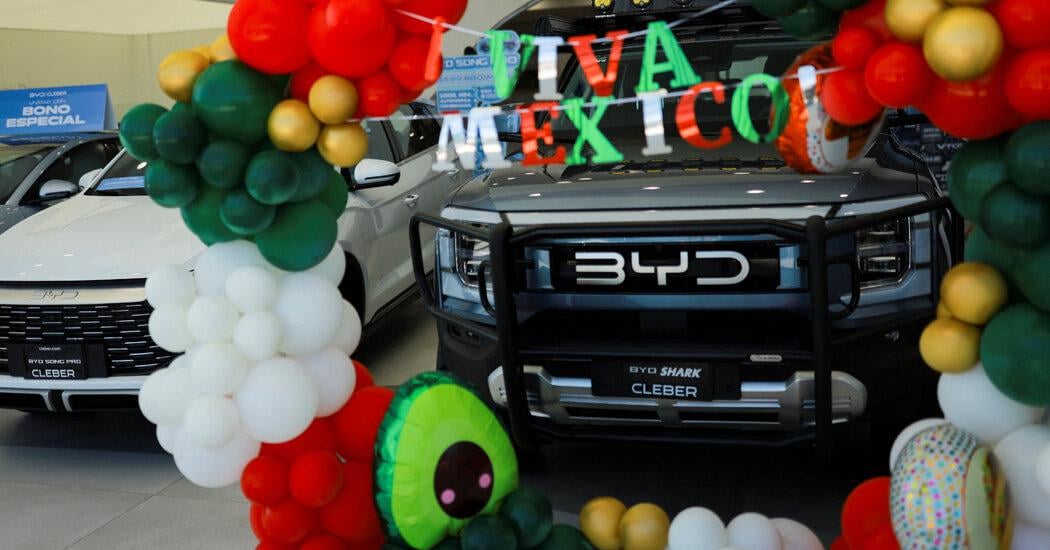
Mexico’s Congress authorized up to 50 percent tariffs on Chinese imports on Wednesday, a move seen as an effort to align Mexico with the United States amid pressure from Washington.
On Wednesday morning, Mexico’s lower chamber of Congress approved the tariffs, which apply to China and other countries with which it does not have a trade deal. Mexico’s Senate then passed the bill in an expedited vote on Wednesday night. Seventy-six senators voted in favor versus only five against, while 35 abstained.
President Claudia Sheinbaum, who proposed the tariffs in September, is widely expected to approve the legislation, which would then take effect in January. The tariffs would affect a wide variety of goods, including automotive parts, textiles, furniture, plastics, steel and aluminum.
President Trump has been pressuring other nations to distance themselves from China, and the new Mexican tariffs would represent one of the biggest moves to do so yet.
China is the second largest exporter to Mexico after the United States, selling $130 billion in goods to Mexico last year. (The United States sold $334 billion to Mexico last year.)
Ms. Sheinbaum has denied that the tariffs are to appease Washington. She has said they will help boost Mexico’s domestic manufacturing — a major priority of hers — and close its large trade deficit with China, which buys comparatively little from Mexico.
The Chinese government has strongly denounced the levies. It had warned Mexico to “think twice” and criticized moves made “under coercion to constrain China,” an allusion to Mr. Trump’s pressure.
In its newly published National Security Strategy, the Trump administration said it was focused on strengthening its grip on the Western Hemisphere, including by keeping powers like China out of the region. “We want other nations to see us as their partner of first choice, and we will (through various means) discourage their collaboration with others,” it said.
The new tariff rates would vary depending on the import. They also apply to other countries that Mexico does not have a trade agreement with, including South Korea, Thailand and India. But China is by far the largest exporter affected.
Posted by John3262005
1 Comment
*Apparently, it affects other countries that Mexico does not have a trade agreement with, including South Korea, Thailand and India. But China is by far the largest exporter affected.*
Going to be interesting to see the effects of this tariff rates on goods, especially since it also targets other Asian countries, not just China though it is the main focus
Maybe or maybe not related, President Trump threatened to add an additional 5% to the tariffs because of the water situation between the two countries. Mexico said that it will send water but later. Could this be a way to calm that threat down until later? I don’t know.
Also, I think with this tariff rate, the US and Mexico are the world’s highest tariffs on Chinese goods.