As a Chinese immigrant in the west, I’m personally saddened by the response to the fire as much as the conditions that led to it. The censorship has been quite heavy handed and repressive and there is little chance it will improve in the future.
>In the past, pro-democracy legislators would have grilled government officials in the legislative council: but in 2021 that changed when 47 pro-democracy politicians proposing to run in elections were charged with subversion, and later jailed. Only Beijing-approved “patriots” are now permitted to run for office, and all of Hong Kong’s pro-democracy political parties have since dissolved.
>Freewheeling independent media outlets, such as Jimmy Lai’s Apple Daily newspaper or online outlet Stand News, would have doggedly pursued investigative reporting to uncover corruption or mismanagement, and seek accountability for the fires. But those independent media outlets were forced to close, and their editors charged with sedition.
>An array of civil society groups would have offered assistance. The Progressive Lawyers Group, for example, would have volunteered legal aid for victims and their families, and provided objective analysis on legal questions such as the difference between a statutory commission of inquiry and the toothless “independent committee” proposed by the Hong Kong government to investigate the disaster. But that group, and scores of other civil society groups, have either been forced to close by the authorities, or disbanded in fear.
>And Hong Kong’s creative community might have responded in works of art, film and literature. But artists have also been cowed. Those with a track record of activism or political activity are prevented from exhibiting.
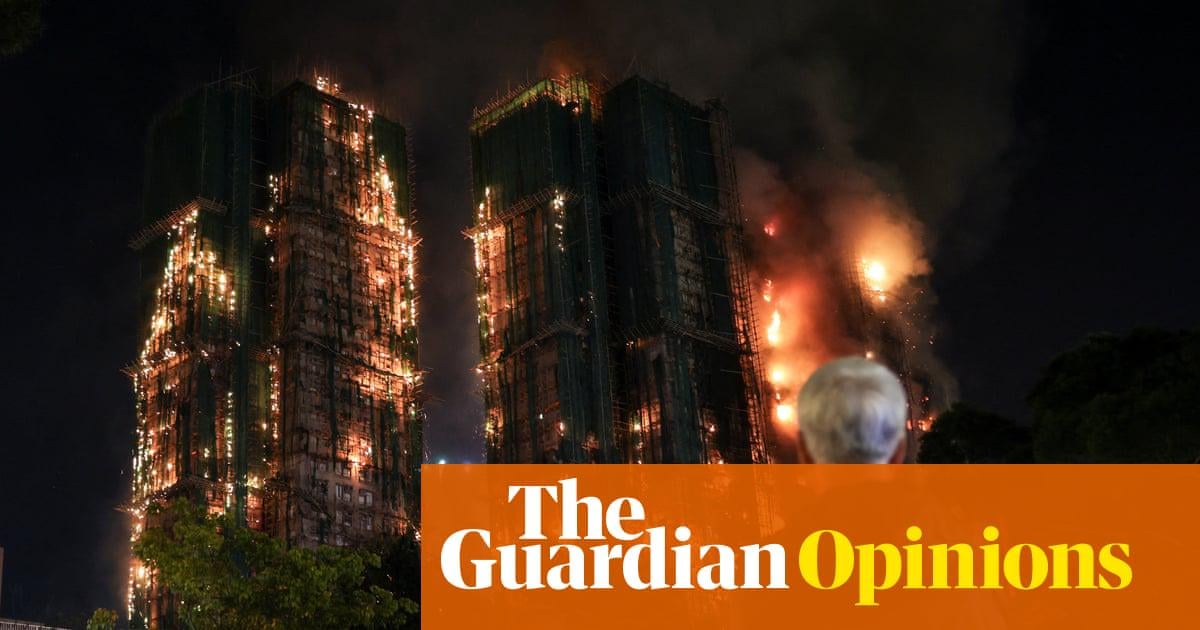
>Theatre groups find their venue bookings abruptly cancelled. Films are censored such that the depiction – whether documentary or fictional – of any “sensitive” topic, including Hong Kong’s own protests broadcast widely in 2019, is effectively banned. A work of art on the Tai Po fires like Steve McQueen’s haunting Grenfell could not possibly be exhibited in today’s Hong Kong, and even making such a film would be considered an act of sedition.
>Hong Kong was once a city of lively, sometimes raucous, public debate; now those voices have fallen eerily silent. However, this does not prevent the authorities from being nervous that – as has been the pattern elsewhere in China and globally – the tragedy will become a focal point for anti-government sentiment.
teethgrindingaches on
> One point of difference with the mainland, however, has been an apparent contrast in the accountability of leadership. The lines of accountability for local officials in cases of similar disasters in the mainland can be brutal and short. For example, just last year 55 officials, including the local mayor and party secretary were removed from their positions or punished after a fire in a Jiangxi commercial building killed 39 people.
> So one bold reporter was speaking the minds of many of his fellow Hongkongers – and possibly many in the mainland as well – when he confronted chief executive John Lee in a press conference earlier this week with the question: “Can you tell us why you deserve to keep your job?” In any other Chinese city, heads would roll for the negligence and mismanagement that has caused so many deaths.

2 Comments
As a Chinese immigrant in the west, I’m personally saddened by the response to the fire as much as the conditions that led to it. The censorship has been quite heavy handed and repressive and there is little chance it will improve in the future.
>In the past, pro-democracy legislators would have grilled government officials in the legislative council: but in 2021 that changed when 47 pro-democracy politicians proposing to run in elections were charged with subversion, and later jailed. Only Beijing-approved “patriots” are now permitted to run for office, and all of Hong Kong’s pro-democracy political parties have since dissolved.
>Freewheeling independent media outlets, such as Jimmy Lai’s Apple Daily newspaper or online outlet Stand News, would have doggedly pursued investigative reporting to uncover corruption or mismanagement, and seek accountability for the fires. But those independent media outlets were forced to close, and their editors charged with sedition.
>An array of civil society groups would have offered assistance. The Progressive Lawyers Group, for example, would have volunteered legal aid for victims and their families, and provided objective analysis on legal questions such as the difference between a statutory commission of inquiry and the toothless “independent committee” proposed by the Hong Kong government to investigate the disaster. But that group, and scores of other civil society groups, have either been forced to close by the authorities, or disbanded in fear.
>And Hong Kong’s creative community might have responded in works of art, film and literature. But artists have also been cowed. Those with a track record of activism or political activity are prevented from exhibiting.
>Theatre groups find their venue bookings abruptly cancelled. Films are censored such that the depiction – whether documentary or fictional – of any “sensitive” topic, including Hong Kong’s own protests broadcast widely in 2019, is effectively banned. A work of art on the Tai Po fires like Steve McQueen’s haunting Grenfell could not possibly be exhibited in today’s Hong Kong, and even making such a film would be considered an act of sedition.
>Hong Kong was once a city of lively, sometimes raucous, public debate; now those voices have fallen eerily silent. However, this does not prevent the authorities from being nervous that – as has been the pattern elsewhere in China and globally – the tragedy will become a focal point for anti-government sentiment.
> One point of difference with the mainland, however, has been an apparent contrast in the accountability of leadership. The lines of accountability for local officials in cases of similar disasters in the mainland can be brutal and short. For example, just last year 55 officials, including the local mayor and party secretary were removed from their positions or punished after a fire in a Jiangxi commercial building killed 39 people.
> So one bold reporter was speaking the minds of many of his fellow Hongkongers – and possibly many in the mainland as well – when he confronted chief executive John Lee in a press conference earlier this week with the question: “Can you tell us why you deserve to keep your job?” In any other Chinese city, heads would roll for the negligence and mismanagement that has caused so many deaths.
One Country, Two Systems.