Video games are an increasingly large part of the american entertainment industry, with more revenue than movies and music combined. Games like HOI4 and Crusader Kings have an increasingly visible political influence, especially among the young and religious far-right. This article attempts to talk about the “accidental” political influence these games have caused, and their impact on right-wing politics
>As for “Deus Vult,” however, things are a little more complicated. After it was used as a rallying cry during the era of the Crusades, the phrase completely fell off the map. For hundreds and hundreds of years, nobody ever used it—not the church, not religious traditionalists, not even outright neo-medievalists during periods of renewed interest in the era. This only changed when it was suddenly revived as a white nationalist symbol in the 2010s.
>Specifically after the year 2012.
>Or, to be even more specific, after the Swedish video game company Paradox Interactive published Crusader Kings II, a grand strategy game set in the Middle Ages that used the phrase extensively.
Ej1YpKFmdjvKdRt8kvbI on
I can’t afford to pay to read this article because I’ve bought too many Paradox DLCs
OrbitalAlpaca on
Americas fall came from those you wouldn’t even consider.
trombonist_formerly on
>In case you haven’t heard, Pete Hegseth has a lot of tattoos.
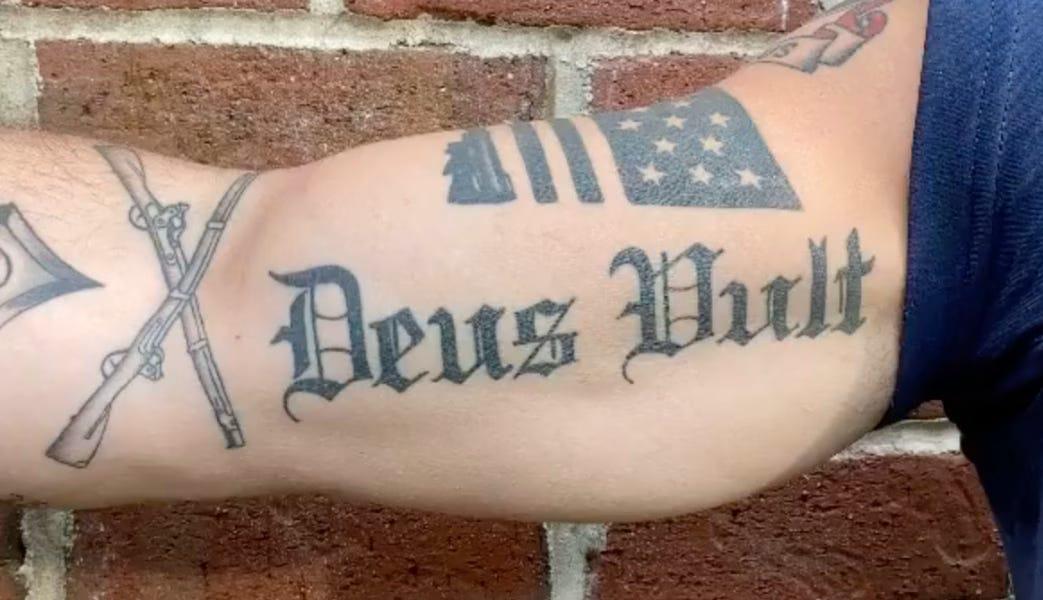
>The first thing to say about them is that they look hideous. The second is that they are concerning, if only because of how many of them relate to a certain theme: the Crusades. Not some metaphorical crusade, mind you—the actual ones. Pete Hegseth, our Secretary of Defense, has covered his body with symbols from the actual armed conflicts that took place nearly 1000 years ago. There is, of course, that large Jerusalem cross—the literal coat of arms of the ill-fated Crusader Kingdom of Jerusalem—placed prominently on his upper chest. From there, one can move down to his lower arm to see a cross with a sword. That’s a reference to Matthew 10:34, a Bible verse that modern Christian nationalists use as justification for religious violence. And right next to it, there are the two Latin words emblazoned on his bicep: “Deus Vult,” or “God wills it.”
>Despite the fierce competition, that “Deus Vult” tattoo proved to be the most controversial of the symbols that Hegseth had stamped upon himself after he was nominated to serve as Secretary of Defense in November 2024. As many outlets quickly noted, the phrase had been widely used by white supremacist mass shooters and neo-Nazi during the 2010s. This made the nominee’s attachment to it quite concerning, even for those beyond the reaches of the so-called liberal media. But, as one might expect, all of the furor passed without any consequence. During his nomination hearings, Hegseth was questioned about the tattoos, defended them, and said that the scrutiny was a case of “anti-Christian bigotry.” Then he was confirmed to run the Pentagon and liberals gave up on the topic. Even when they train their fire on him today, they almost always go after the easiest targets, like his drunkenness and general incompetence.
>Why have they punted on the tattoos? Perhaps they assume that Hegseth simply has enough plausible deniability to claim that whatever symbol they say is an icon of racial hatred is actually a simple expression of faith that dates back centuries. That may very well be the case with the Jerusalem cross, which is used as the flag of the country of Georgia to this day. It may even be true for Matthew 10:34, which has been referenced by preachers for thousands of years in countless different contexts. As for “Deus Vult,” however, things are a little more complicated. After it was used as a rallying cry during the era of the Crusades, the phrase completely fell off the map. For hundreds and hundreds of years, nobody ever used it—not the church, not religious traditionalists, not even outright neo-medievalists during periods of renewed interest in the era. This only changed when it was suddenly revived as a white nationalist symbol in the 2010s.
>Specifically after the year 2012.
>Or, to be even more specific, after the Swedish video game company Paradox Interactive published Crusader Kings II, a grand strategy game set in the Middle Ages that used the phrase extensively.
EstablishmentNo4865 on
Fucking Stellaris
Acacias2001 on
Its under paywall, but fron what little I can see, the articles conclusions imply Vicky3 is going to raise a generation of neoliberals
raidthirty on
And looks like nobody actually played the game that well, because as soon as you try to cull the population your economy and productivity drops because you lack manpower, and then your existing population starts getting angry.
Jacobs4525 on
I have been posting in the DT unironically for a while now that if I were the father of a teenage boy I would much rather come home to find him drunk than playing paradox map games.
I know plenty of people who experimented with alcohol and drugs as kids and turned out normal, but every single person I know who played these games turned into weirdos obsessed with niche political ideologies from the dustbin of history who only want to talk about their favorite political faction from weimar germany that consisted of like 12 people.

8 Comments
Submission statement:
Video games are an increasingly large part of the american entertainment industry, with more revenue than movies and music combined. Games like HOI4 and Crusader Kings have an increasingly visible political influence, especially among the young and religious far-right. This article attempts to talk about the “accidental” political influence these games have caused, and their impact on right-wing politics
>As for “Deus Vult,” however, things are a little more complicated. After it was used as a rallying cry during the era of the Crusades, the phrase completely fell off the map. For hundreds and hundreds of years, nobody ever used it—not the church, not religious traditionalists, not even outright neo-medievalists during periods of renewed interest in the era. This only changed when it was suddenly revived as a white nationalist symbol in the 2010s.
>Specifically after the year 2012.
>Or, to be even more specific, after the Swedish video game company Paradox Interactive published Crusader Kings II, a grand strategy game set in the Middle Ages that used the phrase extensively.
I can’t afford to pay to read this article because I’ve bought too many Paradox DLCs
Americas fall came from those you wouldn’t even consider.
>In case you haven’t heard, Pete Hegseth has a lot of tattoos.
>The first thing to say about them is that they look hideous. The second is that they are concerning, if only because of how many of them relate to a certain theme: the Crusades. Not some metaphorical crusade, mind you—the actual ones. Pete Hegseth, our Secretary of Defense, has covered his body with symbols from the actual armed conflicts that took place nearly 1000 years ago. There is, of course, that large Jerusalem cross—the literal coat of arms of the ill-fated Crusader Kingdom of Jerusalem—placed prominently on his upper chest. From there, one can move down to his lower arm to see a cross with a sword. That’s a reference to Matthew 10:34, a Bible verse that modern Christian nationalists use as justification for religious violence. And right next to it, there are the two Latin words emblazoned on his bicep: “Deus Vult,” or “God wills it.”
>Despite the fierce competition, that “Deus Vult” tattoo proved to be the most controversial of the symbols that Hegseth had stamped upon himself after he was nominated to serve as Secretary of Defense in November 2024. As many outlets quickly noted, the phrase had been widely used by white supremacist mass shooters and neo-Nazi during the 2010s. This made the nominee’s attachment to it quite concerning, even for those beyond the reaches of the so-called liberal media. But, as one might expect, all of the furor passed without any consequence. During his nomination hearings, Hegseth was questioned about the tattoos, defended them, and said that the scrutiny was a case of “anti-Christian bigotry.” Then he was confirmed to run the Pentagon and liberals gave up on the topic. Even when they train their fire on him today, they almost always go after the easiest targets, like his drunkenness and general incompetence.
>Why have they punted on the tattoos? Perhaps they assume that Hegseth simply has enough plausible deniability to claim that whatever symbol they say is an icon of racial hatred is actually a simple expression of faith that dates back centuries. That may very well be the case with the Jerusalem cross, which is used as the flag of the country of Georgia to this day. It may even be true for Matthew 10:34, which has been referenced by preachers for thousands of years in countless different contexts. As for “Deus Vult,” however, things are a little more complicated. After it was used as a rallying cry during the era of the Crusades, the phrase completely fell off the map. For hundreds and hundreds of years, nobody ever used it—not the church, not religious traditionalists, not even outright neo-medievalists during periods of renewed interest in the era. This only changed when it was suddenly revived as a white nationalist symbol in the 2010s.
>Specifically after the year 2012.
>Or, to be even more specific, after the Swedish video game company Paradox Interactive published Crusader Kings II, a grand strategy game set in the Middle Ages that used the phrase extensively.
Fucking Stellaris
Its under paywall, but fron what little I can see, the articles conclusions imply Vicky3 is going to raise a generation of neoliberals
And looks like nobody actually played the game that well, because as soon as you try to cull the population your economy and productivity drops because you lack manpower, and then your existing population starts getting angry.
I have been posting in the DT unironically for a while now that if I were the father of a teenage boy I would much rather come home to find him drunk than playing paradox map games.
I know plenty of people who experimented with alcohol and drugs as kids and turned out normal, but every single person I know who played these games turned into weirdos obsessed with niche political ideologies from the dustbin of history who only want to talk about their favorite political faction from weimar germany that consisted of like 12 people.