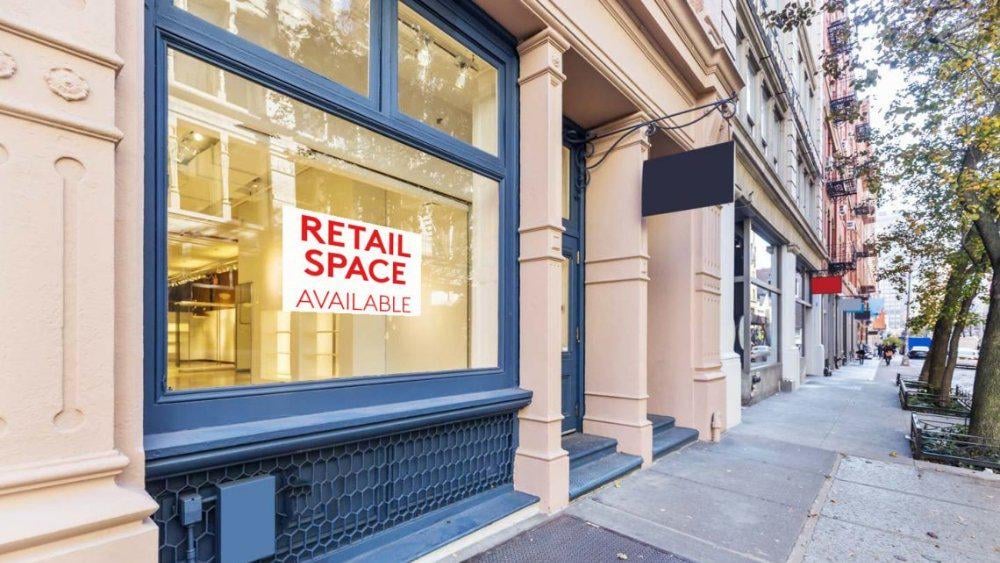
The author gives a useful explanation of why some storefronts stay empty for so long. Basically, lowering rents could devalue the building below the value the operator took out a commercial loan for, causing them to default. I’d be happy to tax empty spaces, but he claims that’s also detrimental cause it hurts banks. But that’s hard to care about these days. In any case, it doesn’t seem like it benefits a community at all.
>The short answer is both simple and surprising: In many cases, lowering the rent on a building will force the bank to foreclose on it.
>Foreclosure is very bad for both the bank and the operator, so both parties would rather “extend and pretend,” leaving the building vacant while they wait and hope for the market to change.
>This seems absurd. Surely everyone would be better off if they just lowered the rent and got some use out of the building — getting some rent must be better than getting no rent, right?
>Intuition fails because normal people think of a building as a building, when in the majority of cases, a building is not a building but a financial product. Behavior that makes no sense for a building can make perfect sense for a financial product.
>…
>The obvious thing cities could try is to put more pressure on building operators to fill their spaces, but the building operators are already under a ton of pressure — they’re losing a bunch of money! So, cities could do something like put a vacant storefront tax and… make them lose even more money? If that “worked,” the mechanism would be to force a lot of commercial property to default, which could put a lot of new space on the market at lower prices, which should lower the commercial rent. But it would also hurt the banks a lot, which has a history of leading to bad consequences and subsequent bailouts.
upthetruth1 on
Because there’s no Land Value Tax
Maximilianne on
Best Buy bought out our local electronics chain and you’d think they would just do a rebrand but they built a new best buy building right beside it,and only after like 10 years did the old retail store get turned into a bowling alley
regionalgamemanager on
Because starting and opening a business is expensive.
Tonenby on
The line about how the building is not a building but a financial product is, as a layperson, so weird.

5 Comments
The author gives a useful explanation of why some storefronts stay empty for so long. Basically, lowering rents could devalue the building below the value the operator took out a commercial loan for, causing them to default. I’d be happy to tax empty spaces, but he claims that’s also detrimental cause it hurts banks. But that’s hard to care about these days. In any case, it doesn’t seem like it benefits a community at all.
>The short answer is both simple and surprising: In many cases, lowering the rent on a building will force the bank to foreclose on it.
>Foreclosure is very bad for both the bank and the operator, so both parties would rather “extend and pretend,” leaving the building vacant while they wait and hope for the market to change.
>This seems absurd. Surely everyone would be better off if they just lowered the rent and got some use out of the building — getting some rent must be better than getting no rent, right?
>Intuition fails because normal people think of a building as a building, when in the majority of cases, a building is not a building but a financial product. Behavior that makes no sense for a building can make perfect sense for a financial product.
>…
>The obvious thing cities could try is to put more pressure on building operators to fill their spaces, but the building operators are already under a ton of pressure — they’re losing a bunch of money! So, cities could do something like put a vacant storefront tax and… make them lose even more money? If that “worked,” the mechanism would be to force a lot of commercial property to default, which could put a lot of new space on the market at lower prices, which should lower the commercial rent. But it would also hurt the banks a lot, which has a history of leading to bad consequences and subsequent bailouts.
Because there’s no Land Value Tax
Best Buy bought out our local electronics chain and you’d think they would just do a rebrand but they built a new best buy building right beside it,and only after like 10 years did the old retail store get turned into a bowling alley
Because starting and opening a business is expensive.
The line about how the building is not a building but a financial product is, as a layperson, so weird.