>Iran’s currency has plunged to new lows as the country struggles with the economic aftershocks of the war with Israel, sparking protests from shopkeepers and piling pressure on President Masoud Pezeshkian and the Islamic republic’s leaders.
>The rial has lost about 40 per cent of its value since the 12-day war in June, hitting a record low of 1.45mn to the US dollar on the open market in recent days.
>The currency’s slide has accelerated as oil revenues have shrunk under sanctions from the US, which briefly joined the war to bomb Iran’s nuclear sites. The country’s stubbornly high inflation rate rose to 42.2 per cent in December year on year.
>Anger over the collapse of the currency prompted shopkeepers selling electronic goods to shut their stores in central [Tehran](https://www.ft.com/stream/41420255-3172-308d-b0f0-752c0fa7eb58) on Sunday in protest, with merchants in the capital’s historic Grand Bazaar joining the strike on Monday.
>Videos circulating on social media showed riot police using tear gas to disperse crowds and protesters urging others to join them, chanting slogans such as “Iranians will die but won’t accept humiliation”.
>State television confirmed the protests, saying that demonstrators were calling for the “stabilisation of foreign currency rates”.
>Tasnim news agency, which is affiliated with the country’s Revolutionary Guards, said that while public anger over rising prices was justified, “insecurity will not solve any problem and will only benefit those who want Iran in ruins” — an apparent reference to Israel.
>The economic consequences of the conflict have become increasingly visible in recent weeks as the country remains caught in a fragile state of what Iranians describe as “no war, no peace”.
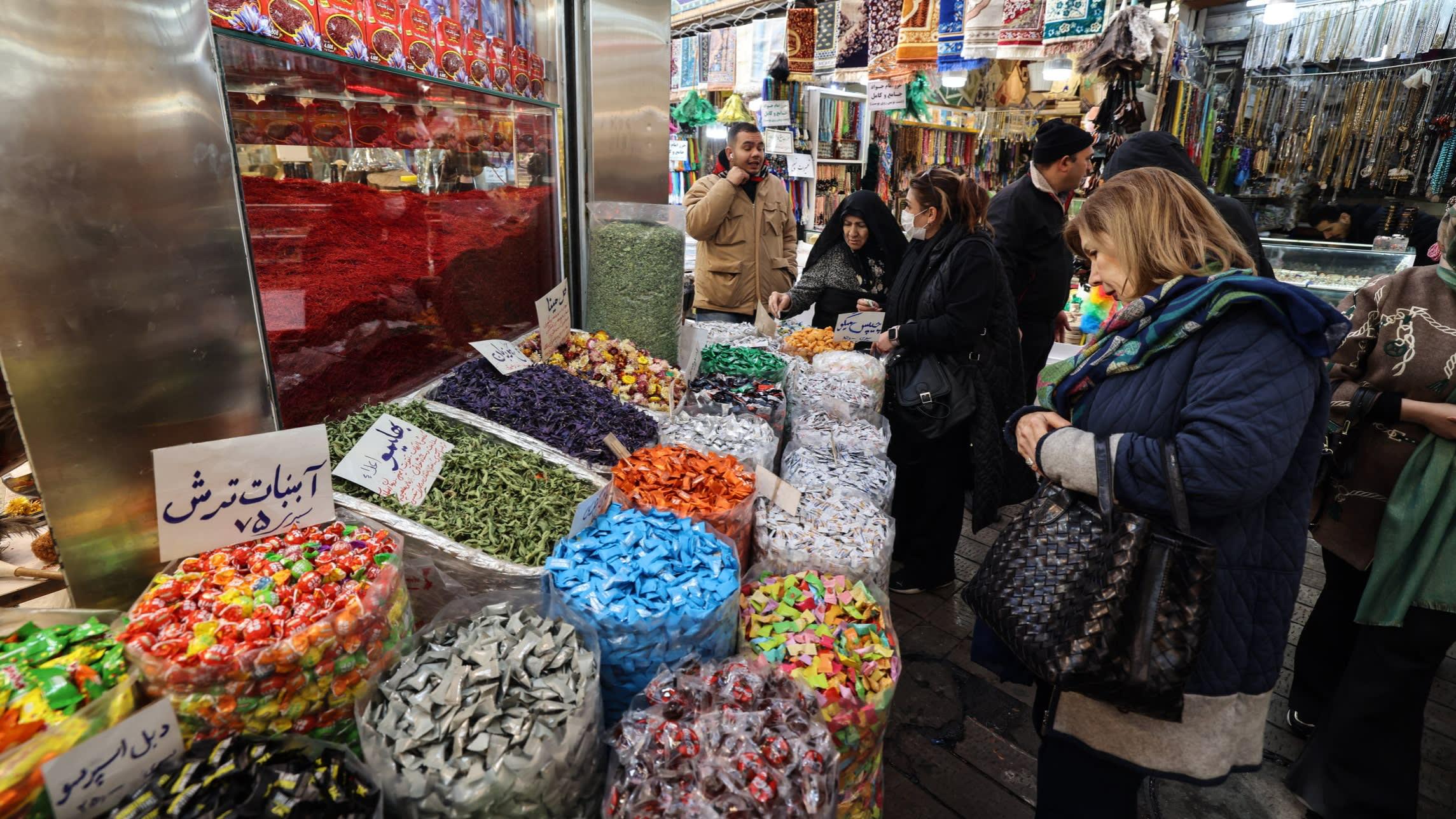
>“You go to the grocery store and see people checking prices and not buying products as basic as milk or yoghurt, let alone meat,” said Saghar, a 55-year-old housewife. She said she had stopped buying Iranian Lighvan cheese — a traditional staple — after its price jumped from 6mn rials to 8mn rials per pack within weeks.
>The price of gold coins, a key means by which Iranians seek to protect their household savings from inflation, hit a record high of 1.7bn rials per coin on Sunday. Gold prices have more than doubled since the war, reflecting both higher global prices and demand in the domestic market.
>The economic spiral has contributed to a broader legitimacy crisis for Iran’s leaders, as growing segments of society demand sweeping political, economic and social reforms.
>Authorities have so far responded by expanding limited social and cultural freedoms — such as easing restrictions on women’s dress — and broadening food voucher programmes for lower-income households.
>These subsidies are expected to expand further next year, as many workers survive on wages as low as $100 a month.
>There has also been mounting speculation in local media, among analysts and senior business figures, that [Pezeshkian](https://www.ft.com/stream/5229fcf5-d639-4dd8-9bc0-fe13f741cc5f) could seek to dismiss Iran’s central bank governor, Mohammad-Reza Farzin. The central bank denied the media reports.
Aoae on
How much of this is from US/Western sanctions and how much of this is from economic mismanagement and war spending?

2 Comments
>Iran’s currency has plunged to new lows as the country struggles with the economic aftershocks of the war with Israel, sparking protests from shopkeepers and piling pressure on President Masoud Pezeshkian and the Islamic republic’s leaders.
>The rial has lost about 40 per cent of its value since the 12-day war in June, hitting a record low of 1.45mn to the US dollar on the open market in recent days.
>The currency’s slide has accelerated as oil revenues have shrunk under sanctions from the US, which briefly joined the war to bomb Iran’s nuclear sites. The country’s stubbornly high inflation rate rose to 42.2 per cent in December year on year.
>Anger over the collapse of the currency prompted shopkeepers selling electronic goods to shut their stores in central [Tehran](https://www.ft.com/stream/41420255-3172-308d-b0f0-752c0fa7eb58) on Sunday in protest, with merchants in the capital’s historic Grand Bazaar joining the strike on Monday.
>Videos circulating on social media showed riot police using tear gas to disperse crowds and protesters urging others to join them, chanting slogans such as “Iranians will die but won’t accept humiliation”.
>State television confirmed the protests, saying that demonstrators were calling for the “stabilisation of foreign currency rates”.
>Tasnim news agency, which is affiliated with the country’s Revolutionary Guards, said that while public anger over rising prices was justified, “insecurity will not solve any problem and will only benefit those who want Iran in ruins” — an apparent reference to Israel.
>The economic consequences of the conflict have become increasingly visible in recent weeks as the country remains caught in a fragile state of what Iranians describe as “no war, no peace”.
>“You go to the grocery store and see people checking prices and not buying products as basic as milk or yoghurt, let alone meat,” said Saghar, a 55-year-old housewife. She said she had stopped buying Iranian Lighvan cheese — a traditional staple — after its price jumped from 6mn rials to 8mn rials per pack within weeks.
>The price of gold coins, a key means by which Iranians seek to protect their household savings from inflation, hit a record high of 1.7bn rials per coin on Sunday. Gold prices have more than doubled since the war, reflecting both higher global prices and demand in the domestic market.
>The economic spiral has contributed to a broader legitimacy crisis for Iran’s leaders, as growing segments of society demand sweeping political, economic and social reforms.
>Authorities have so far responded by expanding limited social and cultural freedoms — such as easing restrictions on women’s dress — and broadening food voucher programmes for lower-income households.
>These subsidies are expected to expand further next year, as many workers survive on wages as low as $100 a month.
>There has also been mounting speculation in local media, among analysts and senior business figures, that [Pezeshkian](https://www.ft.com/stream/5229fcf5-d639-4dd8-9bc0-fe13f741cc5f) could seek to dismiss Iran’s central bank governor, Mohammad-Reza Farzin. The central bank denied the media reports.
How much of this is from US/Western sanctions and how much of this is from economic mismanagement and war spending?