
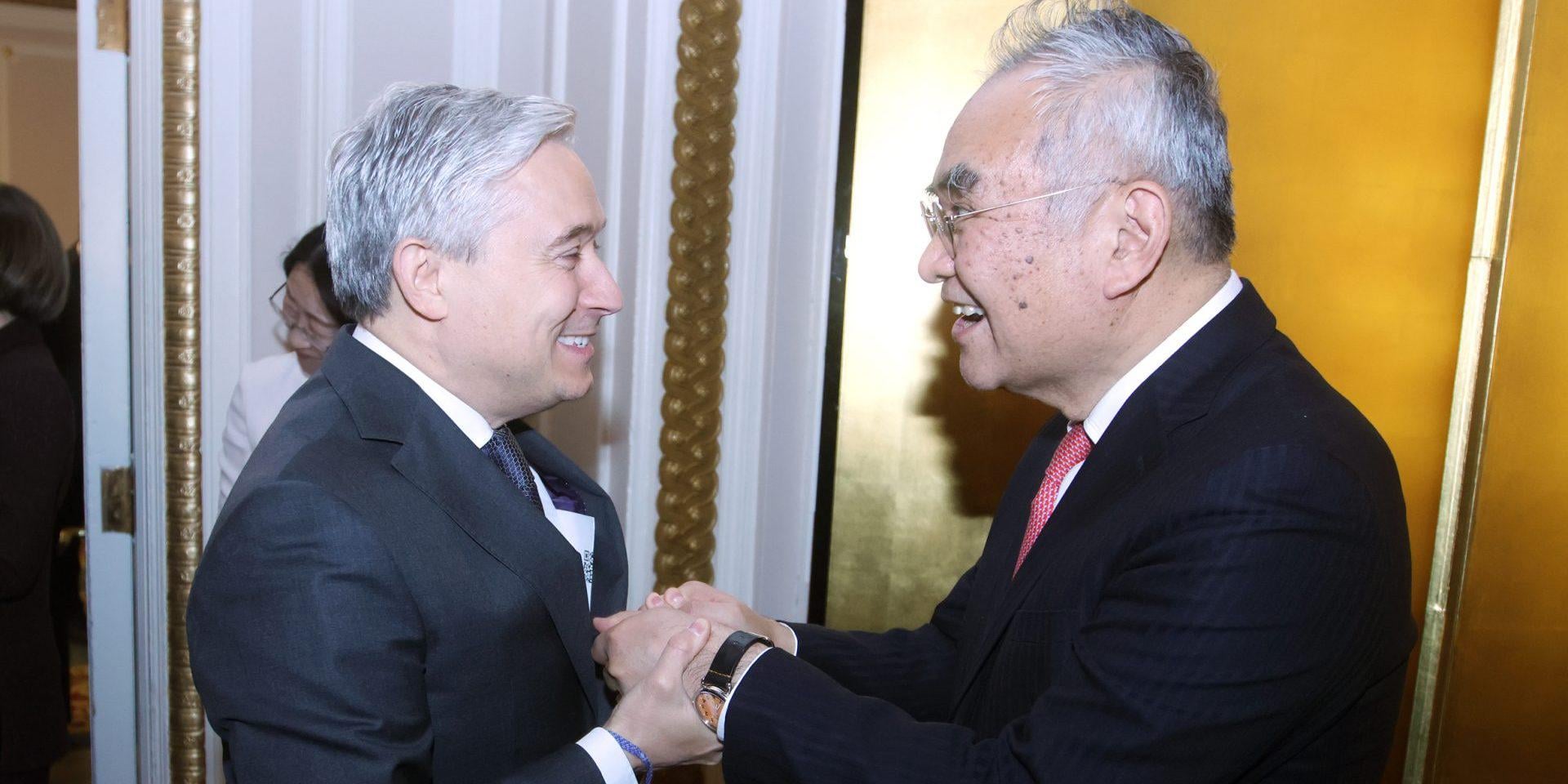
In short, the global environment surrounding both Japan and Canada has become increasingly harsh. Against this backdrop, a delegation from Keidanren’s Canada Committee visited Ottawa and Toronto on Dec. 1 and 2.
Keidanren is Japan’s largest business organization, representing 1,574 world-leading Japanese companies and 106 national industry associations. Its chair is often referred to as the “prime minister” of the Japanese business community, reflecting the organization’s significant influence. Founded in 1946, it has played a central role in Japan’s economic development, guiding the country through postwar reconstruction, rapid economic growth, oil shocks, the collapse of the bubble economy, and successive reforms.
This was Keidanren’s first visit to Canada in nine years. While the COVID-19 pandemic provides some explanation, the visit was overdue. Nevertheless, it underscored the strong determination of Japan’s business community to deepen economic ties with Canada amid an increasingly uncertain global environment. From Canada’s perspective as well, Japan is a crucial partner as Prime Minister Mark Carney's government pursues trade diversification and seeks to position Canada as an energy superpower. Just ahead of the visit, the federal government and the province of Alberta signed a memorandum of co-operation on advancing energy-related infrastructure, making the timing particularly opportune.
The delegation’s schedule was intensive, reflecting the depth of Japan-Canada economic relations. Despite his demanding official duties, Prime Minister Mark Carney received the Keidanren delegation. In addition, Finance Minister François-Philippe Champagne, Foreign Minister Anita Anand, Industry Minister Mélanie Joly, Energy Minister Tim Hodgson, and International Trade Minister Maninder Sidhu each held individual meetings, allowing for frank and substantive exchanges of views.
The delegation also met with senior members of the Canada-Japan Inter-Parliamentary Group. With more than 200 federal parliamentarians currently affiliated—making it Canada’s third largest after the Canada-U.S. and Canada–United Kingdom groups—this reflects strong expectations for bilateral relations. Despite the crowded parliamentary calendar, ample time was secured for meaningful, forward-looking discussions thanks to the leadership of the group’s co-chairs, Senator Stanley Kutcher and Liberal MP Terry Sheehan.
Keidanren’s main interest lies in the Canada-U.S.-Mexico Agreement, which is scheduled for renegotiation in 2026. The delegation emphasized the importance of maintaining the free-trade framework among the three countries. From investors’ perspectives, Canada’s strengths include abundant natural resources such as critical minerals; a stable and inclusive society; high-quality human capital supported by an effective immigration system; and generous support measures from federal and provincial governments. Above all, Canada’s position as an integral part of the North American market remains fundamental. Approximately 75 per cent of automobiles produced in Canada are Japanese brands, most of which are exported to the U.S.
The delegation also raised concerns regarding additional tariffs on steel recently introduced by the Canadian government. While stressing the importance of the World Trade Organization and the Comprehensive and Progressive Agreement for Trans-Pacific Partnership, and calling for Canada’s leadership in upholding the rules-based trading system, Keidanren requested appropriate treatment of Japanese steel products. This issue was discussed amid the recent announcement of layoffs affecting around 1,000 workers at Algoma Steel, underscoring the difficulties faced by domestic industries. Even under such circumstances, it is essential for Japan and Canada to work closely together to address this issue through coordination and dialogue.
The highlight of the visit was the signing of a memorandum of co-operation between Keidanren and the Business Council of Canada. This document aims to further strengthen Japan–Canada economic relations at the corporate level, and I had the honour of witnessing it together with Anand. Major business projects are already underway in areas such as zero-emission vehicles, liquefied natural gas, small modular reactors, and critical minerals including lithium, graphite, copper, and uranium. Looking ahead, energy, technological innovation, supply chains, and decarbonization hold particular promise.
The further deepening of Japan–Canada economic relations is inevitable. We are now witnessing a new dawn. Despite challenging times, there is strong reason to hope that 2026 will be a bright and promising year.
Posted by IHateTrains123
1 Comment
In line with the previous the Logic article about pivoting trade flows in Canada, this opinion piece by the Japanese Ambassador to Canada argues that Canada can deepen their trade relations with Japan, should fight to maintain North American free trade and should help uphold the rules-based trading system.
!ping Can