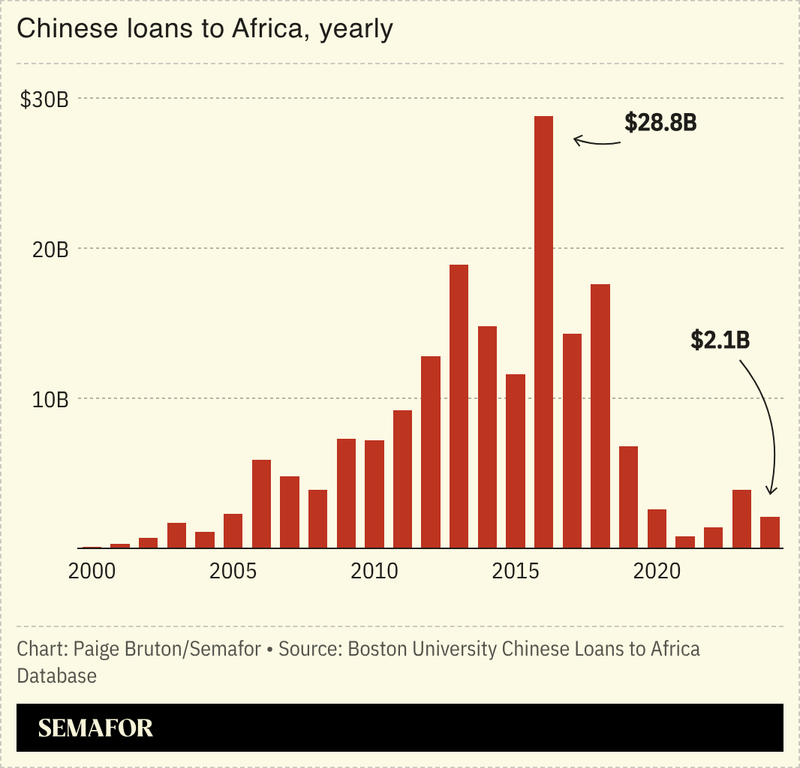
>“Chinese banks lent so much in the past decade but are becoming more risk-averse because not every sum has been repaid,” Yue told Semafor. The lenders are feeling increased “pressure on their balance sheets and do not want so many non-performing or unpaid loans,” she said.
Despite the debt trap or “building up the global south” narratives, I honestly thought a lot of this was the result of naivety. China 40 years ago was at the same standard of living as Malawi. A genuine thread in a lot of investment was a belief that Africa was capital constrained, that previous investments were just done poorly, or that a developing perspective would help
It wasn’t; and now things are coming back down to earth. The big investments have happened and things are now in wait and see mode, like Sinotruck in Ghana or the new Iron mine in Guinea, or the various rail projects in East Africa

2 Comments
Ig they realised how small the returns are
>“Chinese banks lent so much in the past decade but are becoming more risk-averse because not every sum has been repaid,” Yue told Semafor. The lenders are feeling increased “pressure on their balance sheets and do not want so many non-performing or unpaid loans,” she said.
Despite the debt trap or “building up the global south” narratives, I honestly thought a lot of this was the result of naivety. China 40 years ago was at the same standard of living as Malawi. A genuine thread in a lot of investment was a belief that Africa was capital constrained, that previous investments were just done poorly, or that a developing perspective would help
It wasn’t; and now things are coming back down to earth. The big investments have happened and things are now in wait and see mode, like Sinotruck in Ghana or the new Iron mine in Guinea, or the various rail projects in East Africa