SS: covers regional governance structures, YIMBYism and economic development.
> “They just thought it was a bunch of cocky Mancunians talking bullshit,” says Jim O’Neill, the former Treasury minister and Goldman Sachs chief economist. “But the more time goes on and the more the evidence becomes clear, they’re like, ‘Oh my God.’” O’Neill is talking about Greater Manchester, whose economy has been growing at twice the UK’s national rate. It’s attracted the highest foreign direct investment outside the capital, drawing global companies like IBM, Booking.com, Klarna, Bosch, Roku and Auto Trader, while a cultural scene that once fostered bands like Oasis is encouraging young people to move here — and stay.
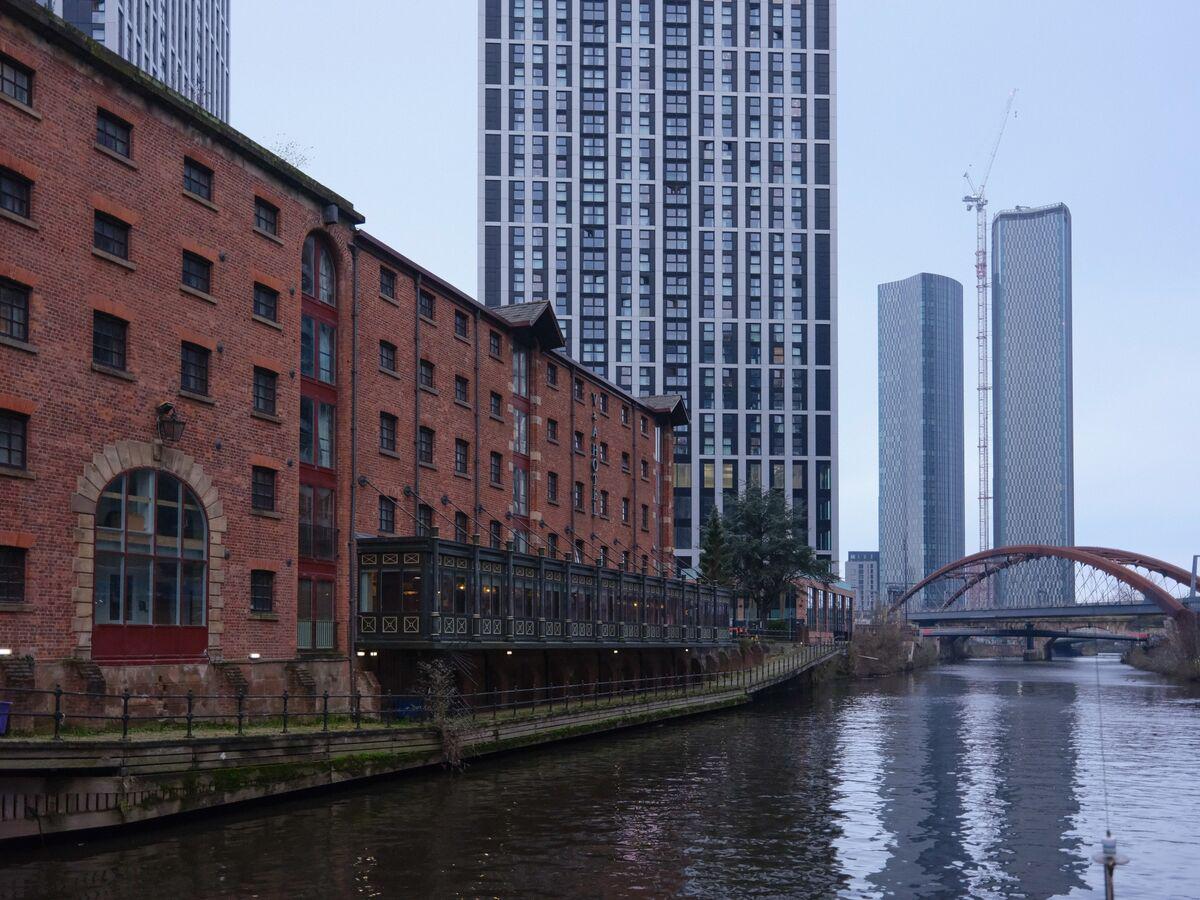
> When the band sang: “I would like to leave this city / This old town don’t smell too pretty,” it was a very different place. After decades of decline, Manchester is booming again. The city center’s population is approaching 100,000 – up from hundreds in 1990 – and it retains a higher share of its graduates than anywhere in England outside the capital. The city’s confidence is written on its skyline. Since 2017, the number of skyscrapers has increased sevenfold. Former industrial districts such as Ancoats, New Islington and Salford Quays were once defined by derelict mills and polluted docks. Now they’re filled with apartments, joggers and bakeries selling croissant butter, a treat made by taking something past its useful life and purposing it anew. “If I’d told my parents that Ancoats would be talked about like Hoxton or Hackney, they’d have thought I was mad,” O’Neill said.
> Manchester’s fortunes stand in sharp contrast to the national mood. Britain’s economy is sluggish and its politics divided. Taxes are at record highs, public services are stretched and even Prime Minister Keir Starmer has complained that when he pulls on the levers of power, nothing moves. You don’t hear that from his would-be rival in the North. Greater Manchester Mayor Andy Burnham has built a national profile off the city’s regeneration and is now the most popular figure in Starmer’s Labour Party, according to YouGov polling. Just last week he was blocked by the prime minister’s allies in his attempt to stand for the seat in parliament he would need to mount a challenge for the top job.
> Though Burnham has won the city new powers from London, and reformed local education and transport, Manchester’s resurgence long predates his 2017 election. He “had virtually nothing to do with any of this at the start,” says Richard Leese, who served as his deputy for four years. Today’s revival is the product of three decades of incremental change: a cultural scene deliberately cultivated to attract and retain talent, close cooperation between neighboring administrations, and an unusually pro-business Labour leadership. Together, they have produced a place that feels buoyant at a moment when much of the country does not.
> Once the world’s first industrial city – built on cotton, canals and global trade – Manchester entered a long decline around World War Two. Engineering, chemicals and light manufacturing withered before collapsing outright when the Thatcher government withdrew state support. “It felt like the world had just used Manchester up and thrown it away,” says Andy Spinoza, a journalist who chronicled the city’s music scene during its bleakest years. “The message to young people was clear: if you want to get on in life, you have to go south,” Burnham says.
> The change started quietly in the early 1990s with the launch of the tram network and the regeneration of Hulme, a notorious Brutalist housing estate. It accelerated after an IRA bombing in 1996 triggered the wholesale rebuild of the center. The east of the city was transformed ahead of the 2002 Commonwealth Games, while the BBC’s decision in 2006 to relocate major operations to Salford gave the city-region a cultural anchor. In 2011, Greater Manchester became the first part of England to form a so-called Combined Authority, pooling power across ten boroughs. A directly elected mayor followed six years later.
> Culture was not an afterthought but an explicit economic strategy. City leaders embraced music, sport and the arts as tools for attracting and retaining talent. Manchester has long hosted major exhibitions and festivals and this year its Co-Op Live arena will host the Brit Awards, the first time the national music showcase has been held outside London. “If there was a city I was least hesitant about paying business rates to, Manchester would be that city,” says David Fox, founder of the Tampopo restaurant group. “They invest in the city as an experiential place.” There are the football clubs. Manchester United and Manchester City have won a combined 21 of 33 Premier League titles since the competition began. But it’s music, in particular, that has long underpinned Manchester’s global appeal. The city produced not just Oasis but The Smiths and Stone Roses – bands that gave it cultural reach during years of economic collapse. Burnham draws parallels with Austin: “a city that prides itself on enjoyment and the good things in life, good football and music.”

1 Comment
SS: covers regional governance structures, YIMBYism and economic development.
> “They just thought it was a bunch of cocky Mancunians talking bullshit,” says Jim O’Neill, the former Treasury minister and Goldman Sachs chief economist. “But the more time goes on and the more the evidence becomes clear, they’re like, ‘Oh my God.’” O’Neill is talking about Greater Manchester, whose economy has been growing at twice the UK’s national rate. It’s attracted the highest foreign direct investment outside the capital, drawing global companies like IBM, Booking.com, Klarna, Bosch, Roku and Auto Trader, while a cultural scene that once fostered bands like Oasis is encouraging young people to move here — and stay.
> When the band sang: “I would like to leave this city / This old town don’t smell too pretty,” it was a very different place. After decades of decline, Manchester is booming again. The city center’s population is approaching 100,000 – up from hundreds in 1990 – and it retains a higher share of its graduates than anywhere in England outside the capital. The city’s confidence is written on its skyline. Since 2017, the number of skyscrapers has increased sevenfold. Former industrial districts such as Ancoats, New Islington and Salford Quays were once defined by derelict mills and polluted docks. Now they’re filled with apartments, joggers and bakeries selling croissant butter, a treat made by taking something past its useful life and purposing it anew. “If I’d told my parents that Ancoats would be talked about like Hoxton or Hackney, they’d have thought I was mad,” O’Neill said.
> Manchester’s fortunes stand in sharp contrast to the national mood. Britain’s economy is sluggish and its politics divided. Taxes are at record highs, public services are stretched and even Prime Minister Keir Starmer has complained that when he pulls on the levers of power, nothing moves. You don’t hear that from his would-be rival in the North. Greater Manchester Mayor Andy Burnham has built a national profile off the city’s regeneration and is now the most popular figure in Starmer’s Labour Party, according to YouGov polling. Just last week he was blocked by the prime minister’s allies in his attempt to stand for the seat in parliament he would need to mount a challenge for the top job.
> Though Burnham has won the city new powers from London, and reformed local education and transport, Manchester’s resurgence long predates his 2017 election. He “had virtually nothing to do with any of this at the start,” says Richard Leese, who served as his deputy for four years. Today’s revival is the product of three decades of incremental change: a cultural scene deliberately cultivated to attract and retain talent, close cooperation between neighboring administrations, and an unusually pro-business Labour leadership. Together, they have produced a place that feels buoyant at a moment when much of the country does not.
> Once the world’s first industrial city – built on cotton, canals and global trade – Manchester entered a long decline around World War Two. Engineering, chemicals and light manufacturing withered before collapsing outright when the Thatcher government withdrew state support. “It felt like the world had just used Manchester up and thrown it away,” says Andy Spinoza, a journalist who chronicled the city’s music scene during its bleakest years. “The message to young people was clear: if you want to get on in life, you have to go south,” Burnham says.
> The change started quietly in the early 1990s with the launch of the tram network and the regeneration of Hulme, a notorious Brutalist housing estate. It accelerated after an IRA bombing in 1996 triggered the wholesale rebuild of the center. The east of the city was transformed ahead of the 2002 Commonwealth Games, while the BBC’s decision in 2006 to relocate major operations to Salford gave the city-region a cultural anchor. In 2011, Greater Manchester became the first part of England to form a so-called Combined Authority, pooling power across ten boroughs. A directly elected mayor followed six years later.
> Culture was not an afterthought but an explicit economic strategy. City leaders embraced music, sport and the arts as tools for attracting and retaining talent. Manchester has long hosted major exhibitions and festivals and this year its Co-Op Live arena will host the Brit Awards, the first time the national music showcase has been held outside London. “If there was a city I was least hesitant about paying business rates to, Manchester would be that city,” says David Fox, founder of the Tampopo restaurant group. “They invest in the city as an experiential place.” There are the football clubs. Manchester United and Manchester City have won a combined 21 of 33 Premier League titles since the competition began. But it’s music, in particular, that has long underpinned Manchester’s global appeal. The city produced not just Oasis but The Smiths and Stone Roses – bands that gave it cultural reach during years of economic collapse. Burnham draws parallels with Austin: “a city that prides itself on enjoyment and the good things in life, good football and music.”