
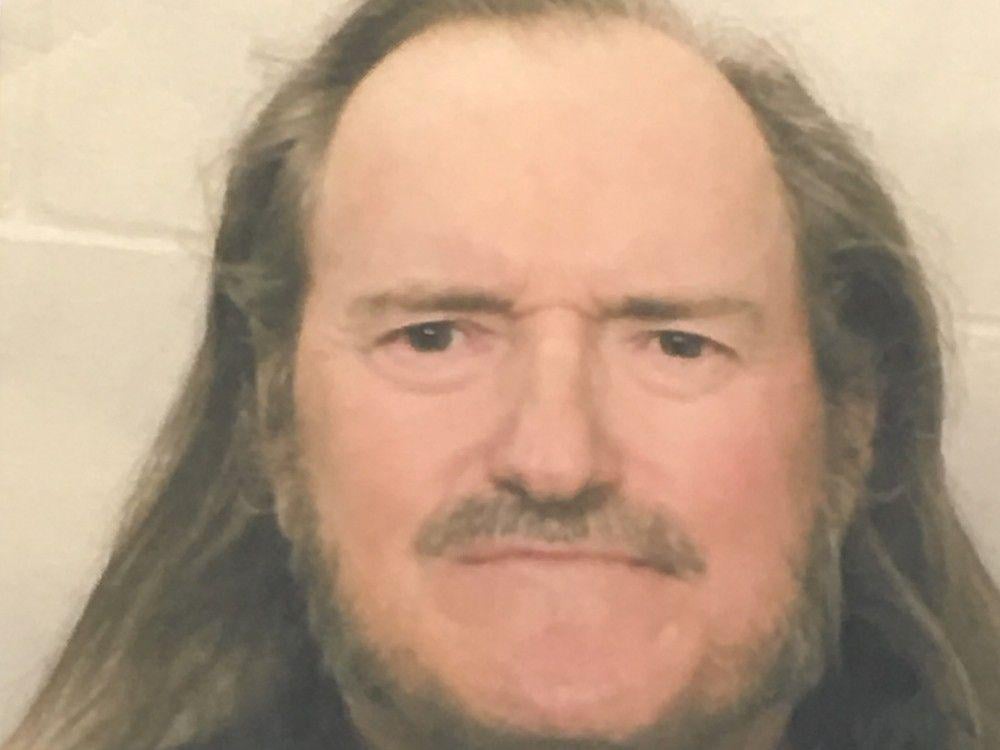
About a year before Oscar Arfmann gunned down Abbotsford Const. John Davidson in November 2017, his firearm was seized by the RCMP in Alberta.
About a year before Oscar Arfmann gunned down Abbotsford Police Const. John Davidson in November 2017, his firearm was seized by the RCMP in Alberta.
Despite concerns about his mental health and ongoing erratic behaviour, the gun was returned to a friend of Arfmann’s and later used to murder Davidson.
Firearms expert Frank Grosspietsch, who spent 15 years with the RCMP’s national weapons enforcement support team, wrote a report about the actions that should have been taken to keep the weapon out of the hands of Arfmann, who was later convicted of first-degree murder.
Grosspietsch said in an interview that this week’s tragic mass shooting in Tumbler Ridge is again raising questions about why more wasn’t done to permanently remove firearms from the home of killer Jesse Van Rootselaar.
RCMP Deputy Commissioner Dwayne McDonald said earlier this week that the RCMP had been to the home several times for mental health calls, including when Van Rootselaar was apprehended under the Mental Health Act.
Firearms in the home were seized, McDonald said, but the licensed owner petitioned to have them returned.
On Friday, the RCMP said in a statement that neither gun used by Van Rootselaar to kill six in the local secondary school nor the one that killed her mother and stepbrother in the family home were among those earlier seized by police.
“We have prioritized the analysis of the two firearms (a long gun and a rifle that had been modified) seized from the school and two firearms, including a shotgun, seized among a number of other firearms, at the residence,” the statement said. “The shotgun is believed to be involved the homicides at the home and has never been previously seized by police. Our investigation has also determined the main firearm believed to be used in the mass shooting at the school has never been seized by the RCMP and its origin is unknown. Efforts continue to identify the owners and source of all other firearms.”
But the general issue of people in a mental health crisis having access to firearms needs to be better addressed by law enforcement agencies, Grosspietsch said.
“Law enforcement agencies need to be properly trained in the identification and recognition of investigations that involved individuals dealing with mental health crises that could result in harm to others and/or themselves,” he said Friday. “And in that educational training, law enforcement agencies must use the applicable laws that are in place.”
He said police often take the first step, which is to seize the firearms. But they don’t always follow up by applying for a permanent prohibition, which means the guns get returned.
Grosspietsch said that the prohibition applications are not “consistently being used and that is the shortcoming.”
Nor should firearms be returned to a licensed owner if “there’s another person with a mental health issue that involves self-harm or harm to others in the same household,” he said.
The Arfmann case is not the only B.C. example where a firearm was returned to someone with serious mental health issues who later used it to kill.
In May 2012, Angus Mitchell shot and killed two Burnaby sushi restaurant employees and wounded a former landlord — weeks after a firearm seized from him by Saanich Police earlier in the year was returned.
Despite being apprehended under the Mental Health Act after he carried the rifle into a Saanich medical clinic, Mitchell later got his Mossberg Maverick shotgun back after his hospital release.
He then used the firearm in his deadly rampage before he died May 30 in a shootout with police in Maple Ridge.
The officer who returned the gun later told a coroner’s inquest that she had sought “guidance” on whether to make a “prohibition” application in Mitchell’s case, but was told, “She would not likely be successful.”
Posted by IHateTrains123