
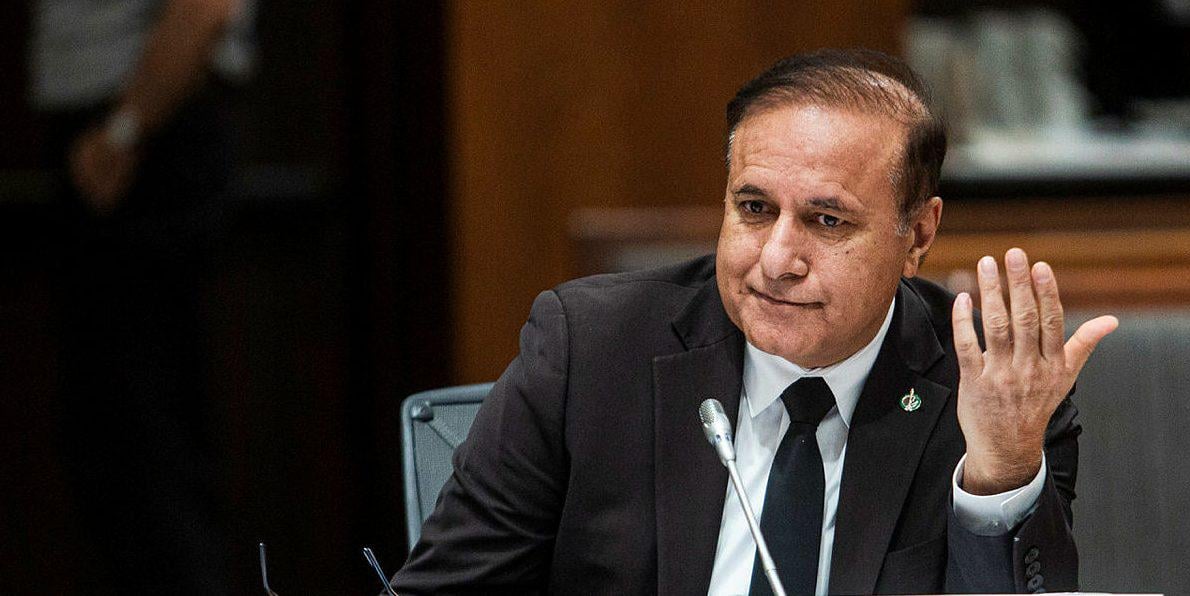
Prior to the 1980s, federal cabinet ministers made do with a handful of staff, but that has jumped to between 15 and 25 exempt staffers over the last 40 years, says professor Donald Savoie.
Prime Minister Mark Carney’s Liberal government has eliminated thousands of positions from the public service, but no cuts have been made to political staff in ministers’ offices or in the Prime Minister’s Office. Some with expert knowledge in the mechanics of government say that, in the interest of fairness, civil service cuts should be matched with reductions in the PMO staff and ministers’ staffers.
“Should ministerial staff be cut back? Yes. Should officers of Parliament be cut back? Yes. Should the bureaucracy be cut back? Yes,” said Donald Savoie, one of the country’s leading experts on the machinery of government and Canada research chair in public administration and governance at the University of Moncton, in an interview with The Hill Times.
Savoie, an award-winning author and editor of more than 28 books, said that it sends the wrong message when the government makes significant cuts to the public service workforce, but leaves exempt ministerial staff positions untouched.
Cabinet ministers’ political staff are called ‘exempt’ because they are apart from regular hiring processes and regulations for public servants. As political staffers, they provide partisan political advice and support to their respective cabinet ministers and to the prime minister, which bureaucrats cannot.
Following the April 2025 election, Carney (Nepean, Ont.) appointed 28 cabinet ministers and 10 secretaries of state.
Savoie said that each cabinet minister currently employs between 15 and 25 exempt staffers at senior and junior-level positions. The PMO typically has around 100 exempt staffers.
Each minister’s office is structured differently, but most exempt staff positions include a chief of staff, director of policy, director of parliamentary affairs, director of communications and regional affairs directors. All chiefs of staff and director positions are executive-level positions.
Based on the 2025 Treasury Board salary ranges, the minimum salary of an executive-level position is $134,827 and the maximum salary is $260,719. To assist these senior exempt staffers, there are mid-level and junior employees, including senior special assistants, special assistants, regional advisers, and policy advisers. Ministerial offices also hire a staffer to assist parliamentary secretaries in their work.
In Carney’s cabinet, secretaries of state are not formal members, but may attend meetings when invited. They can hire up to eight political staffers, including a chief of staff, a policy adviser, a communications director, an operations director, a communications and operations adviser, a senior special assistant, a special assistant and an executive assistant. Chiefs of staff to secretaries of state are also executive-level positions.
‘Too many hands in the soup,’ says Savoie
Prior to former Progressive Conservative prime minister Brian Mulroney, Savoie said, cabinet ministers used to have only a handful of administrative ministerial staff to help with correspondence, scheduling, travel plans, and communications, and a departmental assistant.
But in the last 40 years of Conservative and Liberal governments, the number of political staffers has risen significantly. Savoie said that a high number of exempt employees in a minister’s office inevitably creates more work for the departmental officials. When as many as 25 staffers are looking for tasks and information that isn’t readily accessible, he said, they reach out to their respective departmental officials to gather and prepare it.
That, Savoie said, generates increased additional workload within the government. Depending on the government’s priorities, he suggested the number of exempt staff could be reduced from 25 to as few as eight.
Savoie said that with an oversized public service, a growing number of political ministerial staff, and 11 officers of Parliament who employ between 3,000 and 4,000 staffers, it becomes increasingly difficult for a government of any political stripe to operate efficiently. Savoie pointed to the recent creation of the Major Projects Office, arguing that despite employing close to 350,000 public servants across the country, the government opted to establish what is essentially a new department.
If the government is serious about delivering results quickly and effectively, Savoie said, it needs to take a hard look at how it is structured and staffed.
“There’s too many hands in the soup,” said Savoie.
“We’ve just made it so difficult to get things done that there’s a need to create new offices to pursue major projects. Forty to 50 years ago, you didn’t need to create a new office to build a Trans-Canada Highway [or] medicare. To do all those things, the system [at the time] could do it. Now, it can’t.”
As of 2025, according to the Treasury Board’s website, the federal public service employed 357,965 people, and last year’s budget document indicated that the size of the civil service ballooned by 40 per cent between 2015 and 2024. The Treasury Board website also indicates that 17,217 positions are set to be slashed, which includes 704 executive-level jobs.
The Carney government has launched an initiative to reduce the size of the public service, and scale back several programs in an effort to reduce the deficit and debt. Last year’s budget projected a $78.3-billion deficit.
Savoie also said that of all the countries with a Westminster system of government—including Australia, the United Kingdom, and New Zealand—Canada has the largest number of officers of Parliament. He suggested that the government could take a look at these roles, and see if some could be combined or others could be eliminated.
There are 10 officers of Parliament, including the auditor general, chief electoral officer, lobbying commissioner, official languages commissioner, ethics commissioner, information commissioner, parliamentary budget officer, parliamentary protective service director, privacy commissioner, and the public sector integrity commissioner.
Savoie said that the offices of the auditor general, chief electoral officer, and official languages commissioner need to stay, but others could be combined or cut altogether.
He suggested combining the offices of the ethics, lobbying, and public service integrity commissioners into one. Savoie said that Parliament should undertake a debate on whether or not these officers of Parliament should be kept.
Political staff pool not as bloated as civil service: Turnbull
Meanwhile, a high-ranking public service official agreed with Savoie’s suggestion that there should be cuts across the board, including for exempt staff, and workers connected to the House of Commons, the Senate, and governor-in-council (GIC) appointments.
“There’s a sense of optics there that needs to be considered,” said the official who spoke on not-for-attribution because they were not authorized to speak publicly on this subject.
“It should equate with cuts to the broader system, including the GIC [governor-in-council] appointments. Everyone should feel the hit.”
Lori Turnbull, a professor of political science at Dalhousie University in Halifax, said that the argument behind cutting public service costs is the perception that the system is bloated, but that the pool of political staff is not big enough to justify the same claim. Based on her experience, she said, cabinet ministers do not have surplus staff to eliminate, as the Treasury Board sets the budget for each ministerial office. Any excess, Turnbull added, would likely be limited to a few ministers’ offices rather than being widespread.
Between 2015 and 2017, Turnbull served in the Privy Council Office as a policy adviser in the Machinery of Government Secretariat and later as departmental liaison in the democratic institutions minister’s office.
“There are probably some ministers’ offices where everybody’s working 10 hours a day, and it would be hard to see how they’d cut anybody,” said Turnbull, who also once served as a policy adviser for the Privy Council Office’s priorities and planning secretariat.
“And then there are probably some offices where there’s bloat, and you could use five fewer people.”
Duane Bratt, a professor of Canadian public policy and international relations at Mount Royal University in Calgary, Alta., said that when Ottawa is cutting the non-partisan federal public service, it stands to reason that they should slash the exempt ministerial staffers, as well.
“If you’re reducing the formal public sector, which is politically neutral, and you’re not doing [so with] political advisers, that to my mind is a problem,” said Bratt.
“There is going to be pushback if you’re going to reduce the overall size of the public sector, but not the political appointments.”
Mohammad Kamal, director of communications to Treasury Board President Shafqat Ali (Brampton—Chinguacousy Park, Ont.), said that the government is undertaking measures to improve productivity and reduce inefficiencies.
“As we work together to deliver Canada’s new government’s ambitious agenda, work is underway across government to reduce inefficiencies and improve productivity,” wrote Kamal in an email to The Hill Times.
He did not say if the government has cut any exempt ministerial staff positions.
Posted by IHateTrains123
1 Comment
Beyond sending a bad political message by exempting ministerial staffers from recent government cuts, Donald Savoie, research chair in public administration and governance at the University of Moncton, says that these staffers are part of a bloated parliamentary staff system that have harmed governmental efficiency.
He says that having as many as 25 staffers per minister’s office often creates more work for departmental officials, as the staffers are constantly looking for tasks and information from these officials. But placing this in context shows that this ministerial bloat, until recently, also coincided with a growing and unmanageable bloating of both the public service and the other 11 officers of Parliament who employ between 3,000 and 4,000 staffers.
His prime example is the Major Projects Office, which is essentially a new department designed to manage projects that 50 years ago didn’t require the creation of new offices. Savoie explains:
>“There’s too many hands in the soup, we’ve just made it so difficult to get things done that there’s a need to create new offices to pursue major projects. Forty to 50 years ago, you didn’t need to create a new office to build a Trans-Canada Highway [or] medicare. To do all those things, the system [at the time] could do it. Now, it can’t.”
Savoie also points to other Westminster style governments, such as Australia, the UK and New Zealand, and says that Canada has the largest number of officers of Parliament, which he suggests the government should rationalise. Otherwise his other solution is reducing the amount of ministerial staffers to eight per minister.
Other news:
[Mark Carney and the failure of co-operative federalism in Canada](https://policyoptions.irpp.org/2026/02/competitive-federalism/) – Policy Options
[Why Canadian Critical Minerals are More Critical Than Ever – Policy Magazine](https://www.policymagazine.ca/why-canadian-critical-minerals-are-more-critical-than-ever/)
[Federal Tracker: Carney’s Liberals Surge to 12-Point Lead Over Conservatives](https://press.liaisonstrategies.ca/federal-tracker-carneys-liberals-surge-to-12-point-lead-over-conservatives/?ref=liaison-strategies-newsletter) – Liaison Strategies
[What a US threat to Canada’s sovereignty really looks like | Canada’s National Observer](https://www.nationalobserver.com/2026/02/20/news/us-canada-sovereignty-threat-panel-wrap)
[Juno News scraps plan to run residential school denial film after investigation by CNO | Canada’s National Observer](https://www.nationalobserver.com/2026/02/23/news/juno-news-residential-school-film-dropped)
[Canada’s great American breakup: Most now see U.S. as a risk, not an ally, poll finds – The Globe and Mail](https://www.theglobeandmail.com/politics/article-canada-us-risk-not-ally-poll-finds/)
[Big banks set to post higher profits as lenders continue to shrug off trade war concerns – The Globe and Mail](https://www.theglobeandmail.com/business/article-big-banks-set-to-post-higher-profits-as-lenders-continue-to-shrug-off/)
[A failing grade on school construction in Vancouver – The Globe and Mail](https://www.theglobeandmail.com/opinion/editorials/article-a-failing-grade-on-school-construction-in-vancouver/)
[Canadians urged not to travel to Mexico as violence explodes in wake of cartel leader’s death | CBC](https://www.cbc.ca/news/world/livestory/puerto-vallarta-violence-9.7101866)
!ping Can