
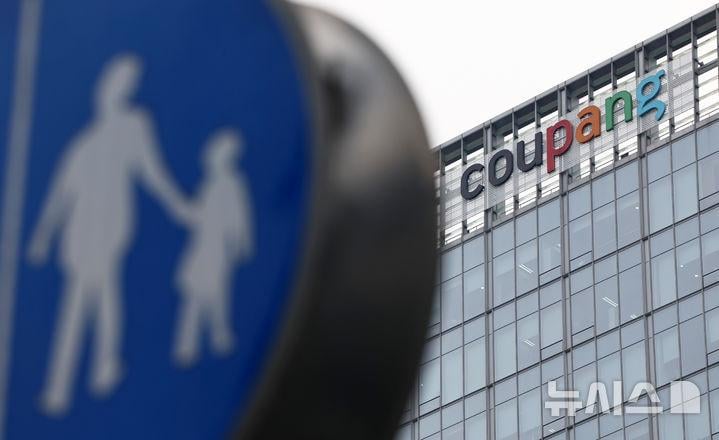
According to diplomatic sources, concerns are growing within the South Korean government that a Section 301 investigation by the United States Trade Representative (USTR) could realistically materialize after investors in Coupang alleged that the Korean government is treating U.S. companies in a discriminatory manner.
On the 24th (local time), officials reported that the USTR is currently reviewing a request submitted by Coupang’s investors seeking a Section 301 investigation into South Korea. While such reviews are procedurally conducted upon request, the Korean government believes there is a meaningful possibility that the process could advance to a formal investigation, particularly as former President Donald Trump has signaled plans for large-scale Section 301 probes following a U.S. Supreme Court ruling that invalidated reciprocal tariffs.
Section 301 authorizes the U.S. government to impose retaliatory measures, including tariffs, if it determines that foreign governments engage in unfair practices against American companies. Typically, stakeholders such as investors file petitions when U.S. firms face regulatory or legal difficulties overseas, including disputes related to intellectual property or market access.
Although industry petitions do not always lead to investigations, officials fear South Korea could become a target this time because the request aligns with broader Trump administration trade priorities, including the potential use of Section 301 measures as substitutes for previously canceled reciprocal tariffs. Given Trump’s directive encouraging active consideration of such investigations, the USTR is expected to treat the Coupang investors’ complaint more seriously than in past cases.
Under standard procedure, the USTR must decide within 45 days whether to initiate an investigation after receiving a petition, meaning a decision on whether to proceed against South Korea could come as early as early March.
The Korean government has consistently explained to U.S. policymakers that issues involving Coupang relate to the enforcement of South Korea’s domestic judicial system rather than discriminatory policy. However, criticism has continued within U.S. political circles, including a seven-hour inquiry conducted the previous day by the U.S. House Judiciary Committee involving Harold Rogers, acting head of Coupang’s Korean subsidiary.
The likelihood of an investigation is further heightened by longstanding U.S. opposition to South Korea’s proposed digital regulations and legislation. Korean officials note that concerns over potential discrimination against digital goods and services have been repeatedly raised by USTR leadership, including Ambassador Jamieson Greer.
Despite these developments, the government believes it remains uncertain whether any investigation would ultimately result in tariff measures against South Korea. If a Section 301 probe is formally launched, Seoul plans to actively present its position, emphasizing that enforcement actions involving Coupang are grounded in domestic law and that ongoing digital platform legislation is not intended to discriminate against foreign firms.
South Korean Ambassador to the United States Kang Kyung-wha stated during a press briefing that the government would respond in a manner best aligned with national interests, while closely monitoring follow-up measures by the Trump administration and working to ensure bilateral consultations proceed in a constructive and cooperative atmosphere.
Posted by Freewhale98
2 Comments
1. Summary
Korean officials are increasingly concerned that the United States Trade Representative (USTR) may launch a Section 301 investigation following complaints from Coupang investors alleging that Korea discriminates against U.S. companies through regulatory and legal actions.
Seoul maintains that issues surrounding Coupang stem from domestic judicial enforcement rather than discriminatory policy and plans to actively defend its digital regulations if an investigation begin.
2. How is this related to the sub
(1) Trade coercion & corruption: Coupang, a US e-commerce giant with deep ties with MAGA, lobbied Trump administration to attack Korea. This is the result.
3. My opinion
Coupang is an evil and incompetent company which business relies on breaking local laws to maintain profit margins. They ignored any cybersecurity measures and cut any safety measures in workplaces. This led to man industrial accidents and privacy concerns, leading dead workers and 37 million Korean user data handed over to China because of Coupang mismanagement. When Korean government tried to punish the company for these crimes, they called upon their allies in Trump administration to attack Korea. MAGA movement is mobilizing to defend Coupang, calling it patriotic duty of Americans against foreign aggression. This narrative is gaining momentum among MAGA Americans. They are rallying to defend the company and attack Korea, calling them “woke”, “pro-CCP”, “anti-religious” and “communist” country.
The problem with Section 301 retaliation/tariffs is you can’t just write whatever in the investigative reports unlike IEEPA. For example, levying tariffs against Canada because of non-existent fentanyl imports would never fly.
Though, I suppose it won’t stop Trump from just claiming whatever, inventing evidence out of thin air, hoping the courts and SCOTUS drag their feet in declaring what Trump is doing as obviously illegal.