
The US has cleared the way for India to temporarily increase its purchases of Russian oil, reversing months of pressure on the world’s third-largest crude importer as an escalating conflict in the Persian Gulf upends energy flows.
A license issued late on Thursday covers transactions related to Russian crude oil and petroleum products loaded onto vessels before March 5, so long as it’s delivered to India and purchased by an Indian firm. The measure expires April 4 at 12:01 a.m. Washington time.
“To enable oil to keep flowing into the global market, the Treasury Department is issuing a temporary 30-day waiver to allow Indian refiners to purchase Russian oil,” US Treasury Secretary Scott Bessent said in a post on X. “This deliberately short-term measure will not provide significant financial benefit to the Russian government as it only authorizes transactions involving oil already stranded at sea.”
The move — intended to ease pressure on oil supplies — provides immediate relief for at least one of the economies most directly impacted by disruptions in the Middle East. With plenty of Russian oil on the water, sanctioned and non-sanctioned, refineries could quickly ramp up purchases and stabilize operations.
“While the waiver is temporary and primarily aimed at clearing stranded cargoes, it provides a critical short-term buffer for India’s refining sector while potentially reshaping Russian crude pricing dynamics and trade flows over the coming weeks,” Sumit Ritolia, lead research analyst, refining and modeling, at analytics firm Kpler Ltd.
Discounts on Russian oil will likely narrow and could turn to premiums as competition for supply increases, he added.
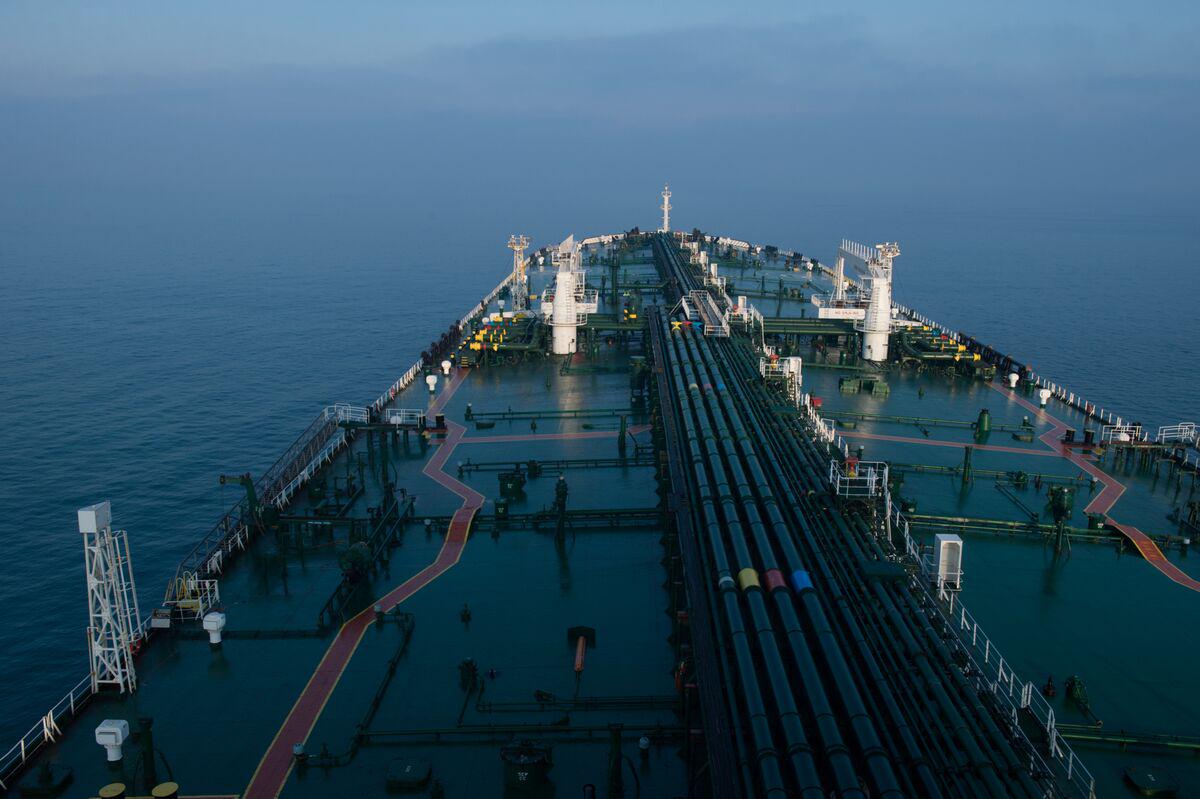
Nearly 11 million barrels of Russian crude are on idling tankers in Asia, with close to 70% of the ships off the Chinese coast and in the Singapore Strait, according to data from ship-tracking and Kpler data. Yet more tankers are on the move, suggesting the total tally could be even higher.
India has not traditionally been a major consumer of Russian oil, but it cranked up its purchases to take advantage of discounted cargoes after the invasion of Ukraine in 2022. The Trump administration — seeking to pressure the Kremlin into a peace deal — has for months sought to cut off that trade, slapping punitive tariffs on Indian goods and sanctioning Russia’s two largest producers.
Those levies were eased under a trade deal agreed last month, and India had kept Russian purchases to a minimum since then.
Out of the roughly 5 million barrels a day that India imports, just a fifth came from Russia in February, according to Kpler. However, other major suppliers include Iraq, Saudi Arabia and the United Arab Emirates — and have much of their production now stranded by the effective closure of the Strait of Hormuz.
“It may take some pressure off the market in the immediate term, but at the end of the day with as much as 20 million barrels per day of Persian Gulf supply being lost, this is not a game changer for the market,” said Warren Patterson, head of commodities strategy for ING Groep NV in Singapore. “The only way to see more permanent pressure taken off prices is to get oil flowing through the Strait of Hormuz once again.”
The waiver, along with other promises from the Trump administration to consider all options to contain spiking oil and gasoline, helped cool benchmark prices in Friday morning trade in Asia — but the ultimate impact on India and on the wider market may well prove limited in time and scope. Additional crude will also not resolve a squeeze on liquefied natural gas and cooking fuel supplies for India.
“Much of this is reactive action, instead of a pre-set game plan that thought through all the risks,” said Rebecca Babin, a senior equity trader at CIBC Private Wealth Group. “The headlines should provide some panic relief, but we will need concrete details to start really see risk premium erode.”
Indian refiners and government officials have been considering a range of contingency measures this week to manage the disruption to supply — including the option of turning to Russian cargoes. The oil ministry had pushed for diplomats to seek some room for maneuver from Washington, where Treasury officials also had discussions on easing pressure.
India has also held talks with the US to seek clarity on a proposed mechanism to provide insurance for tankers transiting the Strait of Hormuz.
Posted by John3262005