
I've translated it with Google so the phrasing sounds rather awkward at times, but it's perfectly readable lol I've only edited two things that had been translated unambiguously wrong ("They wanted to secure the support of the Iberian home front.", which I changed to "They wanted to secure the support of the Iberian rearguard.", & "A lot of people left behind.", which I changed to "A lot of people in the rearguard."):
A question is pertinent these days. Would the slogan “No to war” be so successful if Spain were located differently on the European subcontinent? In other words, would Spain be so pacifist in the current historical circumstances if it were a thousand kilometers from Moscow and not four thousand, with the Pyrenees closing off its northern border? Geography matters. In purely geographical terms, Spain and Portugal are Europe's rearguard. Spain, a sunny rearguard with magnificent beaches. Portugal, a peaceful, friendly country, a perfect escape route to the other side of the Atlantic in case of emergency.
It is important to incorporate this perspective into the analysis of the current political situation. This issue arose last Wednesday at a colloquium held in Huesca, in which I had the honor of participating along with the geographer Santiago Fernández Muñoz, a contributor to this newsletter. We could say it was the first public event of Penínsulas, which will soon be three years old. Our thanks to Carmen Lumbierres and Alfredo Serreta for their kind invitation.
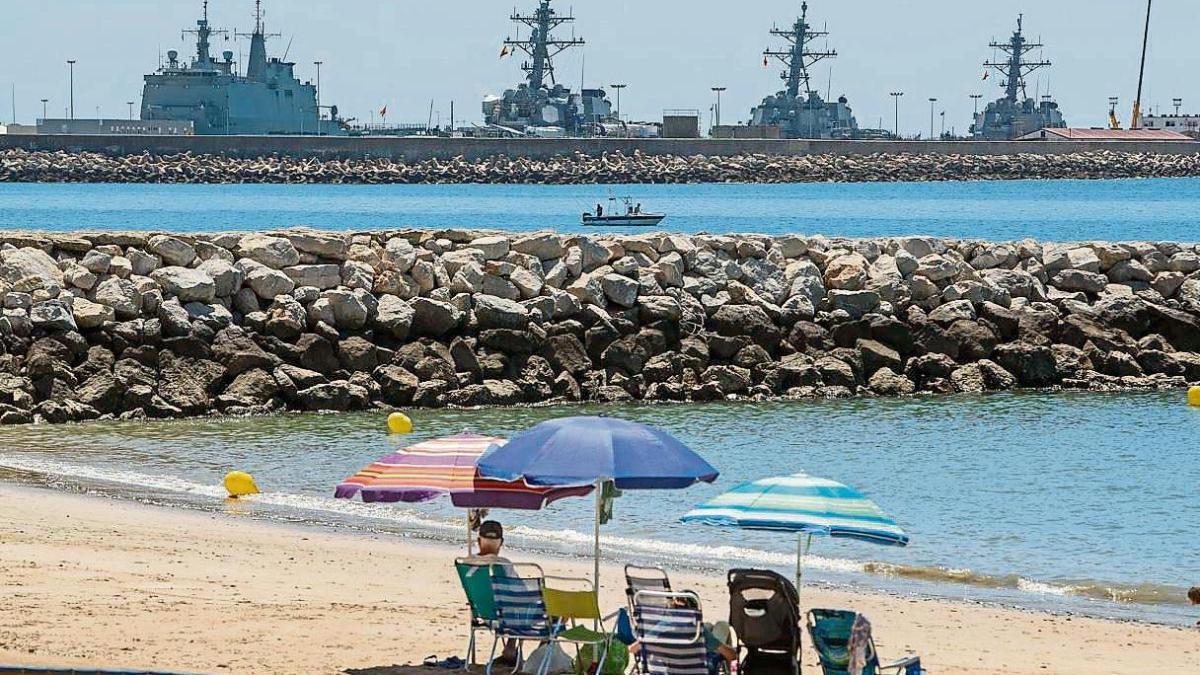
Spain, Europe's rearguard. A rearguard that refuses to spend 5% of its gross domestic product on military expenditures. A rearguard that has just blocked the takeoff of American planes bound for Iran from its military bases in the south. In the Spanish rearguard, very few want to appear warmongering today, since everyone remembers what happened to José María Aznar between March 11 and 14, 2004. In the Portuguese rearguard, they have a geographical asset that helps them get by: the Azores islands, a magnificent aircraft carrier in the middle of the Atlantic, at the disposal of Anglo-American forces, jointly or separately, for more than eighty years.
Geography always matters. There are more geographical features between Huesca and Cádiz than between Paris and Moscow. You can cycle from Paris to Moscow without having to climb high mountain passes; you simply cross the mighty rivers that bisect the vast northern European plain. Paris-Berlin-Warsaw-Minsk-Moscow: 3,700 kilometers without significant mountain ranges. This extensive plain explains some of the twists and turns of dramatic European history. Borders have shifted considerably along this axis. One day, Napoleon mobilized more than 600,000 soldiers to conquer the heart of Russia. At the end of May 1812, the Grande Armée crossed the Vistula River. On November 18, 1814, Russian troops paraded down the Champs-Élysées. Adolf Hitler tried to repeat Napoleon's adventure in 1941, and he too failed. These are two of the great stories of the great European plain.
When Napoleon tried to control Spain, he encountered guerrilla bands that harassed his troops, taking advantage of the country's numerous rugged terrains. "Guerrilla" is one of the words that Spanish has inscribed in the universal linguistic register. Geography shapes and molds. Spain remained neutral during the First World War, and many merchants and industrialists profited greatly from this. Uniforms and blankets were manufactured for both sides in Catalan textile factories. To say that Spain also avoided the Second World War would be inaccurate, since the Spanish Civil War was its bloody prelude. Franco's Spain was isolated after the defeat of Hitler and Mussolini, but the Allies chose not to force a regime change. Nor did they intervene in Portugal. They wanted to secure the support of the Iberian rearguard.
Franco emerged from isolation thanks to the United States. The signing of the 1953 treaty on military bases gave the regime another twenty years of power. The Rota and Morón air bases have been important in Spain's contemporary history. They continue to be so. Here is a little-known fact: in 1973, Franco vetoed the use of both bases to send supplies to Israel during the Yom Kippur War. Admiral Luis Carrero Blanco, then Prime Minister, did not want to antagonize the Arab countries, since a large part of the oil consumed by Spain came from the Persian Gulf. The veto did not prevent Spain from being severely affected by the price increases decreed by OPEC as retaliation against the West. The cost of fuel quadrupled and ignited social conflict in the twilight of the dictatorship. The Spanish transition cannot be understood without the 1973 oil crisis.
A decade later, in a different context, Felipe González prohibited the use of Rota and Morón for the bombing of Libya. Washington was accusing Muammar Gaddafi's regime of being behind an attack against American soldiers in Berlin. April 1986. The referendum on NATO had just been held, in which González had to work hard to ensure a "yes" vote, after having launched the slogan "NATO, no way" when the UCD was in power. A month after the referendum, González didn't want to appear subservient to Ronald Reagan. Spain, an autonomous rearguard. Pedro Sánchez is now applying that same approach.
These days it's becoming clear once again that Spain is a rearguard. Its distance from Russia and the Ukrainian front, as well as our Western position in relation to the Middle East, make this country a safe haven. That's how it's perceived from the outside. Spain is a rearguard, a refuge, and a place of entertainment.
Let's start with the immediate situation. The bombing of Iran by Israel and the United States has disrupted numerous air routes to Asia, Oceania, and much of Africa. The airports of Dubai, Doha, and Abu Dhabi are essential hubs for international air transport, especially for connections between Europe and Asia. They are almost mandatory stopovers for travel from Europe to tourist destinations such as Thailand, the Maldives, India, Sri Lanka, China, and Indonesia. The partial shutdown of these routes is a very significant event.
Summer vacation packages are selling out during these weeks. And nobody wants a war in the middle of their trip. Large European tourist flows are drawn to destinations that offer safety, good weather, and competitive prices. Spain meets all three criteria. Already ranked very highly, Spain has gained even more ground recently. Forecasts indicate that by 2026 we could reach 100 million international tourists. One hundred million tourists and fifty million inhabitants. A lot of people in the rearguard.
Geopolitics has been kind to Spain in all matters relating to tourism. Twenty years ago, there was a feeling that the industry had peaked, given the growing competition in the Eastern Mediterranean and North Africa. Spain received around 50 million tourists in 2000. It wasn't until 2013 that it surpassed 60 million. It was slow growth that only accelerated significantly from 2011-2012 onwards. Tourists were gunned down on the beaches of Tunisia and on excursions to Egypt. Islamic terrorism and the failure of the Arab Spring particularly damaged the North African tourism sector. The events of these days are ruining the season in the Eastern Mediterranean. Missiles are falling in Cyprus. Even Greece could be affected.
Tourism seeks security, and Spain offers it. Security is a far less universal value than we tend to think, and it profoundly shapes the life expectations of societies. We often view migration flows as simply an economic consequence: people leaving their countries in search of work. Many immigrants arrive from Venezuela, Colombia, Peru, Ecuador, or Argentina, seeking employment, stability, and security. They also come to Spain seeking refuge.
Spain is also a refuge for people seeking an alternative residence for a few months. These are people with financial resources who don't want to spend the entire year in a country under tension, whether due to nearby war, the risk of invasion, or insecurity on the streets.
Let's look at the numbers. In 2025, nearly 100,000 homes were purchased by foreigners, representing approximately 14% of all property sales in Spain. This demand for housing from foreign buyers has become one of the factors contributing to the strain on the Spanish residential market.
Over 60% of these purchases are made by resident foreigners, who acquire homes as their primary residence. However, there is also a significant—and growing—percentage of transactions made by non-resident foreigners, who buy mainly as investments or second homes.
The evolution over the last few decades is remarkable. In 2007, at the height of the real estate bubble, barely 3% of homes were bought by non-resident foreigners. Today that percentage is approaching 10%, reflecting the extent to which Spain has also established itself as a destination for international real estate investment.
Analysts at CaixaBank Research have identified several factors that explain this increase in foreign demand: “This surge is due to some of the attractive features Spain offers, such as economic stability, a perception of safety, good connectivity, and a still competitive real estate market. The profile of buyers and areas of interest have diversified, and the variety of nationalities and locations chosen has increased: the UK's influence is decreasing, Poland is among the top five buyers, interest from the US and Latin America is growing, and new areas of interest are emerging in less traditional regions, such as Castellón, Asturias, Huelva, and Córdoba.”
Donald Trump is furious. We all know why. Even across the vast European plain, there are people who see Spain as a safe haven, a place to find a home or relocate a small business. It's uncertain whether this dynamic is currently pleasing to the German government.
(This new chapter of 'Penínsulas' has had the collaboration of Santiago Fernández Muñoz , geographer, expert in geopolitics and public policies, partner of SILO).
Posted by mikelmon99
1 Comment
What happens if Vox wins, though?