
Dangerous Days for the Democratic Alliance
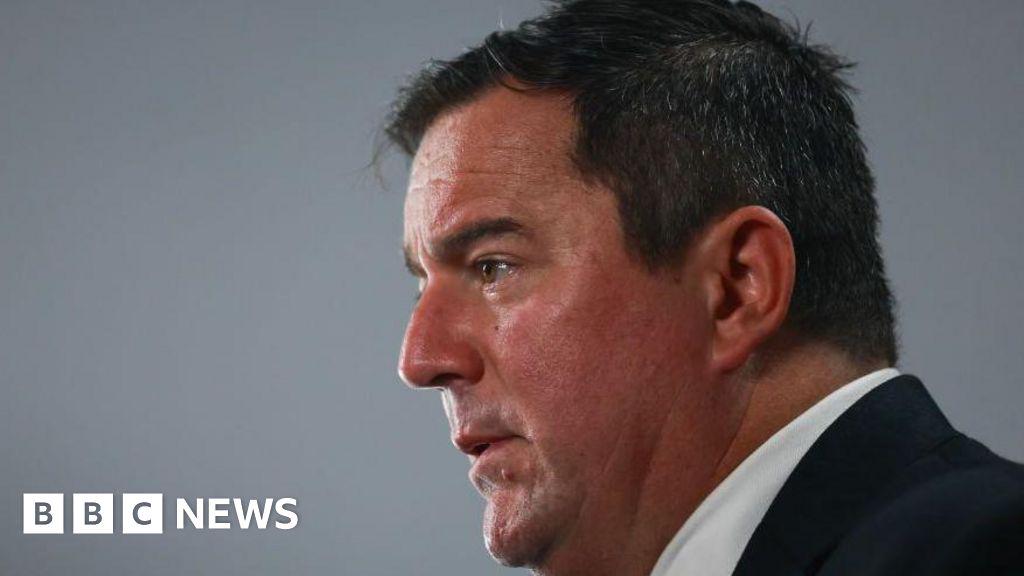
(Submission note: This article is quite long because I supplemented the factual events with my analysis as well as some background context and lots of quotes. I also did not write everything that happened strictly in order of the actual timeline, but rearranged things slightly to make it flow more logically. If you want a high quality account of most of the events described here by an actual journalist and not some guy on the internet, please read this article from the BBC.)
This weekend, South Africa's second largest party held its electoral conference to elect a new slate of leaders.
The Democratic Alliance (DA) is a pro-market, liberal party which has opposed the leftist policies as well as the corruption of the African National Congress (ANC) since the beginning of democratic elections in South Africa in 1994.
Despite their historical opposition, they entered into coalition with the ANC when the ANC lost their Parliamentary majority in 2024. The primary reason was that the DA wanted to block radical and populist parties from entering into coalition with the ANC and getting into national government. The name of this coalition is the Government of National Unity (GNU), and the DA has six ministries: Environment, Agriculture, Basic Education, ICT, Public Works and Infrastructure, and Home Affairs. They also have several deputy ministers in other ministries.
Entering national government has brought risks for the DA. The core idea of this article is that additional power brings additional opportunities to disappoint your voters as their ambitions collide against the practical problems of governing. This is not a bad thing, but is rather a natural result of acquiring more power. In the 1990s, the ANC switched from a far left economic policy of nationalization to Third Way neoliberalism, and have been called sellouts ever since. But 'selling out' is often what makes a political party a real player at the higher levels – ideological purity is what keeps you small and constrained.
In addition, the national spotlight also creates opportunities for politicians to mess up by displaying bad judgement. There has been some of that in the DA too in the last year, or at least there have been strong allegations to that effect. I'll cover these too.
The traditional DA doomer post is all about the party's inability to appeal to Black voters. In the past, the idea was that the reason the DA cannot grow is because Black and White South Africans just cannot get within the party – blame whichever side you prefer. So what has been interesting about the fights and scandals I'll cover here is that there really isn't a racial dimension to it. It has mostly been White DA leaders, fighting with civil society groups that are largely White-led on issues that are of particular importance to various White constituencies. I'm going to emphasize this because I think it provides a useful lens to analyze the DA's political performance without having to even get into debates about race.
Okay, let's dive in.
Environment
The Mother City
The heart of the DA's support is in the City of Cape Town on South Africa's western coast. The DA won in Cape Town in 2011, and from there went on to win the Western Cape province of which Cape Town is the capital. Cape Town and the Western Cape are the foundation of their 20% odd result nationally: DA voters from other provinces look at the quality of governance in Cape Town and Western Cape and vote for the DA as a result.
The important thing to understand about Cape Town is that it is beautiful. To say Cape Town is picturesque is an understatement – it is routinely voted as one of the most beautiful cities in the world. It is a biodiversity hotspot, having a unique floral kingdom that exists nowhere else in the world. It has a Mediterranean climate, with warm summers that attract European visitors in the middle of the Northern Hemisphere winter. It has the globally recognized landmark Table Mountain, of course. It even has penguins. Cape Town's natural beauty forms a core part of Capetonian identity.
White South Africans, in particular, have a deep love of the environment. They are often deeply involved in conservation efforts and caring for animals. Even those in comfortable suburbia who may not be very political will mobilize politically around environmental issues.
Without making any claims about any other groups, we can acknowledge that there is an overlap between White voters, environmentally conscious voters, and Capetonian voters. And the DA sits at the intersection of all three. Cape Town is the city that most White South African families ultimately originate from, being the spot where Dutch settlers first set up in 1652. It is the jewel in the crown of South Africa's natural beauty. And it is the city from which the DA launched on its electoral journey.
The Stink in Cape Town
When the DA's Dion George was appointed as Environment Minister, that meant that Cape Town's natural environment was now fully under control of the DA, from local level to national. So it was surprising that one of the things he did that year was to allow the city with a license to dump more untreated sewage into the ocean (see "Cape Town may pump as much sewage into the sea as it likes").
In the year that followed, more drama unfolded around coastal pollution. A local environment group alleged that their tests showed the water was dirtier than the city's limits should allow. After the city pushed back on this, a group of scientists from the University of Cape Town published an article accusing the City of misleading the public on these issues. They also accused the city of actively suppressing data about water quality issues at Cape Town's beaches.
I can only imagine that it was surprising and disappointing to DA supporters in Cape Town that their appointed Minister was making the problem worse, and that having full control of this issue within the geographic boundaries of Cape Town didn't mean that things would automatically get better.
The Lion King
Despite the initial shock around the sewage issue, the Environment Minister I mentioned previously, Dion George, went on to be a champion for wildlife conservation in the ministry. The animal rights groups loved him. So it was again surprising when, in early November 2025, the DA's leader, John Steenhuisen, asked President Ramaphosa to remove Dion George from his post and replace him with another DA member, Willie Aucamp. The News24 article quotes 'party insiders' as saying that the change was made after 'complaints' and allegations of 'underperformance' against Dion George.
Within a few days, various wildlife organizations rallied to George's defense. Here are three articles published in Daily Maverick, a mainstream South African paper:
- The sacking of Dion George — how a progressive minister is being taken down by the wildlife breeders
- Steenhuisen’s lion bone gambit — firing the one minister who finally took on the wildlife trade
- ‘I respect the party’s decision,’ says Dion George after axing
Taken together, these articles painted a very disturbing picture of the 'real' reason George was fired, as they saw it. They said that George was about to go after the captive lion breeding industry – think "Tiger King" but with lions I guess, as well as the trade in lion bones.
They accused Willie Aucamp, the replacement, of being aligned with the wildlife breeding industry. They accused John Steenhuisen and the DA of acting at the behest of that industry to remove George. George, in their telling, was the first minister to take on these interests and was being punished for it and replaced with a more friendly minister. They totally dismissed the story of 'underperformance' as a vague cover. Essentially, they were accusing the DA of selling out good governance to vested interests.
Dion Abroad
A few days after these articles were published, City Press published an article quoting anonymous department staff who made accusations against George. They said he intimidated and bullied them, and had made staff cry. They accused him of not understanding the departmental subject matter. George vehemently denied these claims. Sunday Times also published claims that Dion George was a spendthrift, prone to taking so many international trips that departmental staff called him "Dion Abroad". Around the same time, News24 published claims that George was fond of expensive flights and luxury hotel stays, and that he refused to stay in his official lodgings because it didn't meet his standards. He was also accused of improperly empowering his special advisors in the department to issue orders to Department staff. It actually just goes on and on, and it was really bad.
If the accusations against George were true, then it is damning that one of the DA's most senior leaders behaved this way. George was the Chairperson of the Federal Finance Committee for the party, and had been their Shadow Finance Minister at one point. And here he was being accused of not only being a bad boss, but of wasting taxpayer money.
By the end of November, after his firing, George announced his intention to sue News24 for what he described as an orchestrated smear campaign. If none of the story of misbehaviour are true, then it means that Steenhuisen's DA was willing to drag the party's name through the mud in order to appease vested interests who disagreed with the policy direction George was taking.
I don't know who is telling the truth here, but whether it is George, Steenhuisen, both or neither, this is a horrible look for the Democratic Alliance. This is dirty politics.
Agriculture
Centralized Control
South Africa has had outbreaks of foot-and-mouth disease in its livestock on and off for years. The latest outbreak has been particularly terrible. When John Steenhuisen was appointed as Agriculture Minister, he inherited a crisis. There is an understanding from farmers that this outbreak began before Steenhuisen entered office. Nobody blames him for the outbreak itself. However, what has surprised farmers has been Steenhuisen's refusal to allow them to vaccinate their herds in their private capacity. Instead, the Agriculture Minister has insisted that the vaccination drive should be centrally managed.
Here is Steenhuisen's explanation for why vaccination has to be centrally managed:
The scientific path to FMD-free status is very clear. In order to regain the “FMD-free status with vaccination” from the World Organisation for Animal Health (WOAH), South Africa must prove there has been no virus transmission for at least 12 months. This requires a strictly controlled vaccination rollout, official surveillance, strict movement controls and systematic vaccination coverage that is able to be documented and verified.
Without centralised monitoring and State-led control over the process, the country will fail to achieve this goal, causing long-term damage to agricultural exports and negating the entire strategy of vaccination.
This quote comes from later in the story, but is a useful summary.
Farmers vocalised their frustration and disappointment in Steenhuisen:
The dairy farmer from the Eastern Cape did not hold back in his attack on Steenhuisen, saying the minister has not grasped how bad the foot-and-mouth disease situation has become. “You’ve failed us,” he said, pointing to what he sees as a lack of real action from the top. He added that the department’s way of handling things – keeping tight control and not being open about plans – has underestimated the problem and tested farmers’ limits too far.
Again, we have a genuine policy debate here. In this case, it's a core DA constituency – rural White farmers – who reasonably expected that having their party in charge of the Agriculture department would bring efficiency, or at least get the government out of their way until it rebuilds capacity. But Steenhuisen had a point too – biosecurity is a fundamentally systemic problem, and even if he gave into farmer's demands, uncoordinated private vaccinations might not satisfy the standards of global authorities and international trading partners.
What to do?
AfriMAGA
South African farmers, especially those of Afrikaner heritage, cherish the ideals of self-reliance. The unofficial motto of the Afrikaner people is "A Boer Makes a Plan". Steenhuisen's centralising of power didn't just run against their policy preferences, and not even just up against livelihoods, but also against identity and ideology.
South Africa's farmers are organised in various civil society groups. Some of the most effective of these groups also organise around Afrikaner identity politics. They have supported and worked with the Democratic Alliance in the past, and their former members now even serve in Parliament under the DA.
As the crisis has worsened, these groups have spoken out against Steenhuisen in ever harsher terms. Afriforum, a powerful, organised and highly effective Afrikaner-interest lobby group in the country, accused Steenhuisen of 'treason' against farmers. These are the same people who have spent considerable time in America, building relationships with National Conservative groups there and distributing dossiers alleging mistreatment of the Afrikaners as an ethnic group by the government.
Other groups sent him a letter demanding that he allow private vaccination, which he rejected. Their response to his rejection was scathing:
Minister John Steenhuisen’s reaction to the letter of demand sent to him by Saai, Sakeliga and Free State Agriculture has shocked the farming fraternity to the core. Not only does it reflect the petty politics in which he got entangled, but it also shows how shallow his understanding of the essence and the extent of this crisis is.
Eventually, these groups decided to roll up their sleeves and take the Minister to court.
Steenhuisen criticized these groups for going to court, arguing that this would only distract and delay from the effort to organize the state-led vaccine programme. He also argued that it's not like he was excluding the private sector, but rather asking for a role for the state in order to satisfy global traceability and reporting requirements. In official government communication, Steenhuisen accused these groups of trying to 'profit' off of the crisis:
We urge the farming community to be wary of promises by lobby groups attempting to profit from the hardships farmers are currently enduring. These actions threaten a scientific framework designed to ensure the country wins the war against FMD once and for all.
Privately, he was said to refer to these groups as 'AfriMAGA', a portmanteau of Afriforum, one of the most prominent of these groups, and MAGA, as in President's Trumps conservative movement, which these groups are involved with.
The ANC Lite
Steenhuisen's desire to centralise the vaccine response has drawn accusations from the right that he is essentially behaving like an ANC minister who fully buys into hard left ANC ideology.
In a center-right online paper, The Common Sense, Steenhuisen was criticised in these terms by contributor Koos Malan:
John Steenhuisen and His Circle’s Anti-Constitutionalist and ANC-Light Misbehaviour
Professor Koos Malan critiques John Steenhuisen's ideological shift, warning that his actions could align the DA with ANC-style totalitarianism and undermine the party's constitutionalist values.
…
Yet cleaner government and an anti-corruption culture fall way short of what is required by a political party to secure support. What is crucial, specifically in South Africa, is that opposition parties should be ideologically cogent and act as a principled adversary of the baleful leftist and statist ANC.
In some circles within the DA, this is not sufficiently realised or practised, leading the party to suffer symptoms of “ANC-lightism”. The DA suffered from this ailment in the run-up to the 2019 election, but a sound self-correction initiative at the behest mainly of Helen Zille enabled the party to (somewhat) cured itself.
They weren't just upset about his policies, but also his criticism of the civil society groups that were suing him. They felt that the crisis represented an ideological drift in the DA last seen in the terrible and dark days of peak-'Woke' in the late 2010s. That's what the reference to 2019 is about.
John Steenhuisen responded to the criticism that he was aligning with "ANC-style totalitarianism", describing it as:
a disappointing exercise in ideological distortion that confuses reckless libertarian cosplay for genuine constitutionalism
The irony of all of this is that Steenhuisen had come to power in the DA in the aftermath of the DA losing votes to the conservative, Afrikaner nationalist Freedom Front Plus (FF+) party because of 'wokeness' (embracing social progressivism to reach Black voters and grow the party). He and Helen Zille, who is always the de facto leader of the DA, set about restoring the party to 'colourblind', common sense 'classical liberalism' in order to win back those voters. And yet now, all these years later, it is Steenhuisen himself who that exact same constituency has a huge problem with. They narrowed the party ideologically (and demographically) to avoid losing these voters, and it hasn't worked. This suggests that the political calculus post-2019 was wrong.
The Fall of John Steenhuisen
Uber Eats
Even before the fight with the farmers in early 2026, Steenhuisen was in trouble.
Earlier, I described the Dion George fiasco and the accusations levelled against him after his firing in November 2025. But shortly after Dion George was axed, in mid-2025, Daily Maverick reported that Steenhuisen had had a default judgement issued against him for unpaid credit card debt of almost R150,000. This while he was earning a gross annual salary of R2.69 million a year.
It was also alleged that John Steenhuisen's party credit card had to be taken back by the party (i.e. by Dion George, head of Finance) because the numbers couldn't reconcile. It was alleged that Steenhuisen spent party money on personal expenses, including on UberEats. This, predictably, became a meme.
George's replacement as Environment Minister, Willie Aucamp, lodged a formal complaint to the Public Protector (state ombudsman) against the former Minister, accusing George of abusing state resources to investigate him for political purposes. George also laid a formal complaint with the Public Protector against Aucamp.
In other words, the feud between George's camp and Steenhuisen's camp had escaped the containment of not only the DA but even the media. It was now the subject of formal complaints to the state authorities. Steenhuisen was facing allegations as serious as those that were being levelled against George.
Capture
The DA investigated John Steenhuisen and, in early January, cleared him of accusations related to abusing the party credit card.
Following this, Dion George went onto national TV and publicly announced that he was leaving the DA. In this address, George made serious accusations against Steenhuisen and the DA.
First, he implied that the DA was no longer operating independently but had been 'captured' by 'criminal interests' in the ANC:
I cannot remain in a party that has, through the actions of its current leader, John Steenhuisen, been captured by the African National Congress (ANC) and other criminal interests. The result of this capture is that the DA has been completely muzzled and lost its voice and its ability to lead in South Africa’s interest.
He provided a reason for this alleged capture: John Steenhuisen's financial problems.
It is still my view that with skillful leadership, while jealously guarding our integrity, the DA’s participation in the GNU could have worked. Instead, Steenhuisen as the DA leader has been captured, because of his personal financial vulnerabilities.
He also alleged that the reason he was removed from his post was not because of improper behaviour on his part, but because 'criminal interests and illicit networks' influenced the DA. He then said the accusations against him were a smear campaign.
He painted a picture of Steenhuisen as someone who was desperate for the party to remain in the GNU at all costs
I did my job without fear, favour or prejudice, but I discovered that was not what Steenhuisen wanted. He wanted co-option. He wanted to remain in the GNU at any cost to the party values and principles and to the country’s interests.
Finally, he directly accused the wider party, and not just Steenhuisen, of "cooking the books" in order to cover up for Steenhuisen's abuse of the party credit card:
When I removed the credit card as Chairperson of Federal Finance in March 2025, the credit card could not be reconciled. The only way a “full reconciliation” could occur as claimed by the DA FLC, is by subsequently cooking the books. It must be asked who did that “reconciliation”? This matter requires a full and independent forensic investigation that is disclosed to the DA’s voters and donors before the upcoming DA conference in April.
The Donors
In his public address, Dion George addressed the DA's funders and donors, who are the third constituency I'd like to speak about here. We've moved from the middle class citizens in the beautiful suburbs of Cape Town, through to the valiant and self-reliant farmers scattered in rural areas across the country, and now finally we are sitting in a mansion in Johannesburg or Pretoria, with the people that Julius Malema and other leftists call "White Monopoly Capital"; the people who "own" the country; the people in the right hand extreme of South Africa's ridiculous Gini Curve; the people who worry about exchange rates and property values in functioning cities.
Because of the history of South Africa, this constituency is disproportionately White. I don't say that as a criticism of any of them, but rather just to tie everything in this article together. Notice that nothing in this article so far really has anything to do with 'wokeness' or racial issues at all. Almost everyone involved or mentioned here has been White, and the constituencies mentioned are disproportionately White too. All this is to say that all this drama is of a very different variety to what is stereotypically associated with the DA – it's not about race relations.
The DA's wealthy supporters are an important part of the secret sauce that makes the party work. The relationship is symbiotic – they give the DA money to do good work, and the DA spends that money wisely. The DA runs a slick and professional shop in terms of marketing, communications and general party machinery. They also spend a hell of a lot of money on hiring good lawyers to take the government court. In the days when the ANC held a pure majority, and even since then, the DA turned to the courts time and time again to hold the government in check. All of this is expensive, but worth it when the money is spent right.
If we assume the accusations on both sides are true, then it means that the man who would have been President can't even manage his own credit card. And it would mean that the man who would likely have been Finance minister was a spendthrift with state funds. If the allegations are false, then it's still terrible: it means that both men were happy to drag the party's name through the absolute mud over what would be merely a factional battle and a disagreement over positions. Whichever way you slice it, this is ugly. I don't imagine that the donor class of the DA would look at all this and feel too confident about their investment in the party.
The Geordin Hill-Lewis Project
A Fresh Start
Between the financial matters, the handling of the Dion George firing and the farmers, eventually it was decided that John Steenhuisen had to go. Steenhuisen had been eligible to stand for another term as leader of the party, but announced he would not do so. This cleared the way for the mayor of Cape Town, Geordin Hill-Lewis (pronounced "Jordan"), to run for party leader. Hill-Lewis has long been presumed to be the next in line, and his election was basically a done deal as soon as he announced. He was officially elected as leader of the party on April 12th.
The DA will be hoping that Hill-Lewis can hit reset on the last year of chaos. He is a charismatic and gregarious politician who is good at communicating and understands TikTok. He will not serve in Cabinet because he wants to keep more distance with the ANC, to avoid the kind of accusations of being 'captured' that swirled around Steenhuisen. He will, however, have a right to shuffle the ministers in Cabinet, and no doubt the farmers will demand that Steenhuisen be removed from heading the Agriculture Ministry. But, hopefully, the DA will be able to move on after that?
I don't think that's the right way to see it.
Let's be charitable to the DA, and assume the very best case scenario which is as that all the more serious allegations of financial mismanagement against their leaders were false and were just mudslinging. We're still left with serious disagreements about policy within the party: How far forward should the Environment Minister go on protecting wildlife? Should livestock vaccine administration be centrally or privately managed? What should be the party's red lines when negotiating with the ANC in coalition? There are other scandals and questions I haven't even covered here: what should happen when a DA minister is in charge of administering a law that the base hates, like the Expropriation Act? Even Hill-Lewis comes in for heavy criticism because his administration in Cape Town is seen by some to be failing on affordability, if not fuelling the crisis. This again is an issue that has less to do with racial division and growing the party and much more to do with the DA's base – ratepayers in Cape Town.
Political Complexity
The real source of all the conflict in the party is the power they have acquired. The more power you have, the greater your responsibilities. And those responsibilities include having to disappoint your supporters, make trade-offs and abandon your ideals because they are simply not practical at that moment. That's not going to change just because you switch leaders.
What needs to happen is that the DA needs to learn to manage political complexity better. It needs to learn how to communicate better with voters and aligned civil society groups. It needs to foster patience, trust, and respect for compromise in the DA-aligned coalition.
In 2019, the party attempted to grow horizontally by reaching out to Black voters as well as constituents with more progressive ideals. The DA made a big compromise by working with the EFF in order to take Johannesburg. These compromises helped them to grow horizontally and acquire additional power, but it also alienated White voters, who shifted right and voted for the Freedom Front Plus in 2019. The DA over-corrected by shifting back to classical liberalism, and some prominent Black leaders left the party. They eventually lost control of Johannesburg to an ANC/EFF coalition, and later lost control of Pretoria to one of those Black leaders who left.
This could happen again in 2026. Suppose the farmers don't forgive the DA for the Steenhuisen debacle? Or perhaps a new minister is put in place and concludes that Steenhuisen's approach was correct, further enraging farmers and their civil society groups. What happens then? A repeat of 2019, with conservative White voters going to FF+, the party over-correcting and then withdrawing from the GNU?
If the DA follows Koos Malan and Dion George's advice, it will just have to keep retreating and never grow. Forget about attracting Black voters and growing horizontally – it will have to retreat from national government and not even grow vertically.
Conclusion
Local Government Elections will take place towards the end of this year (or beginning of next). In the ideal case, Geordin Hill-Lewis is wonderful and charismatic and all the conflict I've described here just fades away. Much more realistic is that political clashes within the DA keep happening because exercising power is hard. Geordin Hill-Lewis' job will be to get the party to a point where it can manage political complexity, and position itself to take over from the ANC as that party continues to decline. If we see a repeat of 2019, and the DA retreats from the complexity of exercising power again, then we will see chaos at national level just as we saw in Johannesburg after 2019.
Posted by Top_Lime1820