
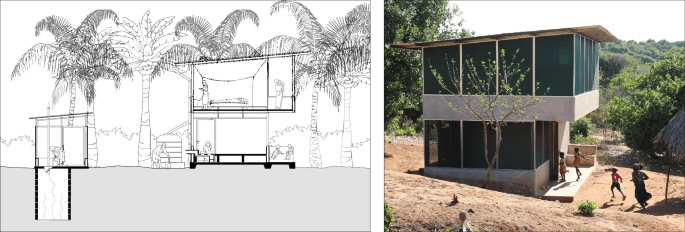
A sustainable house design to improve child health in rural Africa: a cluster-randomized controlled trial
Posted by ProfessionalMoose709
A sustainable house design to improve child health in rural Africa: a cluster-randomized controlled trial
Posted by ProfessionalMoose709
1 Comment
**Why is this relevant for** [r/neoliberal](https://www.reddit.com/r/neoliberal/)**?** Fighting malaria and global poverty is pretty core to the sub, and this paper details a potential innovation that could help with those things via a policy intervention. I think using home architecture as a way to reduce malaria and naturally improve sanitation is a really clever and really interesting way of doing it.
**2. What do you think people should discuss about it?**
Study design, effect size, how replicable the results might be, how this could be used for cost-effective interventions in developing countries, potential barriers to further implementation, etc.
Here’s an article which includes some uninvolved expert commentary: [https://www.science.org/content/article/simple-house-may-help-prevent-multiple-fatal-diseases-african-children](https://www.science.org/content/article/simple-house-may-help-prevent-multiple-fatal-diseases-african-children)
and here’s another article along the same vein but much cheaper so probably easier to replicate
[https://www.nature.com/articles/s41591-025-04104-9](https://www.nature.com/articles/s41591-025-04104-9)